Nature
 PUBLISHED


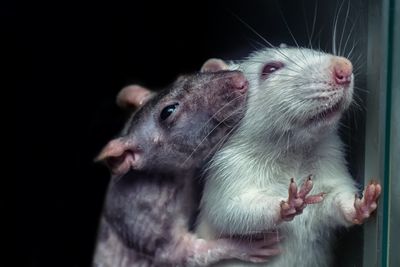


Rats make high-pitched, happy squeaks when in the company of another rat, new research has revealed. The rodents are renowned for their fondness for friendship, frequently choosing it over food (but not heroin) and jumping for joy when watching their besties getting tickled. Now, for the first time, the glee that individuals feel when around another rat has been recorded, in the form of high-frequency squeals.
During social interactions, rats make ultrasonic vocalizations, imperceptible to the human ear, which reflect their emotions. For example, when happy, they tend to emit squeaks at about 50 kHz. However, until now, it has proved challenging to identify which rat is responsible for which sound.
Using novel mini-microphones connected to the rats’ noses, the team behind the new study were able to pinpoint the individual rats making each vocalization, and therefore gain insight into their emotional state.
In doing so, they discovered that the little cuties made more 50 kHz (positive) vocalizations during close interactions with other rats, “yet it is not linked to any specific behavioral event we could recognize,” the researchers write. By this, they mean the rats weren’t attempting to communicate or respond to something – they were simply expressing their contentment.
“We think that this isn’t a language, but actually another way to pronounce happiness in general,” Shai Netser, one of the study authors, told New Scientist.
Netser and co-authors surgically attached their teeny microphones to the noses of 13 rats, before placing them in cages with another rat, either directly or separated by mesh.
The 50 kHz squeaks were more prominent when the rats were in physical contact with one another and only began after another rat was introduced, and so may reflect social bonding processes, the team suggests.
They also discovered a new sound made by the rats: a low-frequency vocalization marking rat social interactions. These noises (4–10 kHz) are within human hearing range but were too weak to be detected by the microphones in the cages, which may explain why they’ve never been reported before. The meaning of this novel sound is yet to be determined.
The researchers anticipate that their findings, and new miniature microphones, will help shed some light on social behaviors and emotions in rats.
“We hope that this method will enable for the monitoring of socio-emotional states in laboratory rats, including models of neurodevelopmental disorders, upon exposure to various environmental and internal conditions,” they write.
In other unexpected (and adorable) animal vocalization news, how about this tiny crocodile that can moo?
The study is published in the journal Cell Reports Methods.
[H/T: New Scientist]