Nature
 PUBLISHED


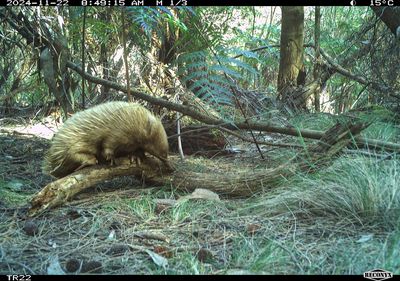


Camera traps can be an incredible resource for monitoring wildlife. Capturing secret moments, hidden species, and even never-before-seen behaviors, they offer insight into the secret lives of the animal world. Now, in the first-ever camera survey of Truwana/Cape Barren Island, a remote island off the coast of Tasmania, traps have recorded two rarely seen animals – including blonde echidnas.
A total of 30 motion-sensor cameras were positioned at seven sites on the island from November 2024 until May 2025. When the team came to collect the memory cards from each of the cameras, there was a combined total of half a million pictures to go through.
The first surprise came in the form of white-footed dunnarts, tiny, nocturnal marsupials that snack on insects. There are thought to be fewer than 5,000 of these creatures in Tasmania, so seeing them captured on cameras at six of the seven sites is thought to be good news for the population.
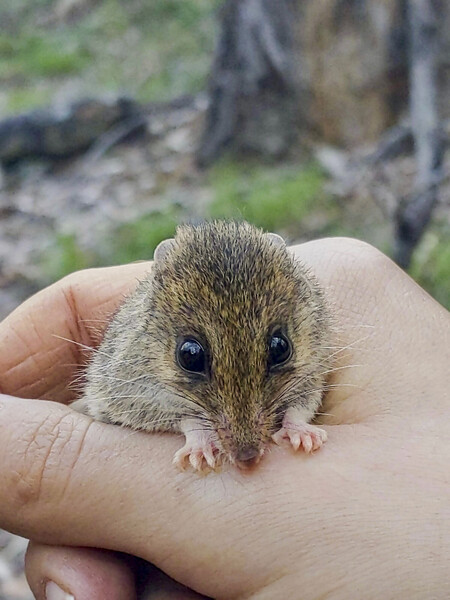
Although the photos showed the presence of small mammal-hunting feral cats on the island, Truwana is considered a good habitat for species like the white-footed dunnart; it has managed to avoid large-scale land clearing for crops, allowing the native vegetation to remain, helping to protect the smaller species.
Crucial to this was the return of Truwana to Aboriginal ownership in 2005; the local Truwana Rangers, who now care for the space, have been vital in carrying out both weed and pest control.
"Knowing we have these small animals in particular landscapes on Truwana encourages us to keep working hard on managing our island for healthy communities,” Truwana Fire Project Ranger Roy Thomas said in a statement.
Among the other animals captured by the camera traps were both normal colored and blonde echidnas. Truwana’s echidnas belong to the Tasmanian subspecies that has adapted thicker fur than its mainland cousins. The blonde echidnas are thought to have leucism, the result of a mutation that causes the absence of pigmentation in their skin and fur. Unlike with albinism, the echidnas are not totally white and do not possess red eyes.
The cameras also captured photos of the Tasmanian subspecies of the long-nosed potoroo, a small hopping marsupial mammal that carries its young in a pouch, and the eastern pygmy possum.
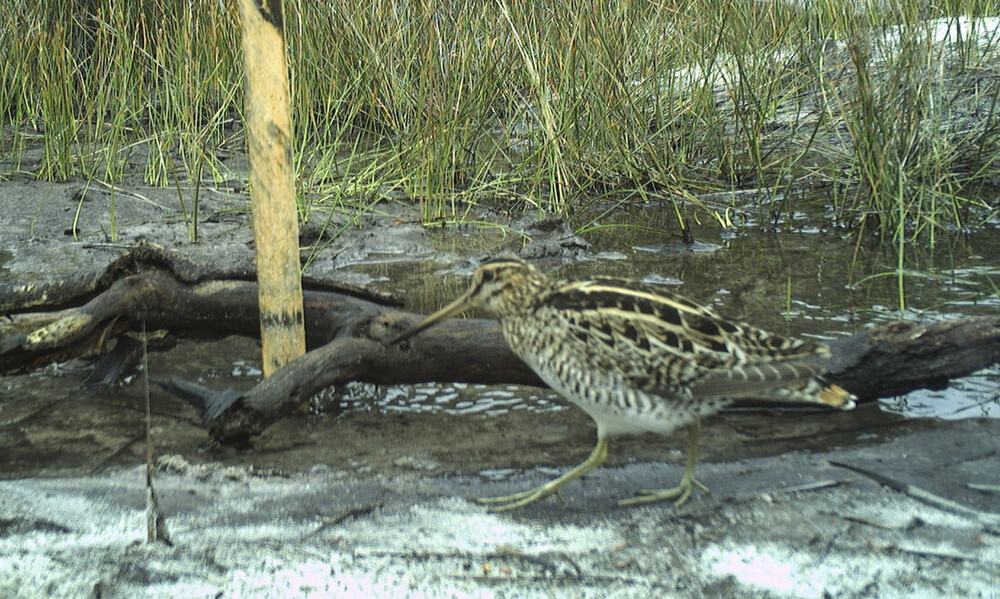
Bird species were also recorded, including the migratory Latham’s snipe. This species breeds in northern Japan or Russian islands before making its way down to Australia. These birds are typically very hard to see, being well-hidden in their wetland habitats. The photos taken from the camera traps suggest that this habitat is in good condition.
“These camera arrays are revealing a level of biodiversity that other survey methods often miss, especially for shy or nocturnal birds and mammals,” said Dr Elizabeth Znidersic from Charles Sturt University, who also highlighted the essential role of the Truwana Rangers in the survey.
“Working alongside the Truwana Rangers has fundamentally shaped this research. Their understanding of the land and its species has helped us interpret what the cameras are showing in a much more meaningful way.”