Nature
 PUBLISHED
 1
1


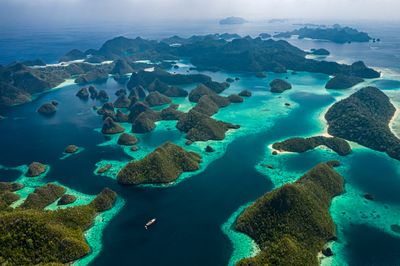


The Raja Ampat archipelago in Indonesia is considered one of the most biodiverse marine habitats on Earth, home to thousands of fish, mollusks, and coral species. Its remote location means the wildlife here can thrive without the impact of intensive human activity, which is why it’s known as “the last paradise on Earth”.
Sitting within the western Pacific Ocean’s “coral triangle”, the region’s reefs are among the healthiest in the world, acting as a vital habitat for diverse marine life. The unique conditions at Raja Ampat mean many species found here can’t be found anywhere else on Earth – and hoo boy, do they have some characters in the mix.
Raja Ampat’s walking shark caused a stir back in 2020 when it was recorded using its pectoral and pelvic fins to potter along the seafloor. Named the leopard epaulette shark (Hemiscyllium freycineti), it was declared a new species and joined eight other known species of walking sharks.
The leopard epaulette isn’t the only peculiar shark in the area, as Raja Ampat is one of the few places the tasseled wobbegong shark calls home. Looking a bit like someone stamped on a potato, these peculiar sharks are flat and – as the name suggests – pretty frilly at the edges, making them hard to spot but a remarkable sighting.
Raja Ampat is also home to the highest proportion of melanism among the black manta rays Mobula birostris – also known as the giant oceanic manta ray – and Mobula alfredi – the reef manta ray. Melanism describes a kind of hyperpigmentation that gives animals a uniform and dark coloration. A goth manta, if you please.
Not only do the massive mantas here come in a spooky hue, but they’re incredibly social. Scientists studied more than 500 social groups of reef manta rays over five years in Indonesia’s Raja Ampat Marine Park, to analyze social networks and see how manta rays interact with one another. It revealed that the reef-dwelling cartilaginous fish form social relationships and choose social partners, but do they have “friends”?
The biodiversity of Raja Ampat doesn’t end in the water, either. A hunt for a long-lost species of orchid sent a group of scientists scrambling over the summit of Mount Nok on Waigeo, which is the largest of the four main islands in the Raja Ampat archipelago. The successful expedition not only rediscovered the blue beauty Dendrobium azureum, but also stumbled upon a new-to-science species that was bright red: Dendrobium lancilabium.
So, if you like your sharks flat and frilly, and your orchids rare and colorful, Raja Ampat really is paradise on Earth.
How to get there: Reaching Raja Ampat is a journey, but it begins at Jakarta or Makassar airports, from which you’ll need to get to Sorong for the ferry.
This article first appeared in Issue 22 of our digital magazine CURIOUS. Older issues of CURIOUS are free for all users. To access new issues, become an All Access Member.