Nature
 PUBLISHED


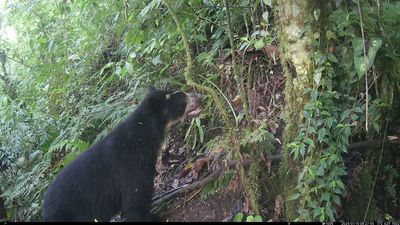


The undeniable face of Andean bears is the one and only Paddington, but while everyone’s favorite fictional marmalade fiend thrives, the number of his real-life counterparts remaining in the wild is on the decline. A recent conservation project taking place in Ecuador hopes to turn the tide.
Classified on the IUCN Red List as a vulnerable species, it’s estimated that there are around 2,500 to 10,000 mature Andean bears (Tremarctos ornatus) left in the wild – and that number is decreasing. Reasons for their decline include not only large-scale deforestation of their habitat, but also increased conflict with humans, in part spurred on by habitat loss.
Some of the remaining bears live within the Andean Bear Corridor, a region sitting along the spine of the Andes that stretches from Peru and into Ecuador. It’s here that a team of researchers from the University of Sussex are focusing efforts to conserve the species.
To do that involves not just an understanding of the bears, but examining in detail the human factors behind their decline and working with local communities to find solutions that work for people and Andean bears alike.
“This project isn’t just about helping to protect wildlife, it’s also about how we do this whilst supporting local communities so that we create a truly sustainable future,” said the project’s principal investigator, Professor Fiona Matthews, in a statement sent to IFLScience.
That’s involved searching for ways that local people can generate income without having to destroy forest – cultivating vanilla might work here – but it’s also thought that farmers might be more inclined to protect forested land if that land legally belonged to them
“Farmers told us that one of their main concerns was they didn’t have the legal entitlement to the land they’ve settled on: a common problem for many communities in South America,” explained Matthews. “We’re therefore working to help them gather the necessary documentation, and have worked with the Environment Ministry and Provincial government to find an agreed way forward.”
One of the other avenues currently being explored by the team is the possibility of providing the Andean bears with legal protections.
Giving animals legal personhood isn’t without precedent; back in 2021, a US district court ruled that Pablo Escobar’s infamous “cocaine hippos” are legally considered as people.
In Ecuador in particular, the rights of nature are enshrined in the country’s constitution – something that has seen successful legal cases brought on behalf of a cloud forest and the river running through the capital city. The country’s high court also determined back in 2022 that animals also qualified for such rights.
“An interesting development is that Ecuadorian Rights of Nature legislation has not only successfully challenged harmful practices for biodiversity such as mining, business practices, and the use of market-based mechanisms for conservation but has also been used to recognise and protect the rights of a wild animal as a sentient being,” said project co-investigator Dr Joanna Smallwood.
“Our project is exploring the implications of implementing the rights of the Andean bear alongside broader rights for nature in the Andean Bear Corridor and the rights of the local communities to realise just, fair and equitable solutions for nature, bears and humans."