Nature
 PUBLISHED
 2
2


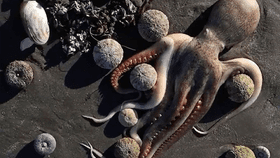


A catastrophic event on Russia's Kamchatka peninsula has caused the mass death of sea animals, which are washing up on beaches along the Pacific coast. Authorities were first notified of the event when surfers began reporting that the once clean and safe waters were causing sore throats, fevers, and sight problems.
Massive mortality events (MMEs) is the name given to events that see large numbers of populations die within a narrow time frame, and as hundreds of dead sea animals continue to wash up on the shores of Khalaktyrsky beach, it’s becoming all the more apparent that the region is in the midst of a devastating MME. Species affected include deep-sea giant Pacific octopuses, to seals, sea urchins, stars, crabs, and fish that continue to wash up on the volcanic black sands.
Experts from the World Wildlife Fund reporting from Kamchatka suspect a highly toxic substance is to blame, spreading through this globally significant marine hotspot. Samples from the affected area are being tested by WWF-Russia to investigate the source of the possible water contamination. Toxic pollution of some sort is considered the most likely source at the time of writing as preliminary testing by Russia’s Ministry of Natural Resources has already ruled out the possibility that an oil spill is to blame. They are also sifting through photos and video footage of the devastation to try and isolate potential candidates for the contamination event.
“Such impact apparently cannot be the result of a storm or water pollution with oil products,” said Alexey Knizhnikov, the head of business environmental responsibility at WWF-Russia, in a statement. “There is a great probability of toxic contamination with a high-solubility substance. Judging by the fact that benthic species of plants and animals are carried ashore in large quantities, we draw a preliminary conclusion that not only the surface layer of water is polluted, as it would have been in case of an oil products spill, but the entire body of water. However, we first must receive the results of the water samples and examination of dead sea animals. Only after that it will be possible to judge the origin and the scale of the contamination.”
[H/T: Siberian Times]