Nature
 PUBLISHED
 1
1


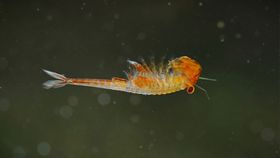


A new species of fairy shrimp that fluttered around in the freshwater habitats of Australia around 100 million years ago has been discovered in the Koonwarra Fossil Bed. Despite its advanced age, it was able to show off a remarkable skill in the fossil record as researchers behind the discovery have concluded that the crustacean could reproduce through parthenogenesis.
Reproducing without the need for a male, known as parthenogenesis, is a reproductive strategy employed by plants and even some animals. Most recently condors and sharks joined the ranks of sans-male baby-making animals, and now so too does our ancient fairy shrimp, Koonwarrella peterorum, whose discovery was published in Alcheringa.
So how does one detect parthenogenesis in an animal that’s been extinct since the Cretaceous? You look at its junk, of course.
Looking for male genitalia or mating equipment such as the grasping antennae that relatives of K. peterorum are known to use is a good place to start when trying to place new species on the evolutionary tree, simply because they are easy spot. However, here, study first author Emma Van Houte met something of a wall as there didn’t appear to be any.
Close inspection of the 40 juvenile and adult female specimens of K. peterorum also revealed no evidence of hermaphroditism (an animal with both sets of genitalia) or shrimps halfway through switching from male to female. This, combined with the presence of egg pouches, pointed toward the extinct species reproducing asexually through parthenogenesis.
Fairy shrimp reproducing in this way isn’t without precedent as there’s another, extant fairy shrimp species in Australia that can reproduce without males. Handy, since males in the population are very rare, but it’s not these shrimp’s exclusive means of reproducing as they will mate sexually if the opportunity arises.
The Koonwarra Fossil Bed in Australia, where the 40 fairy shrimp specimens were retrieved, is something of a treasure trove for ancient beasties big and small, and in great detail. The conditions have even preserved dinosaur feathers (see them in action in Prehistoric Planet), alongside insects, fish, and aquatic invertebrates.
The remarkable preservation at the site also kept critters as small as fairy shrimp in good enough nick to allow scientists to add K. peterorum to the parthenogenesis register. In its prime, the ancient fairy shrimp wouldn’t have looked much like shrimp as we tend to think of them today but instead more like the extremophile brine shrimp, better known as sea monkeys.
[H/T: Live Science]