Space and Physics
 PUBLISHED




What you'll discover in this article
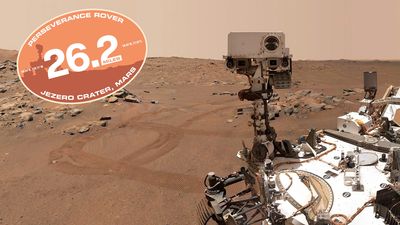
- Perseverance has officially traveled more than 26.2 miles (42.2 kilometers) on Mars, only the second robot to do so.
- NASA rover driver Mark Maimone told IFLScience, "We're likely to surpass Opportunity's [total distance traveled] record 3x faster than it did!”
- Perseverance's secret weapon is its sophisticated ability to drive autonomously at nearly its top speed.
For five years, NASA’s Perseverance rover has been studying the river delta inside Mars's Jezero Crater. Its goal is to better understand the Red Planet's past and to seek any signs of ancient life.
Last year, the rover found what is currently the most promising rock to suggest that there was once life on Mars, but we don't know that for sure yet – bringing the samples home to study is a whole other issue.
Today, however, we're focusing on something different: an epic achievement and milestone. The rover's journey over the last five years has led it not just to new and incredible findings; it's set a few travel records on another world.
This week, NASA's Jet Propulsion Laboratory, home of the Mars rovers, announced Percy has officially traveled 26.2 miles (42, 195 kilometers) on the Red Planet. It passed this milestone on June 14, 2026, while exploring some "intriguing terrain" west of Jezero Crater.
Opportunity drove for nearly 15 years, whereas we are not yet at five years of operations, so we're likely to surpass Opportunity's record 3x faster than it did!
Mark Maimone
There is only one land-based vehicle that has completed a marathon on another world, and that is NASA’s Opportunity Mars rover in 2015. However, it took 11 years to do so, and Perseverance took just five, which goes to show how sophisticated a rover it is.
Another record looms
Opportunity landed on Mars in 2004 and by the end of the mission in 2019, the rover had traveled a total distance of 45.16 kilometers (28.06 miles). Perseverance is going to easily reach that, and based on past movements, it could very likely happen this year – but it will depend on what the mission scientists spot next and where they want to send the rover.
“It's up to the science team to choose how the rover spends its time. If the goal were to drive several kilometers away quickly, we could accomplish that in a matter of weeks,” Mark Maimone, a long-time rover driver and mobility engineer at NASA's Jet Propulsion Laboratory, told IFLScience.
“But most likely we will be performing science assessments using the many sensors on the rover rather than just driving, so it will likely be a while before we match Opportunity's record," Maimone explained.
"I do want to note that Opportunity drove for nearly 15 years, whereas we are not yet at five years of operations, so we're likely to surpass Opportunity's record 3x faster than it did!”
Perseverance, which arrived on Mars in February 2021, is designed to be able to drive around 200 meters (650 feet) a day, but it is capable of much more than that.
Just one year into its mission, Perseverance drove 5 kilometers (3.1 miles) in 24 days during the “Perseverance Rapid Traverse Campaign". In 2025, it broke the record for the longest single-day drive when it covered 411.7 meters (1,350.7 feet) on June 19, or Sol 1540. The secret is in the rover's capability to drive itself.
The most sophisticated Mars rover yet
“Rovers have been actively exploring Mars during most of the past 29 years. But it's only recently with Perseverance's self-driving software and hardware that a rover has been able to drive autonomously at nearly its full mechanical top speed,” Maimone told IFLScience.
While NASA engineers plot a course for the rover each day and its scientific activities, once it starts driving, it's on its own and relies on its autonomous systems to navigate any unexpected obstacles along its path.
Previous rovers could do this to a certain extent, but were unable to do so as far in advance as Perseverance. They would often have to slow down to a crawl in order to navigate around rocks, sand pits, and ledges.
It's a great engineering achievement to have our latest Mars rover able to drive itself quickly enough that self-driving is now the primary way we accomplish long drives. In fact, over 90% of all driving on Perseverance is now being done autonomously.
Mark Maimone
“It's a great engineering achievement to have our latest Mars rover able to drive itself quickly enough that self-driving is now the primary way we accomplish long drives. In fact, over 90% of all driving on Perseverance is now being done autonomously.”
The human rover planners still need to find the best and safest route for the rover to reach the scientific destination of relevance, while the autonomous navigation performs dozens of checks multiple times per second to make sure the rover stays safe.
The team uses satellite images to plan longer drives and rover images for the shorter ones. As Mars is several light-minutes from Earth, it takes time for the instructions to arrive. This is why the autonomous software has been revolutionary. It can recognize hazards and keep the rover safe, which allows for more complex driving.
“Having successfully driven 411.7 meters on sol 1540 also helps guide our planning for the rest of the mission," Maimone told IFLScience.
"If we know we can accomplish long drives, that gives the Science team more options for exploration, both in distance traveled and also time spent at a given science site (since we can quickly maneuver to the next one)."
The Road Ahead Might Not Be Smooth, But It Will Be Covered
Last summer, JPL certified that the rotary actuators, which are the bits that turn the rover’s wheels, will perform optimally for at least another 60 kilometers (37 miles). The rover can happily drive 100 kilometers (61 miles) in total. Now they are testing the brakes. But even if some issues were to emerge, Maimone is certain that they will be overcome and the rover will continue to do amazing science.
“We've learned a lot from past missions, including how to operate the rover even after motors fail," Maimone told IFLScience.
"Spirit lost a drive motor and had to drag a wheel, but that dragging ended up uncovering white silica that led to one of the best science results of the mission. Opportunity eventually had to drive with its arm extended out in front of it when an arm motor failed. And Curiosity had to completely redevelop its drilling strategy when its drill's feed motor failed. Each mission continued long after something failed; we expect Perseverance to persevere as well. We look forward to operating as long as we can on Mars, driving, studying, collecting samples.”
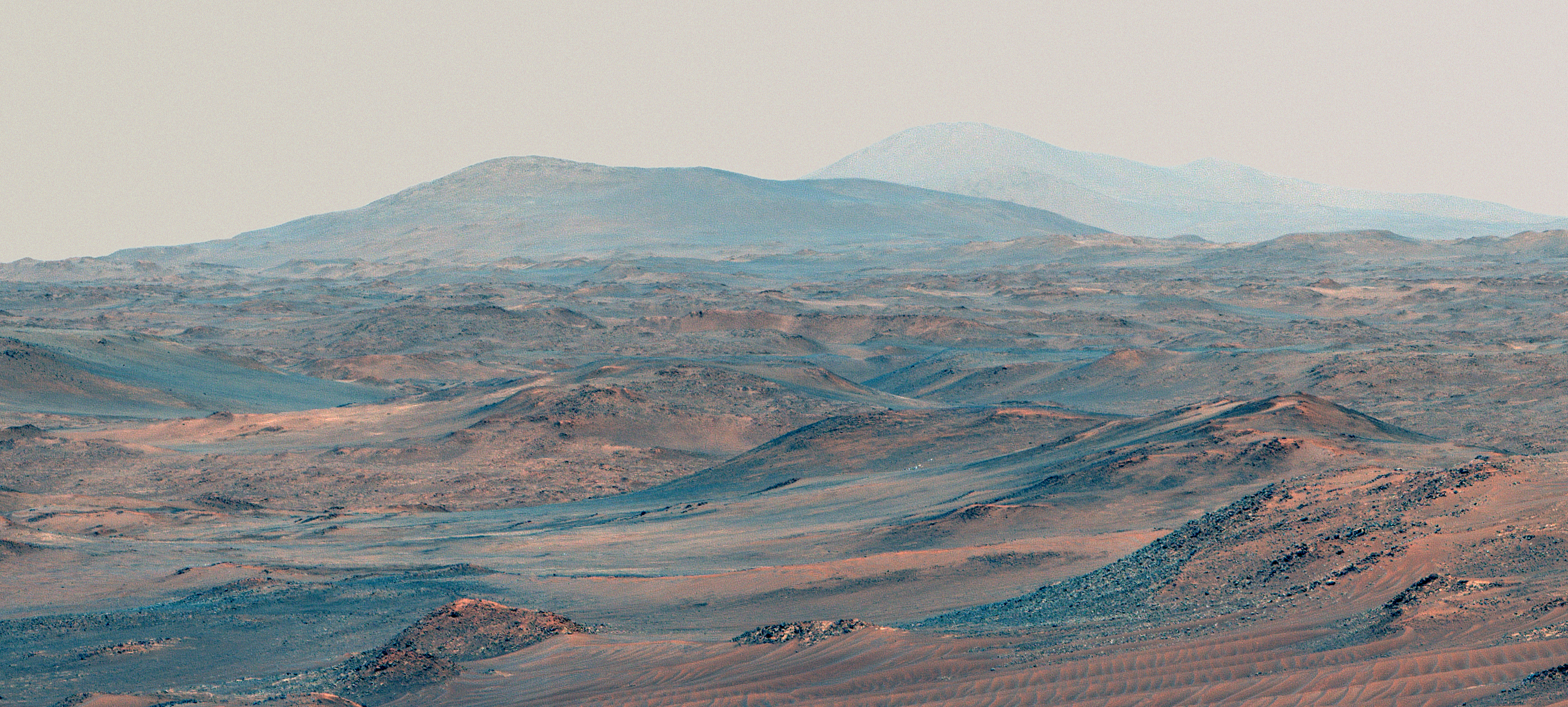
Having access to an actual Martian rover driver, we couldn’t help but ask about what operating a vehicle on another world is like.
“When I was a kid, I was amazed by pictures from the Viking missions, including a photo of the science team getting a first look at pictures from Mars. The prospect of being one of the first humans to see pictures from another world filled me with awe. Yet every time we drive to a new location, that's exactly what our rover planners get to do; driving on Mars is truly a dream come true,” Maimone revealed.