Nature
 PUBLISHED
 8
8


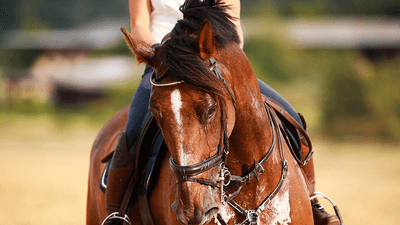


People are ever so slightly horrified and a little grossed out after learning the foamy truth about how horses sweat.
Every now and then on the Internet, people rediscover something weird about animals that breaks their expectations. For instance, in 2020, people (including myself) were pretty shocked to find out what koalas sound like, while others were surprised to find out that pufferfish do not inflate themselves with air, and starfish can sometimes crawl their way along a beach.
Every day is a learning day, and now is the time for people to learn how horses sweat. In a video shared on X and Reddit, a horse owner removed their horse's blanket and revealed the foamy sweat underneath.
As you can see in the video, when horses sweat, they can produce an odd-looking white foam. So what is going on? Are they producing their own horse shampoo? The answer to that is: kinda.
Sweating is found in many different mammals, but only in a few, like horses, humans, a number of other primates, and bovids, is it a mechanism for cooling down.
"While most quadrupeds sweat, they do so to maintain skin health and create scent (we do this, too), and even to create ear wax," author and academic Vybarr Cregan-Reid explains in a piece for The Conversation, adding that this gave humans a slight advantage when it came to hunting.
"For thermoregulation, most animals use interior air movement (panting) to cool down – where their bodies have to actively work to lose heat. So that means, on a hot day, we could chase down a quadruped, and when it stopped to shed some heat, we humans could keep going and close the gap a little. Eventually, the distance between predator and prey would close as their technology failed, and ours kept functioning. Sweat meant that we were much better hunters than we appeared."
Horses, zebras, and asses (grow up) sweat to cool down. If you're unsure how sweat cools us down, it is because of evaporative cooling, where your body's heat energy is used to heat the fluid and evaporate it into vapor, cooling your skin in the process.
Horses, you may have already noted, are pretty hairy. This would make cooling difficult, despite the copious/unholy amount of sweat they are known to produce, as their hairy pelt would prevent the sweat from reaching the surface of their hair, where it can evaporate and cool the horse.
"To solve this, horses appear to have evolved a surface-active, detergent-like protein that they release at unusually high concentrations in their sweat (human sweat is instead high in salt but low in protein)," a paper on the topic explains.
"This protein, latherin, presumably acts by wetting the hairs to facilitate water flow for evaporation, the side effect of which is the lathering that is often observed on the pelts of sweating horses, especially where rubbing occurs."
While we know that surfactants are important in helping horses to cool down, there is still more to be learned.
“The factors influencing the production of latherin in horses are unknown,” said Peter Huntington, director of nutrition at Kentucky Equine Research in Australia, explained to Equinews. “Popular opinions include lack of fitness and an excess of protein in the diet, but a definitive answer remains elusive. Horses, humans, and a species of monkeys are the only mammals known to sweat profusely to lose heat, though the compositions of their sweat varies significantly—humans have low-electrolyte, high-protein sweat, whereas horses have low-protein, high-electrolyte sweat.”
But be assured that if you see a horse covered in foam, it's helping them to cool down. They have not secretly mastered shampoo.