Nature
 PUBLISHED
 13
13



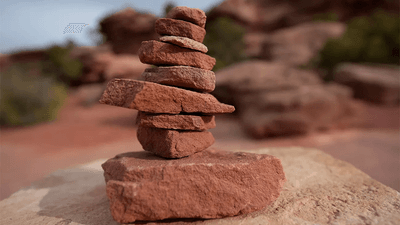


Over on Reddit people are once again asking what the harm is in stacking rocks, and why people go around knocking them down.
"Is rock stacking seriously harmful for the environment or is it just one big inside joke that I don't get?" Reddit user notorious-bacons wrote in the "no stupid questions" subreddit. "I've seen hundreds of videos on people knocking down rock stack and the people knocking them down act extremely angry, so angry that it just looks ridiculous. How could a tiny stack of rocks ruin local wildlife?"
So, why do people stack rocks in the first place, and is there any harm in the practice?
Sometimes known as "cairns" – the Scottish Gaelic word for "heap of stones" – the piles of rocks are historically used to guide hikers on confusing routes through mountains, showing people that they're on the right track. In some areas of the US, like at El Malpais National Monument, New Mexico, the cairns are actually built and maintained by the US National Park Service.
But people also make them for artistic purposes.
So what's the harm? In certain areas, moving a few rocks around can do a lot of damage. For example, last year the National Park Service appealed to visitors not to stack rocks after an endangered salamander was crushed to death.
"Recently, an eastern hellbender, the largest salamander in North America, was found crushed beneath rocks that had been moved and stacked by people in the park," the Great Smoky Mountains National Park Service explained in a Facebook post in September 2025.
"Building dams, channels, or rock stacks might seem harmless, but for the wildlife hiding below, it can be deadly. Beneath those stones are fragile ecosystems: nests, shelters, and homes. In late summer to early fall, hellbenders lay between 100 to 300 eggs beneath rocks. When rocks are disturbed or removed, entire generations can be lost in an instant."
It's in these environments that rock stacking induces the strongest reactions, as mentioned by the Reddit user above.
In other areas, the reasoning is less extreme, but the National Park Service still recommends not doing it. Cairns placed for decorative purposes can confuse hikers, who mistake them for way-markers and are led off piste.
They can also damage the environment in other ways.
"Moving rocks disturbs the soil and makes the area more prone to erosion," the National Park Service writes, explaining you should neither tamper with existing cairns, nor build new ones. "Disturbing rocks also disturbs fragile vegetation and micro ecosystems."
In general, you should simply leave nature as you found it, as best as you can. While moving a single rock may not do much damage, the National Park Service recorded over 323 million visits in 2025, including 13 million overnight stays. If every visit involved moving a stone or stacking rocks, it would cause countless damage to vegetation and ecosystems.
However despite this, if you should see a stack it is generally advised not to disturb it. As well as some parks using them to mark the way, some are left for historical reasons, having been first designed in their unique style by Waldron Bates in 1896. Destroying or disturbing them could count as vandalism.