


 Nature
 PUBLISHED


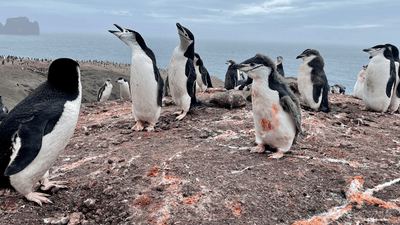


Iron is the all-important element that makes our blood red and keeps our immune systems in tip-top shape. Now, new research into iron within the Southern Ocean has revealed a dramatic drop due to a lack of penguin poop.
The Southern Ocean contains high-nutrient, low-chlorophyll areas where the growth of phytoplankton is controlled by the availability of iron. The areas also contain millions of iron-rich Antarctic krill (Euphausia superba) that feed on the phytoplankton and, in turn, provide meals for a whole host of species including baleen whales and seabirds. Research has been done on iron recycling between whales, krill, and phytoplankton, but the impact of penguin populations on iron recycling has not been explored until now.
Penguins represent the largest seabird biomass in the south pole and therefore contribute significantly to the iron recycling within the ocean. Chinstrap penguins (Pygoscelis antarcticus) in particular contribute because their diet is thought to be around 90 percent krill. Chinstrap penguins were found by the team to contribute around 521 tonnes of iron back into the Southern Ocean every year through their poop, also known as guano.
To arrive at this number, the team used a deep learning model to assess chinstrap penguin census data as well as characterize the nesting site where the majority of the penguins are gathered. They estimated the size of the penguin breeding colonies by using drone images that help them estimate the amount of guano present. These drone image-based estimations could then be compared with the census data to build the best picture.

Chinstrap penguin guano is particularly iron-rich, with around 3 milligrams of iron in every gram of guano. The iron-rich content of penguin poop in particular is important as it recycles close to half of the iron content the baleen whales produce. While you might think 521 tonnes of iron is a lot, this number actually represents less than half the amount these penguins would have been able to produce in the 1980s, as their population has declined more than 50 percent in the last 40 years.
To make matters worse, the iron in the water helps with carbon sequestration, meaning the impact of climate change will be felt even more deeply in these areas.
The paper is published in Nature Communications.



 1
1