Nature
 PUBLISHED
 2
2


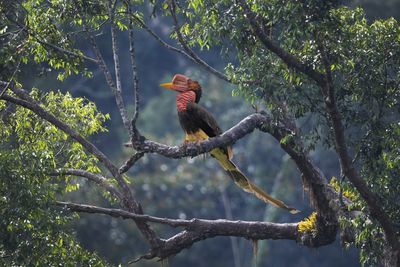


Many species are facing threats to their population sizes, from climate change and habitat loss to illegal poaching and the wildlife trade. While protections are put in place to help species, sometimes these fall short of the mark. A new study has looked at almost 10,000 bird species and come to the worrying conclusion that even if many of the threats were stopped, only half of the bird species would be protected from extinction.
“Many birds are already so threatened that reducing human impacts alone won't save them. These species need special recovery programmes, like breeding projects and habitat restoration, to survive,” said Kerry Stewart, lead author of the research from the University of Reading, in a statement.
While policies and programs are designed to help protect many species from threats at a large scale, it is still not clear how many of these are protecting species at imminent risk of extinction. Some areas have a high level of what is known as functional diversity, the mixture of traits that make up an ecological niche, caused by a few very unique species that live in the area.
Using the IUCN Red List, the team projected expected bird extinctions for the next 100 years. They found that in baseline extinction scenarios, where human activities and threats from the natural world continue to impact bird species, around 5.2 percent of the 9,873 bird species they looked at would go extinct in the next 100 years. This is more than three times the number of bird extinctions that have occurred since 1500.
"We face a bird extinction crisis unprecedented in modern times. We need immediate action to reduce human threats across habitats and targeted rescue programmes for the most unique and endangered species,” continued Stewart.

The team think that a combination of targeted species programs, such as those that involve captive breeding, as well as broad-scale protections, are needed. However, they suggest that by conserving the top 100 most unique threatened species, it might be possible to prevent more than two-thirds of the suggested functional diversity loss and, in turn, help prevent extinctions.
The researchers studied six threats in total, but think that actions that target the main threat of habitat loss and degradation will prevent the greatest number of species extinctions.
“Stopping threats is not enough, as many as 250-350 species will require complementary conservation measures, such as breeding programmes and habitat restoration, if they are to survive the next century. Prioritising conservation programmes for just 100 of the most unusual threatened birds could save 68 percent of the variety in bird shapes and sizes. This approach could help to keep ecosystems healthy,” said Professor Manuela Gonzalez-Suarez, study senior author.
The paper is published in Nature Ecology and Evolution.