Nature
 PUBLISHED
 1
1




What you'll discover in this article
- A few months ago, beleaguered marmot researchers set up a G-rated OnlyFans to combat funding cuts by the Trump administration.
- When media coverage of OnlyMarms grew, the team started receiving emails that looked like phishing scams but turned out to be a large donation in crypto meme coins.
- "We get the transaction fees, and that's hard cash, straight in for the research,” Julien Martin, OnlyMarms co-lead, told IFLScience.
How do you save a decades-long research project faced with savage funding cuts from a hostile government? In the 21st century, you turn to OnlyFans and crypto meme coins, obviously.
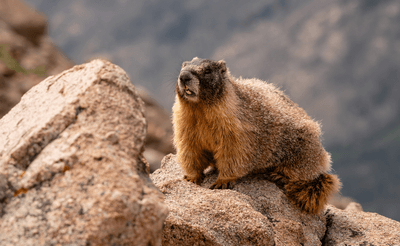
The Rocky Mountain Biological Laboratory Marmot Project tracks the lives of wild yellow-bellied marmots in Colorado, monitoring everything from their reproduction and population dynamics to their behavior, evolution, and physiology.
It has embarked on this mission since 1962, making it one of the longest-running studies of a mammal anywhere in the world, second only to Jane Goodall's research into the Gombe chimpanzees, which started in 1960.
This year, however, was almost its last.
The project, currently led by Daniel Blumstein of UCLA and Julien Martin of the University of Ottawa, was struck down by the heavily politicized funding cuts by the Trump Administration, forcing them to reconsider the project’s future.
The origin of OnlyMarms
Faced with despair, the team took an unorthodox approach: OnlyFans.
“The OnlyFans idea came from a few things: too much time on our own to think, too much TV, and desperation,” Martin told IFLScience.
Just before this year’s season started, Blumstein had binge-watched Margo's Got Money Troubles, an Apple TV comedy-drama about a woman who makes an OnlyFans account to make ends meet.
In a quiet moment of reflection, the idea came to Blumstein like a Eureka moment for the postmodern age.
“He was on his own, watching snow for a few hours after watching too much TV, and thinking about how we could get money. And he suddenly said, ‘oh, maybe we can do an OnlyFans, but just with Marmot.’ In the evening, he pitched that to the students, and they loved it,” explained Martin.
It should be stressed that the delightfully named OnlyMarms account is strictly G-rated and wholly non-pornographic; nothing seedy, just wholesome marmosets living their best lives.
This is actually in tune with the original ethos of OnlyFans, set up in 2016 as a generic subscription-based social network designed to connect influencers, artists, fitness fanatics, and content creators. Sex and feet pics crept in later, but that was never the founding idea.
Over the past few months, OnlyMarms has managed to raise around $6,000 or so, Martin told IFLScience, around 20 percent of which is taken by the platform. It was a brilliant idea, but sadly not enough to keep the project alive.
In came the crypto
Then, the inbox of Martin and Blumstein became slowly flooded by a stream of mysterious emails.
“They were flagging every red flag you could have about spam or phishing. I thought, ‘They're just going to drain my account if I just click.' I think we got at least 20 emails,” he explained.
Eventually, curiosity prevailed and Martin read one of the more professional-sounding messages. It turned out that an anonymous group of crypto traders on the Solana blockchain created a cryptocurrency token called $OnlyMarms on the platform Pump.fun.
The creators had reached out to the lab to offer them the “creator fees” of the meme coin, which are charged each time a transaction is made.
These fees have now been added up to at least $120,000, secured in a stable currency, directly in the control of the researchers.
“Everything we get is not affected by the volatility of the market. We get the transaction fees, and that's hard cash, straight in for the research,” Martin noted.
“I think we've been lucky to get that much money. To be honest, in terms of crypto money, $120,000 in creator fees is a coin that has done okay, but it's peanuts. There are coins that are valued at over $200 million and that have generated millions in creator fees,” he added.
Direct funding, no government required
All of this money from the creator fees goes directly to the researchers, staff, and students, with none going to the token's creators and original investors (some of whom have presumably made their money and moved on to the next meme coin).
The money will have to be carefully managed, but as it stands, it should secure the project for at least another year of research.
“We usually say that we need roughly $100,000 a year to run the project, so it's significant,” Martin noted.
“We're going to spread that as thin as possible. Technically, it gives us a year, but we've been managing that project on a stupidly small budget for years,” he added, suggesting they could stretch the funding even further with the right decisions.
“It's definitely going to have an impact, it's definitely going to add more than one year, and it definitely gives us more time to get better grants or to get more money from other strategies,” Martin said with an assured smile.
It's an unconventional route to get funding, but it worked this time around. Martin doubts every research project facing budget cuts can simply mint its own moderately successful meme coin and call it a day.
Nevertheless, the whole episode offers a fascinating example of how science could be funded in a hyper-technological age, without the need for meddling politicians and centralized control.
And if you can't get enough of marmots, taking a leaf out of the Fat Bears of Katmai Park, the first-ever Fat Marmot Week starts Monday, August 24, 2026. Unlike bears, marmots are true hibernators and bulk up all summer to survive winter. You can vote for the fattest marmot while learning all about them right here.