Nature
 PUBLISHED


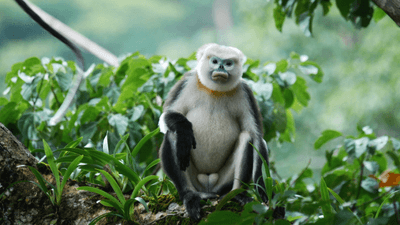


Primate fans, assemble. Positive conservation news has arrived for one of the world’s most endangered primates. If you didn’t already know the Tonkin snub-nosed monkey, get ready to see them in all their pouty, technicolor, eye-mask-wearing glory.
The critically endangered Tonkin snub-nosed monkey (Rhinopithecus avunculus) was once thought to be facing extinction. Now, following a new population census, conservation experts with Fauna & Flora have been able to confirm that their numbers are stable.
Most exciting of all, a number of baby monkeys were seen during the survey. The tiniest members of a critical population that lives in the Khau Ca Species and Habitat Conservation Area in Vietnam.
When Fauna & Flora's Vietnam team first discovered a population of just 50 individuals back in 2002, it was feared that Tonkin snub-nosed monkeys were on the brink of extinction. Those that remain straddle fragmented forest habitats between the karst limestone peaks of northern Vietnam: Quan Ba Forest and Khau Ca Species and Habitat Conservation Area, both of which sit within the larger Dong Van Karst Plateau Geopark.
Now, a fresh survey has estimated that their numbers in Khau Ca are up to 160 individuals, with the last total population estimate being around 250 individuals. It’s still worryingly small from a long-term conservation perspective, but it’s a promising sign that they remain stable.
“These numbers still aren’t big, but it is reassuring that we have been able to identify various family groups in Khau Ca and that there is no evidence of trapping or hunting,” said Canh Xuan Chu, Tonkin snub-nosed monkey project manager at Fauna & Flora, in a release sent to IFLScience.
“While poaching was once a key threat to the species, our biggest challenges today are habitat loss and deforestation, largely due to agricultural expansion. We are working with our government partners to increase protection of these conservation areas, while restoring wildlife corridors in which the Tonkin snub-nosed monkey can thrive.”
The survey was conducted across 10 days outside of breeding season, but still the teams – joined by local community groups – sighted three infants across two groups. It spells hope for the future and that the species is steadily rebounding.
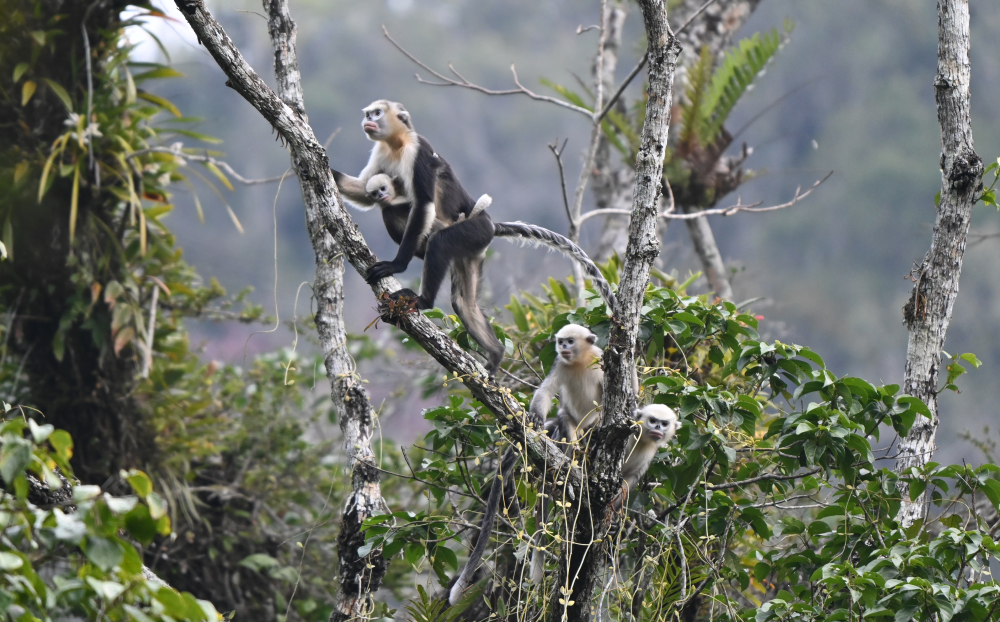
The observations were obtained through a combination of traditional and technological techniques, including thermal imaging drones, camera traps, audiomoths (that can detect their calls), and good old binoculars. They also trialed a new approach that involves creating a grid map for the survey area and allocating groups to individual cells, ensuring none of the data points were duplicates.
Going forward, it’s hoped that restoring degraded habitats and creating wildlife corridors can contribute towards population growth and cement a healthy future for these remarkable primates. A mission many people in Vietnam are ready to get behind.
"Since the project began, I have observed a significant increase in awareness among local communities regarding the conservation of the Tonkin snub-nosed monkey,” added Tran Van On, a Community Conservation Team member.
“People are now not only more conscious about protecting this endemic species of Vietnam, but also more aware of the importance of safeguarding forest habitats and other wildlife species. The project has also introduced a range of livelihood activities that provide additional income for local households, helping to reduce their dependence on forest resources."
Like many species of snub-nosed monkeys, Tonkin snub-nosed monkeys have very large lips. It’s thought they are used for social signalling, as some males’ lips get redder during mating season.
How very fabulous.