Space and Physics
 PUBLISHED
 5
5


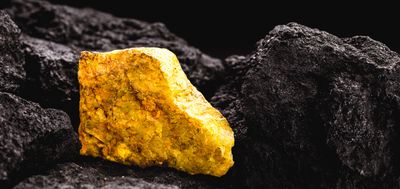


In 1972, physicists discovered something weird about a chunk of uranium ore. Unlike any other chunk of uranium, this piece of ore had an abnormal isotopic composition making it completely unique. After much consideration, researchers could only reach one conclusion: this rock had undergone fission on its own at some point in the distant past. That is, it was its own tiny nuclear reactor.
Uranium is an extremely important resource in today’s world as it is the key to many nuclear reactors. It is a heavy metal (one of the heaviest in fact) that occurs naturally across much of the world and is as common in the Earth’s crust as tin, tungsten, and molybdenum. Like other elements, uranium has several isotopic forms which differ based on the number of neutrons they have in their nucleus.
Natural uranium, which you get from the ground, has two isotopes – uranium-238 (U-238) and uranium-235 (U-235). This latter isotope is what makes uranium so important for nuclear power – it’s a fissile material, which means it can sustain a nuclear chain reaction and produce astounding amounts of power. However, U-235 only makes up a tiny portion of natural uranium. In fact, it only makes up 0.720 percent (the rest is U-238, which is not fissile).
This amount of uranium is pretty standard. If you collect a sample of uranium from anywhere on the Earth’s crust, or the moon, or even the bits floating in seawater, and compare them, they will all contain 0.720 percent of U-235. That is, except the ore found in 1972. This piece was different.
The ore in question came from a uranium deposit in Oklo, Gabon, and was found to contain a lower proportion of U-235 (only 0.717 percent). This was an incredibly baffling discovery, as you can probably imagine, as it deviated from everything scientists expected to find.
At first, researchers wondered whether the ore had undergone artificial fission – e.g. in some sort of nuclear reactor. When fission occurs, uranium nuclei are bombarded with neutrons, which cause them to break into two or more smaller nuclei. This is where we get the term “splitting the atom”. When this occurs, large amounts of energy are released in the form of heat. The process also releases more neutrons that can, if conditions are correct, collide with other uranium nuclei, causing more fission reactions – this is a nuclear chain reaction.
This process would result in the uranium having a lower U-235 content due to the reaction. But when physicists examined the Oklo ore, they found it was completely natural. However, they also found evidence of fission products in the ore as well. So, it was both natural and had undergone fission. The plot thickened.
What could account for this bizarre result? After further assessment, the scientists agreed that the Oklo ore was a unique example of uranium that had undergone fission in the wild over 2 billion years ago. The conditions to achieve this unlikely event would have had to have been particularly propitious.
For one thing, the deposit in Gabon would have had to have the critical mass needed to initiate the reaction. The deposit fitted this requirement. It contained enough U-235 in thick, large amounts.
Secondly, there would have had to be something to moderate the neutron activity during the reaction. This is a fundamental part of how nuclear reactors work. When neutrons are released, they fly about too quickly to sustain a nuclear reaction. As such, reactors use a moderator – mostly water, sometimes a gas or bricks of graphite in older reactors – to slow neutrons down, increasing the chance that the uranium will absorb the neutrons.
Ancient Oklo, it seems, had sufficient amounts of water capable of moderating the errant neutrons for this wild reaction.
Of course, it is impossible for researchers to conclude that this was the only time this natural reaction has ever taken place on Earth. However, it is the only time it has been recorded by humans.