Nature
 PUBLISHED
 1
1




Batten down the hatches – El Niño is looming. NOAA’s National Weather Service has put out a fresh warning that El Niño is likely to return by July 2026 and, by most accounts, it could be a nasty one.
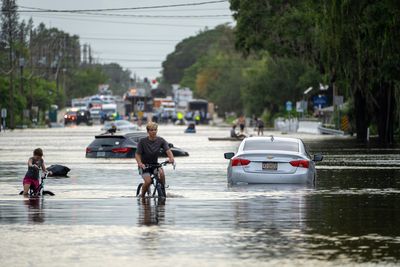
NOAA says they’re especially concerned by the threat of flooding in the US. Their research has shown a significant uptick in high tide flooding along the US coastline in recent years, primarily because of rising sea levels and other wider trends. With El Niño conditions set to stir up weather patterns further, they believe the combination could deliver a "double whammy."
“The first punch is decades of sea level rise, which has waters close to the brim in many coastal communities. And now with this second punch – a strong El Niño – coastal communities face more frequent, deeper, and widespread high tide flooding along both the West and East Coasts,” William Sweet, NOAA oceanographer and high tide flooding expert, said in a statement.
Dr Sweet explained that previous years with especially strong El Niños, such as 2015-2016 and 2023-2024, witnessed a huge surge of more frequent flooding. Another strong El Niño is being forecast for this year, so 2026 looks set to follow suit.
What is El Niño?
The El Niño-Southern Oscillation (ENSO) is a naturally occurring climate cycle driven by fluctuations in ocean temperatures and atmospheric pressure across the central and eastern tropical Pacific Ocean. These conditions here have a knock-on effect on the weather across the globe, influencing everything from rainfall to droughts, tropical cyclones, heatwaves, and more.
The cycle shifts between three phases: El Niño (the warm phase), La Niña (the cool phase), and a neutral state.
The world witnessed a weak La Niña event in 2025, which lingered into early 2026 before transitioning to ENSO-neutral conditions. With sea surface temperatures now rising in the Pacific around the equator, scientists say there’s an 82 percent chance that El Niño will emerge sometime between May and July 2026.
How will El Niño affect weather in the US?
El Niño’s impact on weather is complex. While some parts of the world will witness drier conditions and even droughts, others will have heavier rainfall and wetter conditions.
In general, it’s the latter of those for the US. Warmer-than-usual sea surface temperatures in the Pacific pump more moisture into the atmosphere, fuelling heavier rainfall and more intense storm systems. Simultaneously, the warmer waters cause the Pacific jet stream to move south of its neutral position, adding to the downpours.
Along the US West Coast, this typically means a wetter, stormier winter, with swollen rivers and saturated ground that can quickly overwhelm drainage systems. On the East Coast, the effect is subtler but still significant.
Elsewhere in the world, the impacts can be very different. In Australia, for instance, El Niño typically brings hotter, drier conditions, raising the risk of droughts, bushfires, and heatwaves.
Will El Niño impact hurricane season?
The good news is that El Niño tends to dampen hurricanes in the Atlantic. As such, NOAA says the 2026 Atlantic Hurricane Season has a 55 percent chance of being below-average in activity levels. This could entail just 1 to 3 major hurricanes – though that's no reason for complacency.
“Although El Niño’s impact in the Atlantic Basin can often suppress hurricane development, there is still uncertainty in how each season will unfold,” Ken Graham, NOAA’s National Weather Service Director, said in another statement.
“That is why it’s essential to review your hurricane preparedness plan now. It only takes one storm to make for a very bad season.”