


 Nature
 PUBLISHED


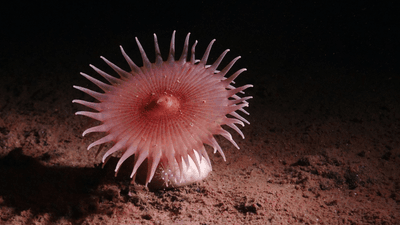


The first comprehensive review of the potential environmental impacts of deep-sea mining has reported its findings from 50 years of experimental studies. The findings highlight the importance of viewing ocean ecosystems individually when assessing the environmental impact of deep-sea mining.
Terrestrial mining damages the environment through the destruction of habitats, release of emissions, and pollution of waterways. As we seek the metals needed for the green "battery revolution", some are looking to the seas as a less damaging alternative. But figuring out just how damaging deep-sea mining might be is a complex task in itself.
For vents and seamounts, the authors of a new review state that the results are clear. Deep-sea mining at these habitats, known to be home to diverse ecosystems, represents a significant risk of species extinction. The same may not be true of mining manganese nodules, though further research is needed before we can make firm conclusions.
"In the case of any mining at active deep-sea hydrothermal vents, no further research is necessary," said co-author of the study, Professor Jon Copley at the University of Southampton, in a statement sent to IFLScience. "We know enough to see that there is a risk of species extinctions from such activity in those rare habitats. But mining manganese nodules is a different prospect, where further research is still needed to understand those potential risks."
“These systems could not be more different,” added Prof. Adrian Glover, Merit Researcher at the Natural History Museum, London, who led the study. “Active vents and seamounts host extraordinary ecosystems rich in unique species, and it is clear that major disturbance at these sites would not be scientifically compatible with policy on biodiversity that almost all nations have already agreed to.”
Hydrothermal vents are a site of interest for mining because they can contain copper deposits, a valuable resource for building batteries, but one we can’t access at vents without risking serious disruption.
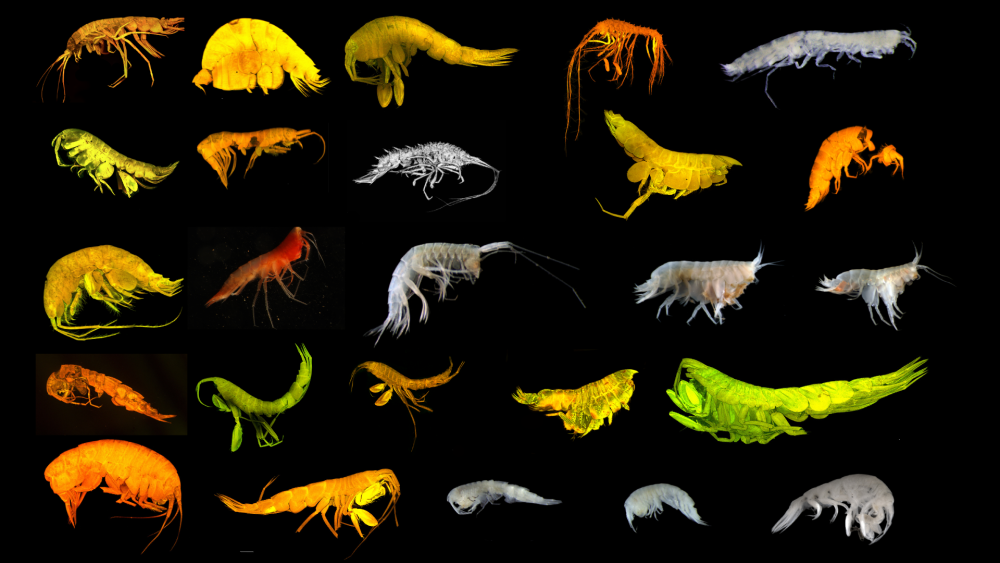
It may be a different story for cobalt and nickel, both of which can be found in nodules peppered across abyssal plains in the Clarion Clipperton Zone (CCZ) – a 6 million-square-kilometer (2.32 million-square-mile) area of deep ocean between Hawai'i and the west coast of Mexico. It’s rich in the metallic nodules, sometimes called “deep sea potatoes”, but is also estimated to be home to 6,000 to 8,000 species, of which only 436 are named.
Understanding what we stand to lose is a critical part of establishing whether deep-sea mining is scientifically viable in the CCZ, but Glover states there may be steps we can take to diminish the risk. An option we don’t have at vents or seamounts.
“For nodule mining, some simple scientific steps would help to resolve the risk of biodiversity loss, which is still mostly unknown. For example, supported by our scientific community, the regulator has already set up a protected area system that covers 30 percent of the main targeted region.”
The study marks the first comprehensive review of the scientific literature available on deep-sea mining – something humans have been weighing the pros and cons of since the 1970s. Fifty years on, questions still remain as to the feasibility of accessing the oceans' mineral resources without causing serious damage.
Over the course of two years, Copley, Glover, and colleagues looked at more than 200 published and unpublished reports on mining tests and baseline biodiversity in the target regions. It seems no further research is needed to assess the potential harms to vents and seamounts, but the work continues to assess if we could ever safely harvest those deep-sea potatoes.
“A simple path forward would be to recognise that mining some undisturbed unique deep-sea ecosystems such as active vents and seamounts is not scientifically compatible with existing policy,” concluded Glover. “In other areas, such as polymetallic nodule regions, scientific data can support the creation and refinement of protected areas, helping policymakers determine whether mining could be considered sustainable.”
The study is published in the journal Current Biology.



 1
1