Nature
 PUBLISHED


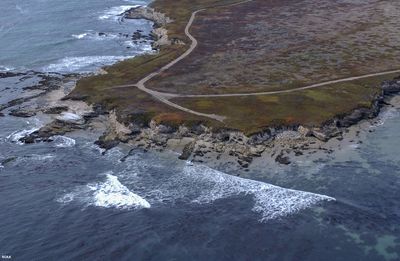


Around 11,766 square kilometers (4,543 square miles) of ocean off the coast of Central California has now officially become the United States’ latest national marine sanctuary. Not only is the new protected area the third biggest of its kind in the country, but it’s also the first that will be led in partnership with Indigenous Peoples.
The sanctuary, which was first proposed to be nominated as such by the Northern Chumash Tribal Council back 2015, has been named the Chumash Heritage National Marine Sanctuary. It is the first marine protected area in 30 years that will be specifically managed for biodiversity conservation.
That’s because the area is home to a rich array of marine life and environmental features, which, according to the National Oceanic and Atmospheric Administration (NOAA), have come under threat from human activities and climate change.
“This sanctuary conserves the area’s rich biodiversity and creates new opportunities for research, and responsible recreation and tourism, ensuring this incredible ecosystem is protected for future generations to experience and enjoy,” said John Armor, director of NOAA’s Office of National Marine Sanctuaries, in a statement.
Conservation efforts in the sanctuary will include protections from industry activities like new offshore gas and oil exploration, as well as the prohibition of waste discharge, and regulations to ensure that species native to the area are not disturbed and non-native species are not introduced.
A critical element in the development of these regulations and the sanctuary’s management plan was the involvement and knowledge of the Chumash Peoples, who have lived along and conserved the California coastline for thousands of years.
“We’re still here, and so are the Indigenous people wherever you live,” Violet Sage Walker, chairwoman of the Northern Chumash Tribal Council, told NPR. “Being able to address climate change, use traditional ecological knowledge, and participate in co-management is Indigenous peoples’ contribution to saving the planet.”
However, the process of designating the area has not been without criticism. Some have said there was not enough consultation with Indigenous communities, while others have criticized the fact that the final boundaries of the sanctuary were made smaller than was initially proposed in order to account for offshore wind development. NOAA has said expansions of the sanctuary’s boundaries will be considered in the future.
“Compromises were made, but I think that's the way we also move forward with addressing climate change,” Walker told NPR. “Dealing with renewable green energy is not always easy.”
While the sanctuary is now officially designated as such, the process doesn’t end there – the next step will be to create a sanctuary advisory council, which will include representatives from Indigenous communities.
“The Chumash Tribal government never relinquished its aboriginal right to manage our traditional homelands,” Kenneth Kahn, chairman of the Santa Ynez Band of Chumash Indians, said. “We are grateful that NOAA recognizes this inherent sovereignty and welcomed us as a co-stewards of the sanctuary that bears our name. This is a time for celebration.”