Nature
 PUBLISHED


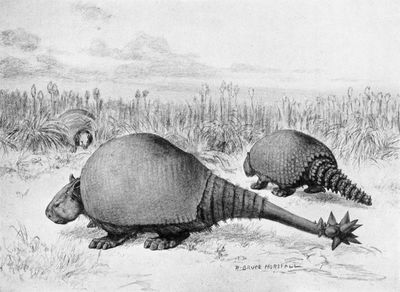


Once upon a time, giant ground sloths and ancient armadillos roamed the Earth. The Americas saw the rise of Glyptotherium, large four-legged creatures that looked like armadillos with an armored shell that lumbered about in the Pleistocene eating vegetation.
Now, a new species has been described from a specimen from Brazil, which was originally discovered in the early 1800s and has been called quite a lot of different names since then.
A skull called NHMD 2045557 was collected by a Danish naturalist called Peter Wilhelm Lund from caves in Lagoa Santa in Brazil, who named it Hoplophorus euphractus. Later, in 1875, another scientist, Johannes Reinhardt, reclassified it as Schistopleurum euphractum.
However, fresh research on the glyptodonts has led a new team to delve deeper into the historical literature and analysis of these specimens. By comparing a wide range of skulls and other specimens, the team have determined that the Brazilian skull is distinct from other known species.
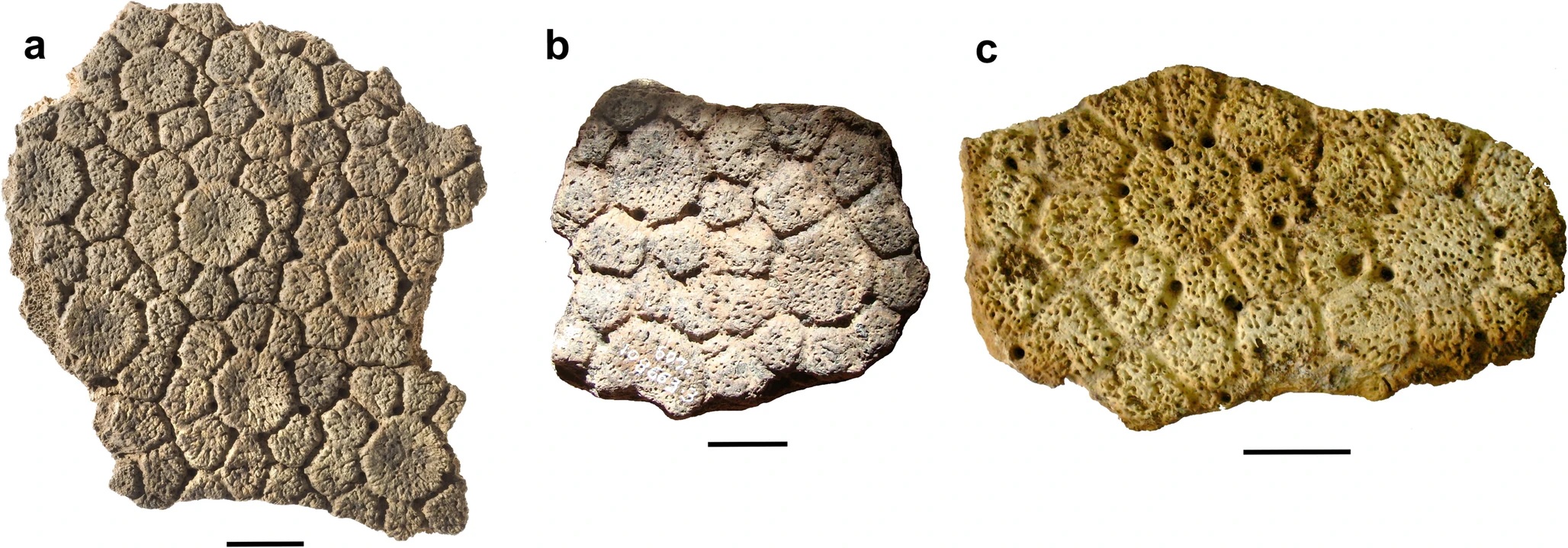
“The history of the genus Glyptotherium began with the description of Mexican fossils named 'Glyptodon mexicanus' by Cuatáparo and Ramírez (1875),” explain the authors. More fossils were found in Texas in 1903, while through the 20th century many studies used Argentine specimens as comparisons, but did not look again at the Lagoa Santa species that Reinhardt described.
The authors say this is one reason why the species they've attributed to the Brazilian skull, which they’ve called Glyptotherium deuterophractum, went unrecognized.
The range of this species is said to have extended out from most of Brazil into northern South America.
“The skull of Glyptotherium deuterophractum has features that distinguish it from other Glyptotherium species in Central and North America, but not from Venezuelan specimens previously classified as G. cf. cylindricum. These specimens are now classified as G. deuterophractum,” explain the authors.
Car-madillo
Interestingly, glyptodonts survived to live alongside humans until around 20,000 years ago. A species known as Neosclerocalyptus was thought to have been hunted and, at around 2 meters (6.5 feet) in length, would have made for a pretty substantial meal for those fortunate enough to kill and butcher one.
However, other members of the family could reach the size and mass of a Volkswagen Beetle. This is the the Doedicurus, the largest member of the glyptodonts that weighed around 1.36 tonnes.
It was one of the last to become extinct, right at the end of the last Ice Age 12,000 years ago. In fact humans might have tipped them over the edge, by using their giant shells as shelters from bad weather.
A farmer in Argentina even stumbled upon four glyptodont shells once while moving cattle.
“These kind of cases, in which several individuals together who died in the same circumstances, are really exceptional and undoubtedly will give us a lot of information about these enigmatic animals and will allow us to test several hypotheses that we have been driving in recent years,” said palaeontologist on-site Ricardo Bonini, in a statement at the time.
The study is published in the Journal of Mammalian Evolution.

 1
1