Humans
 PUBLISHED
 3
3


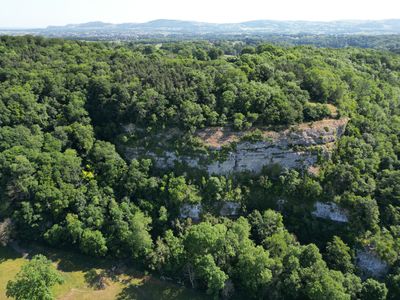


Just outside St Asaph in North Wales, there’s a complex of caves that have mystified visitors for centuries. The caves, known as the Cefn caves and the Pontnewydd cave, have been not only been a site of scientific curiosity, but played an important role in some of the most fundamental debates of the 19th century. Together, they attracted generations of naturalists and archaeologists hoping to stumble on ancient bones and the remains of the earliest humans in Wales.
Cefn caves
The site consists of a group of four interconnected caves in the limestone cliffs of the Elwy valley, in Denbighshire, North Wales. Today, the cave network is recognized as a Scheduled Ancient Monument – a nationally important archaeological site with legal protections – but for millennia, it was home to both now-extinct megafauna and ancient humans dating back to the warmer part of the Palaeolithic period (around 40,000 to 10,000 years ago).
The caves were first excavated in the early 1830s by the Reverend Edward Stanley (later the Bishop of Norwich), who noted seeing bones in the mud in the surrounding landscape. He was particularly interested in specimens owned by locals, reporting that one landowner even had the tooth of a rhinoceros in his possession (which is now in collections of Amgueddfa Cymru-Museum Wales).
At this time, the idea that species may change over time in some way – what was referred to as the transmutation of species by some of Stanley’s contemporaries – was only just beginning to gain serious consideration. It would be a few decades before Charles Darwin published his On the Origin of Species, offering a coherent explanation for this idea, but in the 1830s, it was it was a more controversial topic.
For many people, the Earth was only several thousand years old, as the Bible explained, so for him, the fossils and bones he recovered from the Cefn caves were evidence of creatures that he believed existed before the Biblical flood, what were referred to as “antediluvian creatures”.
However, mounting geological and fossil evidence was starting to challenge this belief. Rather than being measured in thousands of years, evidence was starting to suggest that the Earth's existence should be measured in millions or even billions of years.
It is interesting to note that, a year before Stanley excavated the first cave, the site was visited by a 22-year-old Charles Darwin who was attending a geological tour of North Wales. He was in the company of Professor Adam Sedgwick of Cambridge University, one of the most famous geologists of the time.
It would be tempting to imagine that the budding naturalist experienced something of the awe of deep time as he considered the fossils and the rock formations of those ancient caves. Regardless, the fossils found at the Cefn caves by Stanley and subsequent excavations made them a central point one of the most significant scientific debates of the century.
During his excavation, Stanley found bones belonging to several extinct species, including straight-tusked elephants, rhinoceroses, and hippopotamuses that died during the last Ice Age. Later excavations produced signs of ancient marine shells as well as the bones of ancient hyenas, bears, and wolves.
As time went on, debates shifted from ideas associated with evolution to debates on how the bones got into the cave, how they fitted in with the recently conceptualized “Ice Age”, and how human history fitted in around this. That’s when things took a turn for the weird.
On October 20, 1870, The Times published an article claiming that a strange amphibious creature lurked in the depths of the Cefn caves. The article roused naturalists to investigate this oddity, believed to be a survivor of a lost age. A little later, on the November 4, 1870, The Flintshire Observer added to the hype by describing the thing as a living lizard that was 1.4 meters (4 feet 7 inches) in length and similar to “a crocodile”. The article claimed the beast had been killed by a heroic visitor from nearby Rhyl.
It turns out there never was an amphibious beast at Cefn (I’m sure you’d guessed that). Instead, the creature – an actual crocodile – had been part of a traveling menagerie that visited Rhyl where it died. Upon learning about it, the so-called valiant slayer actually bought the body and took it to the caves and made money from his claims.
Pontnewydd cave
The Pontnewydd cave, which is not far from the Cefn site, boasts an even more exciting history (for archaeologists, that is). While Cefn played a valuable role in the main geological and naturalist debates of the 19th century, Pontnewydd cave offered tantalizing glimpses into the history of the earliest human inhabitants in Wales. Here archaeologists discovered the remains of an early form of Neanderthals – teeth and jaw fragments – dating to around 230,000 years ago.
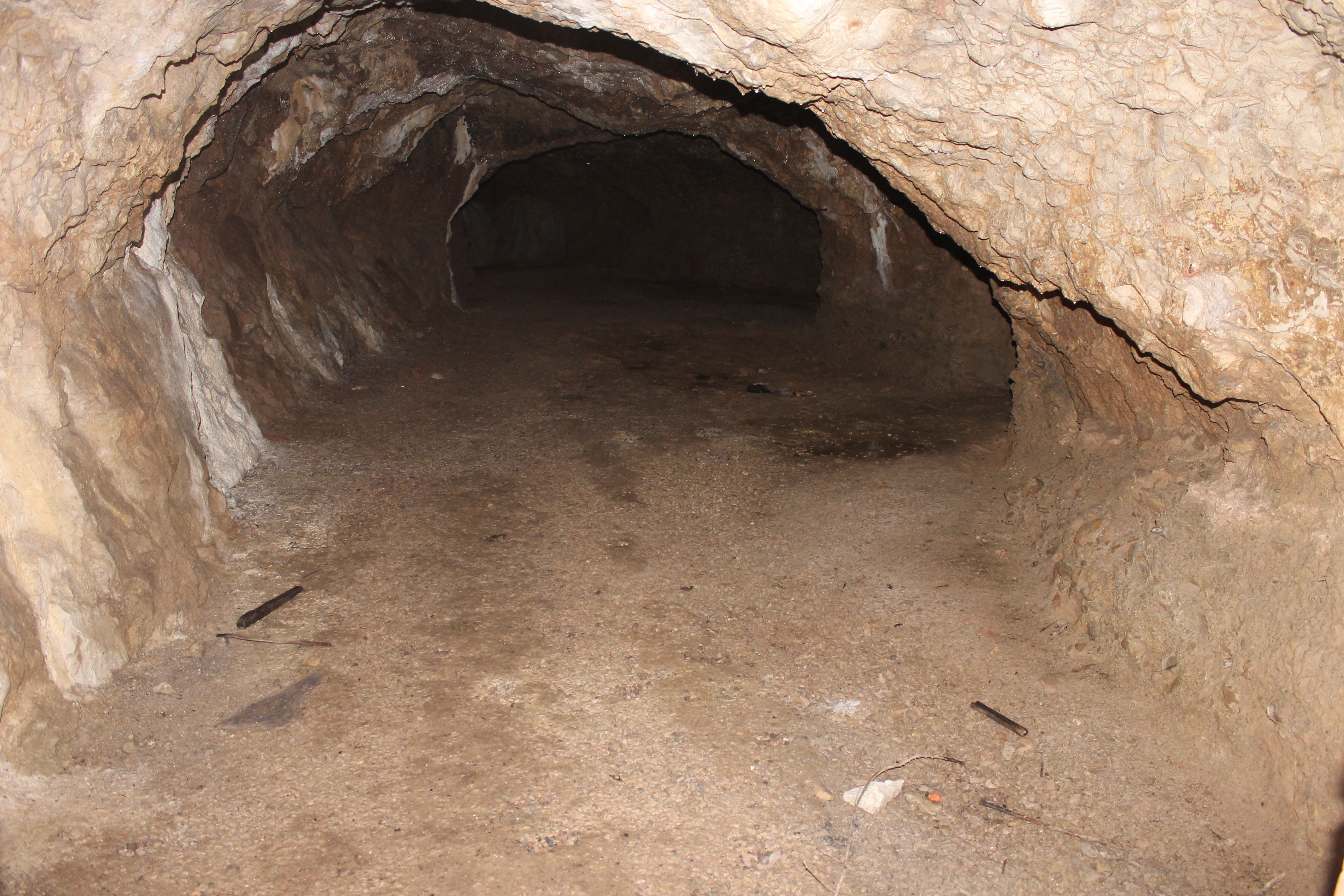
These remans were excavated by the National Museum of Wales between 1978 and 1995. According to analysis conducted by the Natural History Museum, London, the teeth recovered from Pontnewydd likely belonged to five individuals, children and adults.
The jawbone fragment found at the site is believed to have belonged to a child who may have been around 9 years old at the time of their death. The jaw includes a heavily worn milk tooth alone side a newly developed adult molar.
Archaeologists also recovered stone tools and animal bones from this site, the latter of which exhibit signs of butchery. This suggests they were specifically the remains of food for the early Neanderthals.