Nature
 PUBLISHED
 15
15


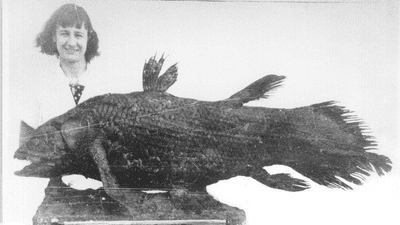


In the 1930s, a museum curator working for the East London Museum in South Africa started asking fishing boats to let her know if anything unusual turned up in their catch. It was a simple request, one she could never have predicted would lead to one of the greatest scientific discoveries of the century.
On December 22, 1938, she got a call from the captain of the Nerine to say they’d spotted something unusual amidst their by-catch. So, Courtenay-Latimer put aside the fossil reptile display she was working on, hopped in a taxi, and unknowingly set off to retrieve a fish unlike any that had ever been in a museum.
"I picked away at the layer of slime to reveal the most beautiful fish I had ever seen," she told Anthony Smith for The Guardian. "It was a pale mauvy blue, with faint flecks of whitish spots; it had an iridescent silver-blue-green sheen all over. It was covered in hard scales, and it had four limb-like fins and a strange puppy-dog tail."
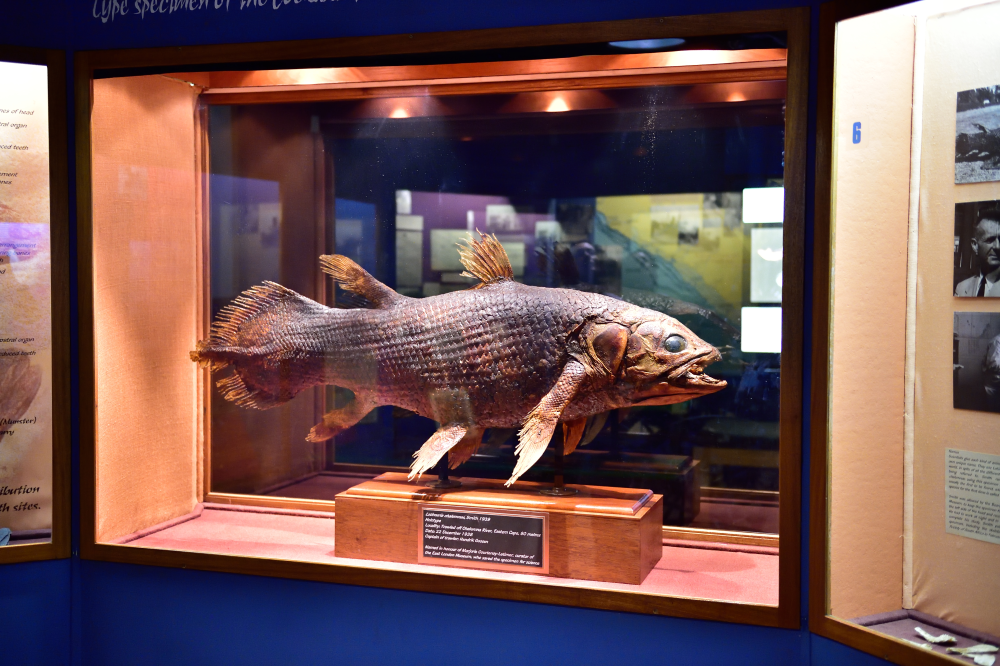
At almost 1.5 meters (5 feet) long, the mysterious fish caused uncertainty for the local taxi driver who was tasked with ferrying it back in the trunk of their car. And when Courtenay-Latimer reached the museum, the chairman disregarded her suspicions that the fish was something unusual, suggesting it was nothing more than a rock cod.
She had been in the lab and recognized how to identify fishes, and said that's something valuable that we have to preserve
Brian Sidlauskas
Though she wasn’t convinced, Courtenay-Latimer found no answers in the museum’s reference books. Local morgues weren’t willing to help her keep the carcass cool, so the race was on to get an ID before decomposition took hold. Unable to get hold of an expert, she eventually conceded to having the fish gutted and taxidermied to prevent further decay.
Only after it was stuffed did she have some success. After a few missed calls, James Leonard Brierley Smith of Rhodes University, Grahamstown (now Makhanda), responded to her letter that included a rough sketch of the specimen. Intrigued, he came to visit the museum on February 16, 1939. To say it knocked his socks off would be an understatement.
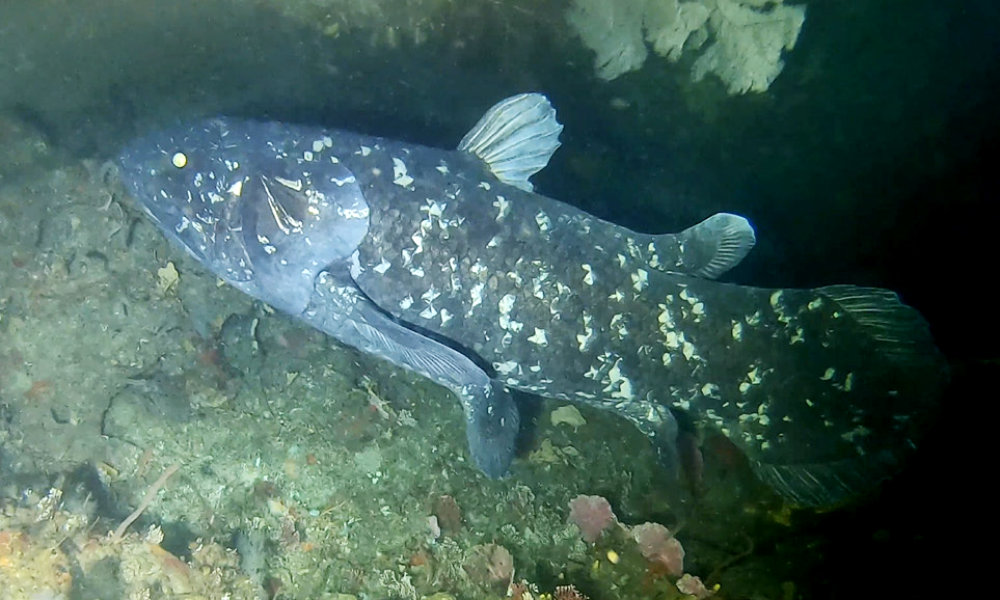
“Although I had come prepared, that first sight hit me like a white-hot blast and made me feel shaky and queer, my body tingled," Smith wrote in his book Old Fourlegs: The Story Of The Coelacanth. "I stood as if stricken to stone. Yes, there was not a shadow of doubt, scale by scale, bone by bone, fin by fin, it was a true coelacanth."
It’s a member of a group that was supposed to have gone extinct around 66 million years ago, yet here it is, trawled up off the coast of South Africa
Brian Sidlauskas
It was something of a shock to the global community, as coelacanths disappeared from the fossil record around the time of the dinosaurs' downfall, leading scientists to believe that they too had gone extinct around 66 million years ago. Definitely not something you expect to scoop up in a fishing net.
The fish was named Latimeria chalumnae after the keen-eyed curator and the river close to where the fish was found. Smith contributed to a search that led to the discovery of a second coelacanth 14 years later, and today it’s thought there are at least two living species in the oceans, L. chalumnae, and the Indonesian coelacanth L. menadoensis. Coelacanths are critically endangered according to the International Union for Conservation of Nature, but they linger on as a reminder of the importance of museum collections, and the bright brains that run them.
“The classic story of Marjorie Courtenay-Latimer discovering the coelacanth off of South Africa – not the first living person, of course, to have seen a coelacanth, but someone who had the training to recognize that this thing was unusual,” said Brian Sidlauskas, director of the Tulane University Biodiversity Research Institute, home to the largest collection of preserved fish in the world. “It’s a member of a group that was supposed to have gone extinct ~66 million years ago, yet here it is, trawled up off the coast of South Africa.”
“She had done her science. She had done her studies. She had been in the lab and recognized how to identify fishes and said, ‘that's something valuable that we have to preserve’.”
Coelacanths have been seen alive on several occasions since Courtenay-Latimer's discovery back in 1938, but we still have much to learn about these curious ancient creatures. After all, it was only recently that we realized these "living fossils" actually have dozens of modern upgrades.