Space and Physics
 PUBLISHED



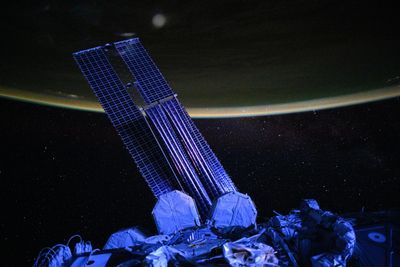


NASA has announced when Crew-11 will undock from the International Space Station and come back to Earth. In consultation with SpaceX, the company whose spacecraft the crew is using, the astronauts won’t be leaving the ISS before Wednesday, January 14, at 5:00 pm EST. If the weather cooperates and the undocking is not shifted, the capsule will splash down off the coast of California at around 3:40 am on Thursday, January 15.
NASA first mentioned a medical concern on January 7, which led to the cancellation of a spacewalk. It came hours after an update confirming that the spacewalk was happening. Follow-up updates confirmed that a member of the crew had a serious medical concern, and while the situation was stable, it warranted an early return for the crew who had been in space since August.
Crew-11 is made up of NASA astronauts Zena Cardman and Michael Fincke, JAXA astronaut Kimiya Yui, and Roscosmos cosmonaut Oleg Platonov. NASA did not reveal the identity of the member affected to protect their privacy. While spacewalks have let to serious adverse events, like when Luca Parmitano risked drowning in space, NASA stressed that this was not an injury that happened during operations.
The reason for bringing back the crew is that while the ISS does have plenty of equipment for diagnosing and treating a variety of medical conditions in space, it's not enough to produce a medical workup that would allow the medical team on the ground to be certain that the astronaut in question is safe.
“Any time we have a medical incident, we embark on looking at diagnoses and what we would call a workup to get a differential diagnosis on what's happening with that patient or astronaut on board," NASA Chief Health and Medical Officer Dr JD Polk said during a press conference last week.
“The best way to complete that workup is on the ground with where we have the full suite of medical testing hardware. Now, again, because the astronaut is absolutely stable, this is not an emergency evacuation. We're not immediately disembarking and getting the astronaut down, but it leaves that lingering risk and lingering question as to what that diagnosis is.”
Due to the early departure, Fincke will hand command of Expedition 74 and of the ISS to Roscosmos cosmonaut Sergey Kud-Sverchkov today, with the ceremony being livestreamed today from 2:35 pm EST.
The exact departure time from the ISS won’t be known until closer to the time. It will depend on a variety of factors, including spacecraft readiness, recovery team readiness, weather, and ocean conditions, among others.
“Crew safety always remains our highest priority. And as it always is across the agency, we never take shortcuts. We never compromise when it comes to protecting our astronauts,” NASA associate administrator Amit Kshatriya added during the press conference.