Health and Medicine
 PUBLISHED
 1
1


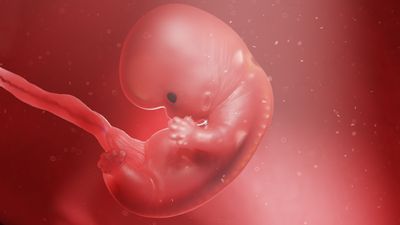


For the first time, scientists have succeeded in creating organoids from cells shed by fetuses in the womb. The so-called “mini organs” were grown from lung, kidney, and small intestine cells found in amniotic fluid, and could pave the way toward better diagnostics and treatments for various congenital conditions.
Organoids are 3D bundles of cells that mimic the structure, function, and biological complexity of organs but on a much smaller and simpler scale. Usually, they are created from cells taken from biopsies that are reprogrammed into stem cells. Organoids of many tissue types have been grown before now, including the brain, heart, even testicles, and are typically used to model diseases and test drugs.
Previous efforts have been limited to samples obtained from the termination of pregnancies, and so this marks the first time that organoids have been grown directly from cells taken from ongoing pregnancies, study co-author Mattia Gerli told Nature in a news article.
By using amniotic fluid as a source of living cells, the team behind the breakthrough could bypass some of the issues that have thwarted previous efforts, and were able to study fetal tissue at later stages of development.
Their technique involved lung, kidney, and intestinal cells taken from amniotic fluid collected from 12 pregnancies between the 16th and 34th weeks of gestation. These cells were then grown on a dish in the lab, and coaxed into forming bundles of tissue. Each organoid expressed the genes and proteins of the organ it originated from.
While the researchers haven’t yet attempted to treat any children with the technique, they say their findings could one day help to study and treat various serious birth defects, which affect between 3 and 6 percent of infants worldwide, according to the Centers for Disease Control and Prevention.
They even suggest that the organoids, created months before a baby is born, could be used in personalized medicine interventions, to help diagnose and treat congenital conditions before birth.
To explore their potential future uses, the team also created lung organoids from fetuses with congenital diaphragmatic hernia (CDH), a disorder where the diaphragm fails to close as it should.
The condition can be treated while the fetus is in the uterus, and the team found that organoids from CDH babies before and after treatment developed very differently, suggesting a successful treatment.
“This is the first time that we’ve been able to make a functional assessment of a child’s congenital condition before birth,” Paolo De Coppi, one of the researchers, told The Guardian.
The approach could therefore be used to monitor the efficacy of such treatments. Although this, and other possible applications, are likely still a way off, the team hope that with more research these innovative organoids may live up to their potential in regenerative medicine and personalized disease modeling.
The study is published in Nature Medicine.