


 Nature
 PUBLISHED


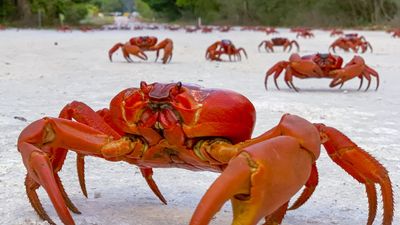


From October through to January, red crabs (Gecarcoidea natalis) on Christmas Island, Australia, up sticks from their forest home and head for the ocean. Millions of crabs will scuttle across the island, which has had to build special crab highways and bridges to keep them clear of cars. They must reach their destination before dawn on a receding high tide during the last quarter of the moon, but can only get going after it rains. The window between the two decides if their migration will be a sprint or a marathon.
Males lead the charge and arrive at the sea first, where they are later joined by females who outnumber them. The males dig burrows, often fighting for territory, and with good reason. Females peruse the properties for one in which they’d like to mate, so the males need to impress if they’re going to get their DNA passed on to the next generation.
Once mating is complete, the females hang out in the burrow for a few days to a few weeks to cook up some eggs. Each female will carry around 100,000 in a brood pouch, and she has to lay them into the sea. She’s a land crab who can’t swim, so waves are tricky.
There can be as many as 100 crabs per square meter when spawning night comes as the females congregate on the shore, getting ready to ditch their eggs. If she’s going to launch the next generation, she’ll have to brave the water, and the ideal time is when the high tide is turning just before dawn. They give a little shake at high tide, arms in the air like they just don’t care, and the water turns black as billions of eggs are released.
These eggs hatch when they make contact with the water and get swept out with the tide to develop in deeper waters. They move through several larval stages, gradually moving back towards the shoreline as they do until they gather as prawn-like megalopae and finally turn into mini crabs.
Though billions of eggs go in, some years none make it out of the water. The swarms of defenseless larvae make for a convenient snack for manta rays and whale sharks. Other years they experience a baby boom that can see millions scuttle out of the water, keeping the population topped up.
In other years, the opposite can happen as hundreds of thousands to even millions of baby crabs scuttle out of the ocean and make for the forests. These rare baby booms are enough to keep the enormous red crab population topped up and ready to make the journey all over again the next year.
How to get there: You can witness the red crab migration at Drumsite, Flying Fish Cove, Ethel Beach, and Greta Beach on Christmas Island, Australia.
This article first appeared in Issue 5 of our digital magazine CURIOUS. Older issues of CURIOUS are free for all users. To access new issues, become an All Access Member.

 1
1