Nature
 PUBLISHED
 4
4


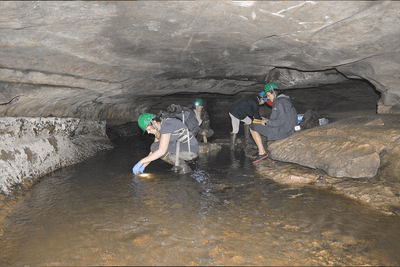


Water and sediment in the Cliff Cave system, Missouri, are contaminated with microplastics, scientists studying student-collected samples have found.
Reports of microplastic contamination are depressingly common these days, even in the most remote places. What makes this finding exceptional, however, is that no one has been able to enter the system for three decades prior to the research being conducted. Our least-wanted products are reaching places we cannot.
Microplastics are technically defined as those smaller than 5.0 millimeters (0.2 inches) in diameter, with those too small to see posing the biggest problems. They are getting into our food supply, and those of other animals, with disastrous consequences.
Still, places humans cannot go might be expected to be safe. Science is all about testing expectations, however, and Dr Elizabeth Hasenmueller of St Louis University decided investigating the Cliff Cave system would be both a worthy project and good practice for her students.
“A lot of research has been focused on surface water setting,” Hasenmueller said in a statement. “Microplastics research initially started in the ocean because of the highly visible problem of large plastic pollution in this environment.” Since then, it has extended into surface freshwater systems, but the subsurface has been largely ignored.
Hasenmueller’s team took samples throughout the cave system and found microplastics almost everywhere, but the greatest concentrations were near the entrance and in sediment.
“Part of the reason we picked Cliff Cave is because St. Louis County Parks regulates access to the cave,” Hasenmueller said. “We knew if we found microplastics in the cave, it’s not going to be because somebody has just hiked back into the cave and shed fibers from their clothing or left food wrappers.”
Floods brought more – and more diverse – microplastics into the cave, carried on the excess water. In one case, a chip packet was found mixed up with flood debris like leaves and acorns. "We weren't sure what to expect with the dataset, but we found that the cave's main entrance is where there's a lot of microplastic debris, either from flood deposition or possibly from microplastic particles suspended in the air being deposited near the opening of the cave," Hasenmueller said.
During baseflow the team counted 9.2 pieces of microplastic per liter (35 per gallon), but this jumped to 81.3/L during floods.
In a paper on their findings, the team notes that karst terrains, suited to forming caves; “May be particularly susceptible to microplastic pollution because the presence of large dissolution openings allows fast transport of water through the systems.” They note that 9 percent of the global population gets their water from karst aquifers.
Once the water recedes, the microplastics remain in the sediments in concentrations far higher than the water left behind; 843 pieces per kilogram (383 per pound)
Chip packets aside, the origins of the microplastics could not always be identified. However, the cave is close to residential areas, and previous research shows that population density around St Louis is the biggest determinant of local microplastic concentration.
"Individuals can avoid buying plastic materials like synthetic textiles used in clothing, but doing so presents challenges to everyday consumers,” Hasenmueller said. “On a larger scale, we, as a society, could move away from synthetic clothing, because a lot of the debris that we found in this cave was synthetic fibers from textiles. And, of course, reducing our overall plastic production and consumption would help as well."
The caves are home to animals such as bats and amphibians that play a crucial role in the external ecosystem, and microplastics could affect their breeding and survival rates,
The findings are published in Water Research and open access in Science of The Total Environment