Nature
 PUBLISHED


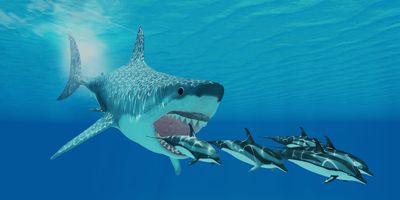


Maryland is set to become the first US state with its own officially designated shark: the megalodon, the largest shark to ever prowl the oceans.
The East Coast state of Maryland has long been a gold mine for megalodon fossils, particularly along the Chesapeake Bay, where beachcombers regularly stumble across their huge, hand-sized teeth in the sand. This abundance of fossils is a reminder that much of this region was once submerged beneath a prehistoric sea before tectonic shifts and geological processes reshaped the world.
As a much-loved (albeit long-gone) resident of the state, the Meg is a fitting symbol, and Maryland’s marine biologists are thrilled by the news.
“Maryland is an important source of fossils that have taught us about ancient oceans, including megalodon. Some of the finest specimens of megalodon teeth have been found at Calvert Cliffs here, and the nearby Calvert Maritime Museum is a world leader in this space,” Dr David Shiffman, a Maryland-based shark scientist and the author of Why Sharks Matter, told IFLScience.
Megalodon (Otodus megalodon) is a species of giant mackerel shark that was over 16 meters (52 feet) long with fins the size of a human. They stalked the world’s oceans between 23 and 3.58 million years ago, where they were almost certainly the undisputed apex predator.
“How can anyone not love an animal with teeth so big that a fossil one won’t fit in my hand? They were big and powerful enough to bite whales in half. And they ruled the ocean for millions of years before going extinct. We can learn a lot about modern-day species by studying how ancient sharks lived and eventually went extinct,” Dr Shiffman added.
Palaeontologists have never unearthed a complete megalodon skeleton from Earth's sediments, and it's unlikely they ever will. This means all of our understanding of their size and shape is largely inferred from teeth, as well as a few vertebrae.
Securing its designation as the state shark required some last-minute political maneuvering. Maryland's House of Delegates passed its version of the bill, HB97, earlier in the session. However, according to local news, the Senate’s version stalled in committee. At the last moment, it was added as an amendment to another bill, SB0035, which had already passed. This latter bill designates the Natural History Society of Maryland as the State natural sciences museum, but now mentions that the megalodon is designated as the “State shark.”
Both the House and Senate agreed on the amendments, so the bill now just needs the final sign-off from Governor Wes Moore.
Who knows, if Maryland signs the decision into law, perhaps it could inspire other states to follow suit and adopt their own official sharks.
“If other states decide to designate a state shark, I hope that some will consider choosing a species found in their waters now. Megalodon is very cool, but they’re extinct and have been for millions of years,” noted Dr Shiffman.