


 Nature
 PUBLISHED


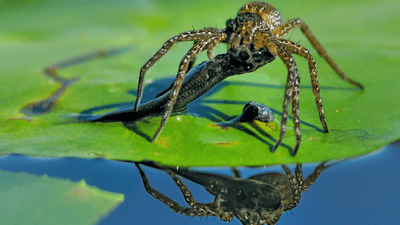


Spiders are remarkable creatures. Resilient, innovative, and packed full of biological engineering that makes biomimeticists hot under the collar (and occasionally create grim “necrobots”). For some, however, they trigger the heebie-jeebies, and unfortunately, I don’t think the fish-eating spiders will help here.
Yes, in case this is the first you’re hearing of it, there are indeed spiders out there that hunt, kill, and eat fish. They’re partial to tadpoles, amphibians like frogs, and even crayfish. Oh yes.
In fact, some of these spiders are such proficient hunters that they can even take down prey that’s five times their size. That accolade goes to the Dolomedes spiders (confuse with dolmades at your dining peril), whose teammates include the six-spotted fishing spider (D. triton) and D. dondalei that hunts at night using vibrations to detect prey.
If you’re hoping to give these overachievers a wide berth, I have bad news. A 2014 study found that fishing spiders are actually very widespread, with species from five arachnid families hunting fish on every continent except Antarctica. Though they're widespread, some are very rare, including one of the UK's biggest and rarest spiders, the fen raft spider.
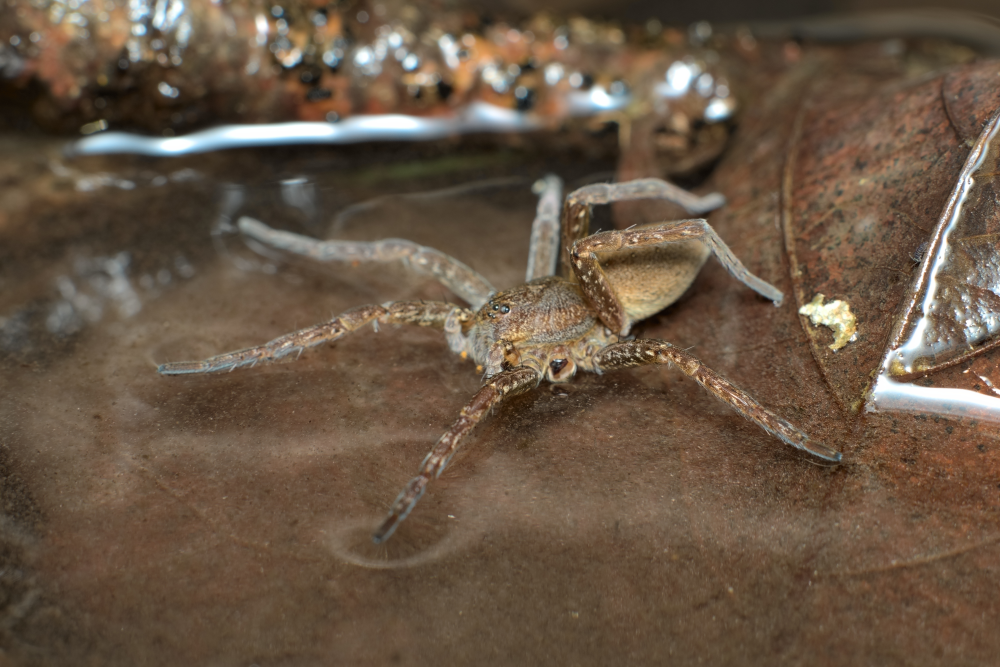
Fishing spiders are diverse in their methodologies, too. Some, like Dolomedes, use the tiny hairs all over their body to skate across the water’s surface and detect the movements of potential prey. Others lurk by the water’s edge and wait for a fish to get close enough that they can chomp it full of venom and drag it onto dry land. Lovely.
There are hot spots, quite literally, for fish-eating spiders, however. The behavior is more common in warmer areas between 40° S and 40° N, encompassing a wide diversity of potential fish prey, though each spider’s diet is constrained by what their size enables them to tackle.
Given that going fishing is a pretty drastic departure from the more typical ways a spider hunts, and that the spider-to-fish ratios can get so crazy, it’s thought that fish may be more of an occasional treat for these spiders. Something that’s pricy in terms of energetic output, but pays dividends in its nutritional value.
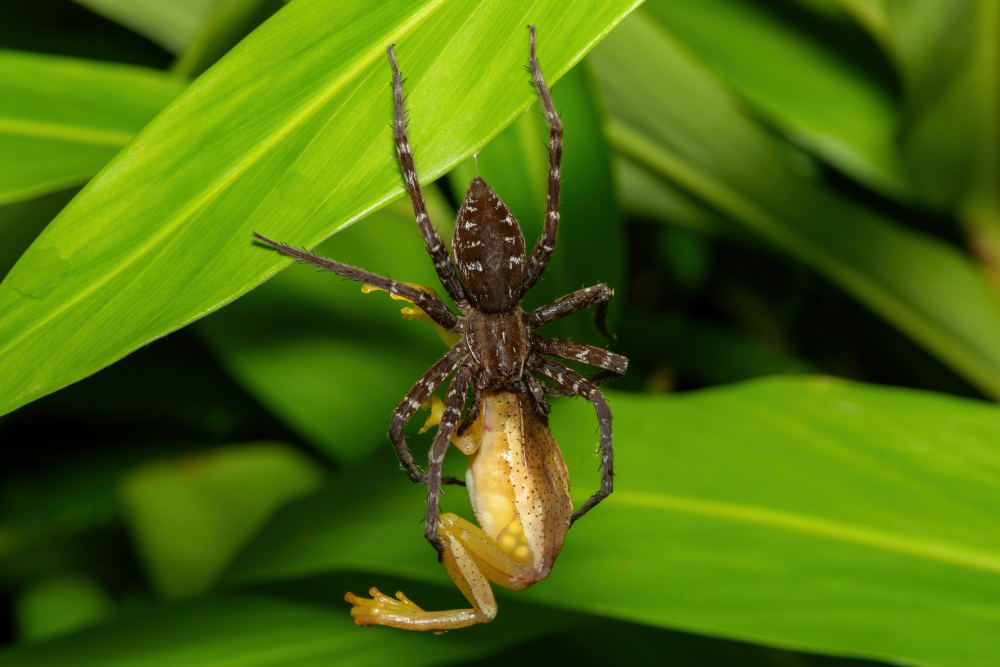
“It has been long-known that semi-aquatic spiders of the family Pisauridae occasionally predate small fish; however, past studies focused on just two genera of a single family (i.e., Dolomedes and Nilus),” wrote the authors in the 2014 paper. “We found that the diversity of spider families engaged in fish predation is much higher than previously thought and encompasses at least eight spider families.”
“Complete piscivory is probably rare and restricted to those occasions when semi-aquatic spiders gain easy access to small fish kept at high density in artificial rearing ponds or aquaria, or in small shallow waterbodies [...]. Additional research will be needed to reveal the extent and nutritional importance of fish in the diet of these spiders.”
So, keep an eye on your line the next time you go fishing. You might not be doing it alone.



 1
1