Nature
 PUBLISHED




A new species of Spinosaurus with spectacular headgear has been described, and the location where it was found is powerful evidence in a closely followed dinosaur debate: Were these giants sea creatures or partially aquatic? For such a rich prize, palaeontologists had to search in a war-torn region of the world’s largest desert, and have found a way to give back to the locals.
Spinosaurus long lacked the public recognition of North American dinosaur species, receiving only a modest boost from one of the less memorable Jurassic Park films. They have, however, drawn plenty of scientific attention through a debate as to whether they were almost fully aquatic, competing in a niche already occupied by mosasaurs and ichthyosaurs, or if they were more like modern crocodiles or even giant wading birds.
Until recently, all Spinosaurus fossils had been found around the Gondwanan edges of what was then the Tethys Sea, which didn’t help settle the question. They might have been living in river deltas and estuaries, or have died when venturing close to shore to feed. Discovering Spinosaurus fossils in northern Niger, which was at the time of their death at least 500 kilometers (300 miles) from the nearest Tethys shoreline, changes that debate.
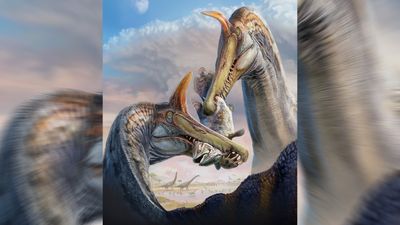
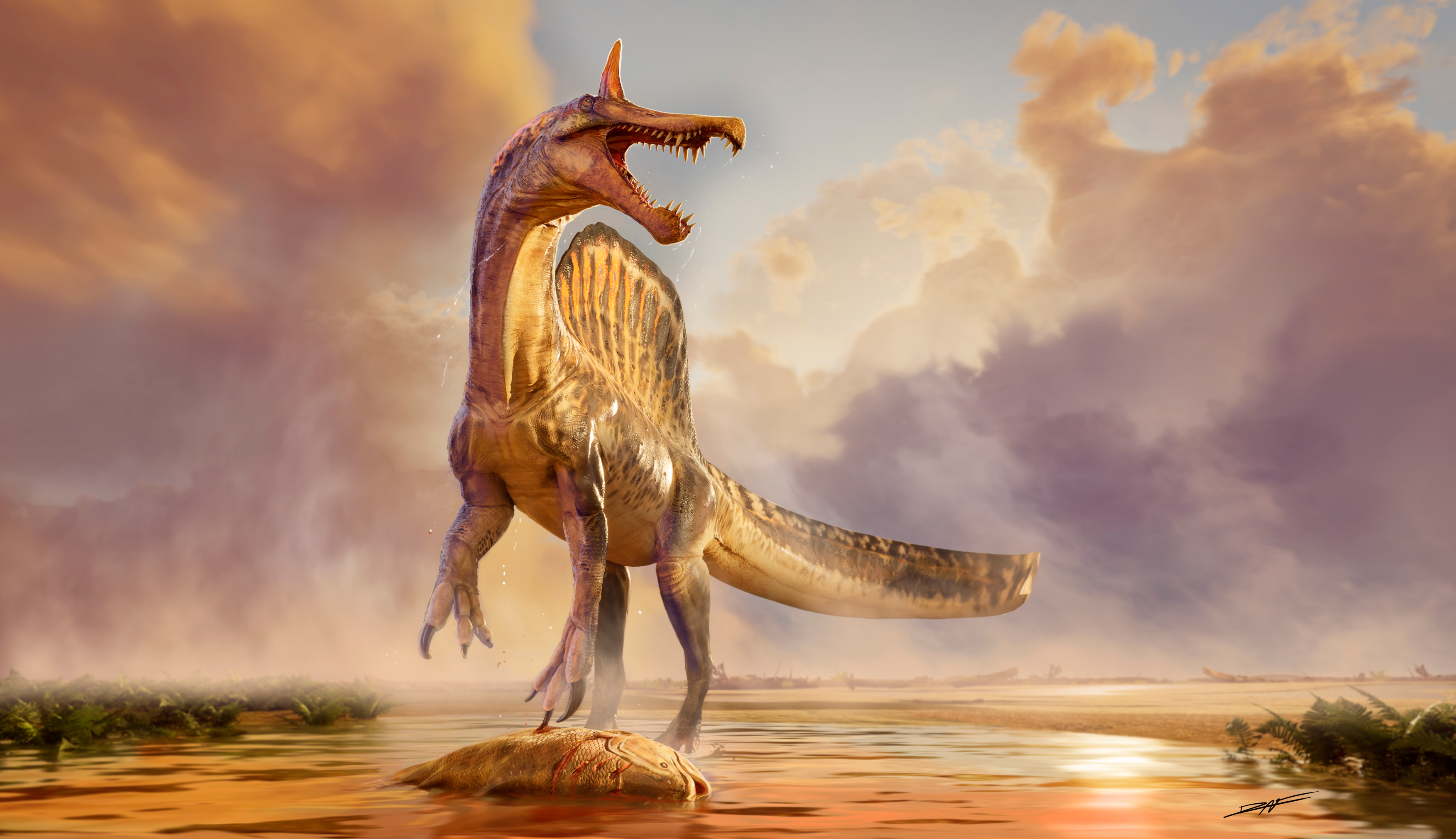
Along with bones that were recognizably from Spinosaurus species, and those that could be assigned to other species, a team led by Professor Paul Sereno of the University of Chicago found a great curved bone they could not identify. Eventually they worked out this was a giant crest, probably used for sexual signaling, atop a Spinosaurus skull.
Since none of the previous Spinosaurus fossils had crests, this had to be a new species, which the team named Spinosaurus mirabilis, in honor of the marvelous crest. Sereno told IFLScience, "We think the new species is probably reached the same maximum size as the original species Spinosaurus aegyptiacus, about 40 feet long (12 meters)."
The texture and internal structure of the bone leads Sereno and co-authors to think it was covered in keratin, familiar from hair, fingernails, and rhinoceros horns. It was also likely brightly colored and carried only by males to attract mates and warn rivals.
“This find was so sudden and amazing, it was really emotional for our team,” Sereno said in a statement. “I’ll forever cherish the moment in camp when we crowded around a laptop to look at the new species for the first time, after one member of our team generated 3D digital models of the bones we found to assemble the skull – on solar power in the middle of the Sahara. That’s when the significance of the discovery really registered.”
.jpg "Professor Paul Serano with a physical reconstruction of what is definitely not a dragon.")
Any possibility the find reveals an arm of the Tethys snaking inland was put to rest by sauropod fossils found in the same layers. Instead, S. mirabilis inhabited a forest environment crossed by rivers, and probably spent time both in and out of the water. Although this does not prove that other Spinosaurus species lived in similar ecosystems, differences between known Spinosaurus fossils, crest aside, are too small to suggest wildly different lifestyles.
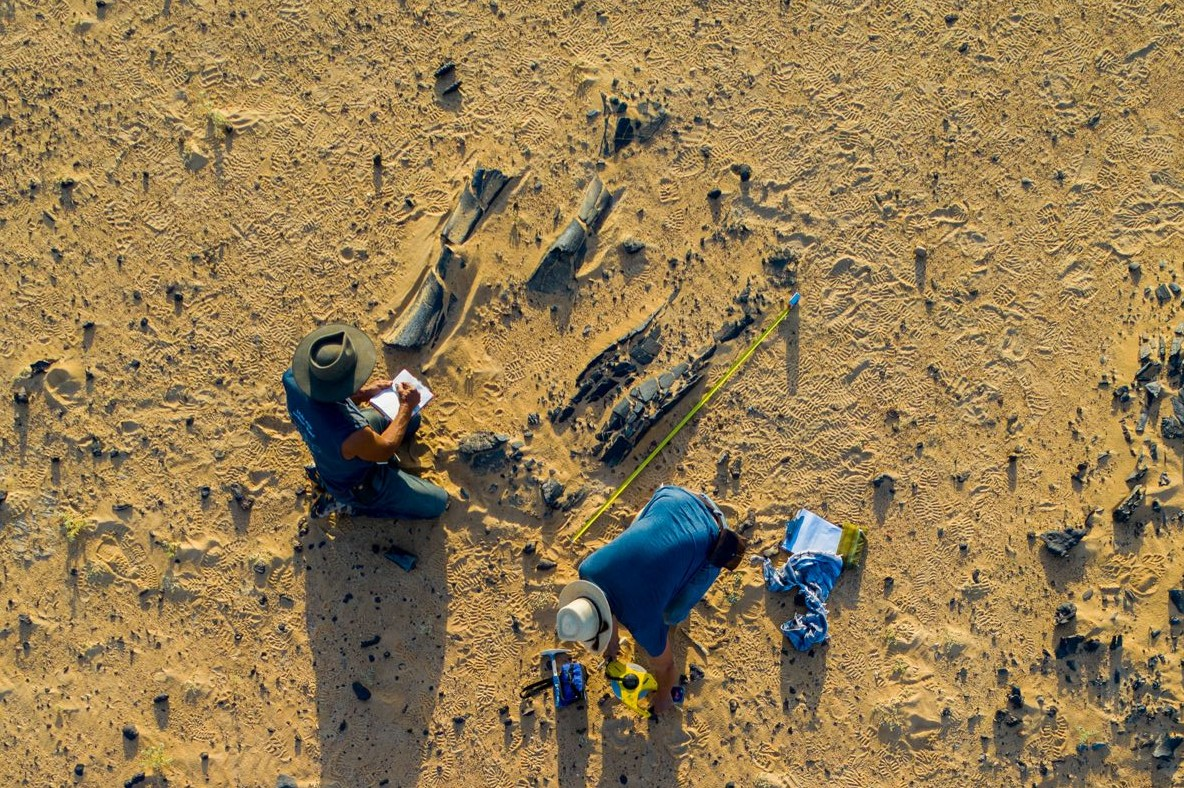
Further digging at the site revealed other Spinosaurus specimens, allowing the authors to confirm the teeth of the lower jaw grew outwards and between those of the upper jaw, like those of modern crocodiles.
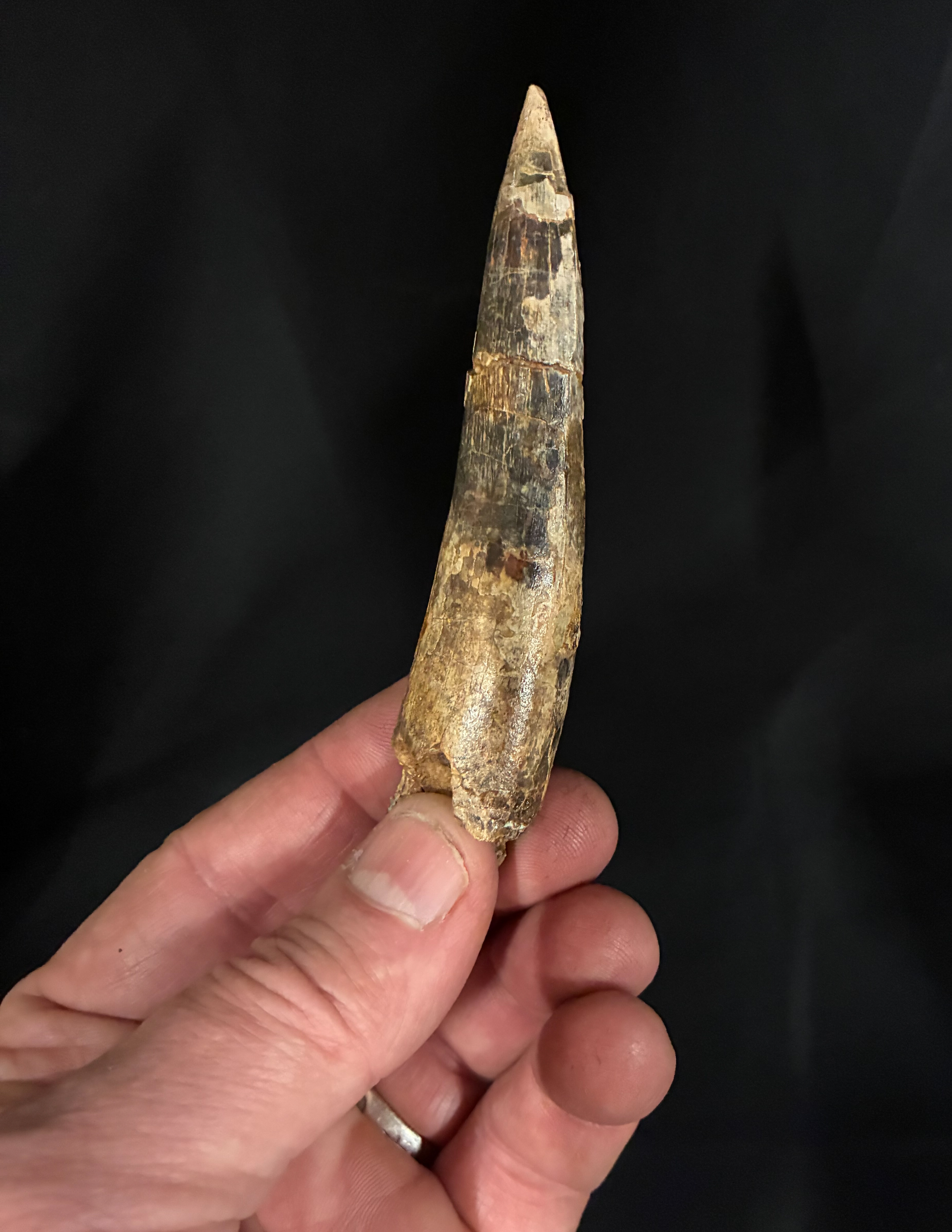
For Sereno, this confirms longstanding suspicions about Spinosaurus’ diet, since this tooth arrangement is a trap for slippery fish, and has evolved in other primarily pescatarian species, including ichthyosaurs and pterosaurs. Of course, we know that crocodiles don’t let their dental arrangements stop them consuming larger prey and Spinosaurus probably didn’t either. As those examples reveal, the teeth don’t settle the aquatic versus semi-aquatic debate, so it’s just as well the location probably does.
“I envision this dinosaur as a kind of ‘hell heron’ that had no problem wading on its sturdy legs into two meters of water but probably spent most of its time stalking shallower traps for the many large fish of the day,” Sereno said.
The story of how the discoveries were made is as marvelous the species. In the 1950s, a geologist in what was then part of French North Africa found giant saber-shaped teeth. He considered this so insignificant he devoted just one sentence to it in a monograph, but Sereno noted the resemblance to Carcharodontosaurus teeth found in Egypt.
“No one had been back to that tooth site in over 70 years,” Sereno said. Why let a location so forbidding the nearest town’s name translates to “No water, no goat”, and Islamist insurgency, hinder following up such a find, he reasoned. “It was an adventure and a half wandering into the sand seas to search for this locale and then find an even more remote fossil area with the new species.”
Sereno told IFLScience,"The Sahara in Niger is like our Wild West use to be, an ungovernable trackless area the size of Texas. You need to take a guard for protection."
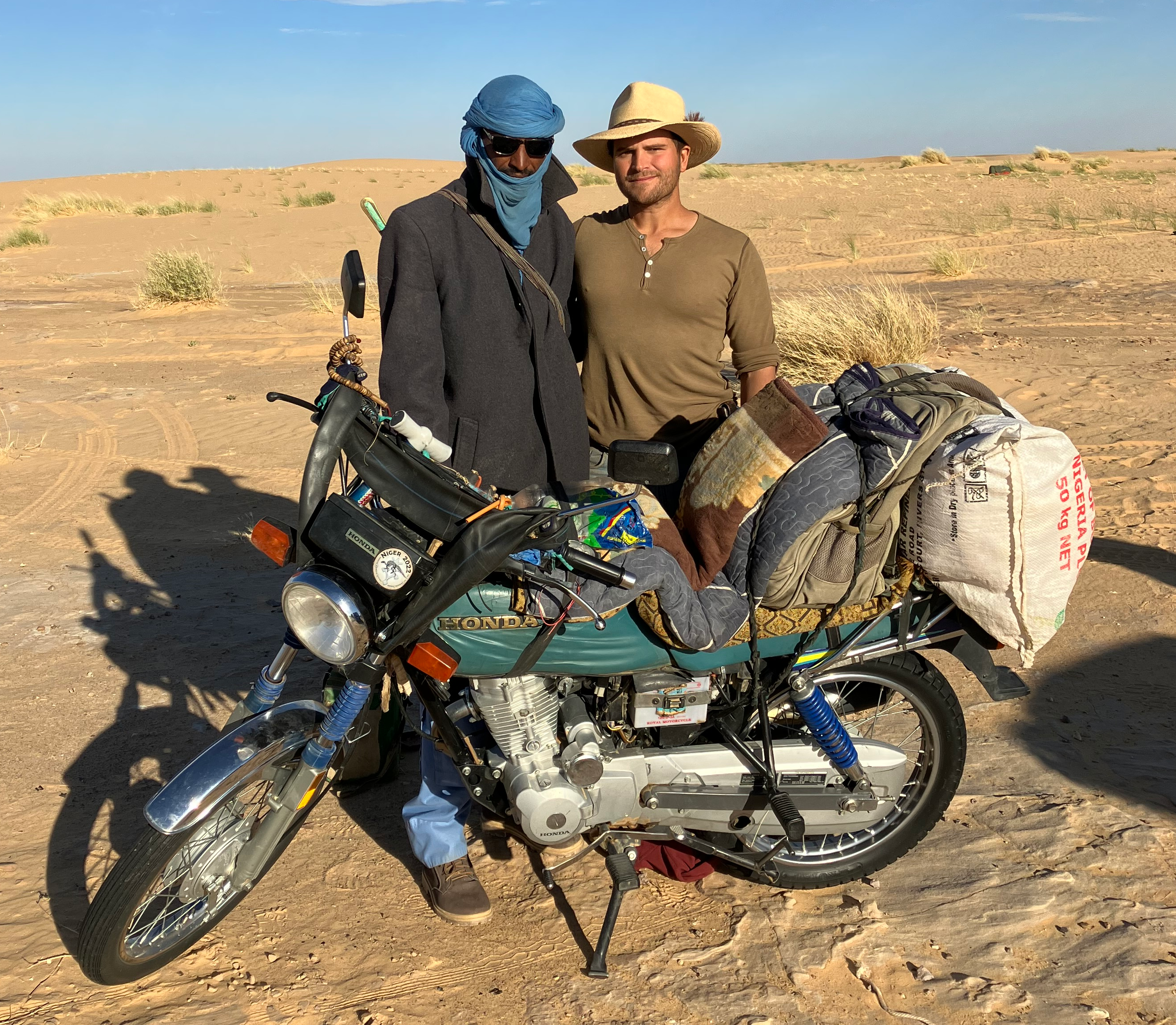
Fortunately for the team they met a local Tuareg man who had seen giant bones deep in the desert, and led them for a day on his motorbike to the site. The team found Spinosaurus teeth and jawbones almost immediately.
“If you can brave the elements and are willing to go after the unknown, you might just uncover a lost world,” Sereno said. “Now all of the young scholars who joined me are co-authors on the report gracing the cover of Science.”
Niger was already one of the poorest countries on Earth with among the lowest life expectancies, even before the recent surge in conflict. Rather than seeing this as a reason to avoid it, Sereno is motivated to reveal Niger’s fossil richness to locals and the wider world. He is leading an international effort to build the world’s first zero-energy museum in the capital Niamey. The Museum of the River is designed to be built on an island in the river that gives the country its name. As well as Niger’s Cretaceous legacy, the museum will have a focus on the people who lived in the area when the Sahara was a green savanna.
“The local people we work with are my lifelong friends, now including the man who led us to Jenguebi and the astonishing spinosaur. They understand the importance of what we’re doing together – for science and for their country,” Sereno said.
"I believe this will be a new start for the modern era of Niger, a mostly externally funded museum that is free for, and mostly seen by, locals. There will be two museums, one in Agadez and a larger one in Niamey, both zero energy. The one I designed in Niamey, in fact, won a coveted international architectural award as best unbuilt cultural institution," Sereno told IFLScience.
"Niger officially decreed that the island in the center of the capital will be devoted to the Museum of the River. Keep in mind that West Africa is now becoming the fastest growing population in the world, overtaking India. For the power broker countries to create lasting high-profile cultural institutions in Niger is a great opportunity. Of course, it will take gargantuan effort and planning... pretty much just like the effort needed to find a new species of Spinosaurus."
As Sereno noted, the study is published in Science, as this week’s cover story.
Amendment 24/2/26: This article has been updated to include quotes from Professor Paul Sereno.