Nature
 PUBLISHED
 1
1


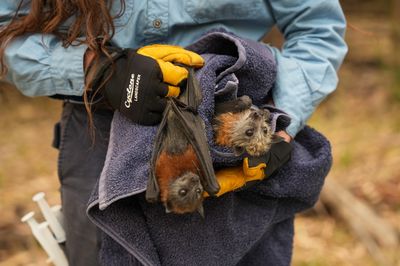


Flying foxes, a family of bats, have suffered mass die-offs after a heatwave struck South-Eastern Australia on Friday. In some areas, this has been reported to be the largest mortality event recorded for the bats, and it is considered likely to be an indicator of what is happening to less visible species.
Officially known as Pteropus, "flying fox" is a popular name for more than 60 species of megabat with a primarily fruit and nectar diet. Nearly half of flying fox species worldwide are vulnerable or endangered, mostly because of habitat loss, hunting, or culling.
Now, however, the Australian populations face a new threat in global heating. The summer of 2019-2020 saw mass flying fox deaths during the extreme heat-waves that rolled repeatedly through it, but awareness was overshadowed by the even larger catastrophe across the animal kingdom caused by that season’s record-breaking bushfires.
Flying foxes have no sweat glands and fall out of their roosts when temperatures become too extreme. Unable to fly, they crawl pathetically towards water or even shade. “Temperatures over 42 degrees are known to cause mortality in flying foxes, sometimes at biblical scales,” Professor Justin Welbergen of Western Sydney University told The Guardian. Melbourne reached 41°C (105.8°F) last Wednesday and 42.9°C (109.2°F) on Friday.
Unless provided with aid quickly, fallen bats usually die soon after. The bats roost in large colonies, so it is easy to count the death toll. On this occasion, the most deaths, reported to be in the tens of thousands, came around Melbourne, with several parks littered with dead bats.
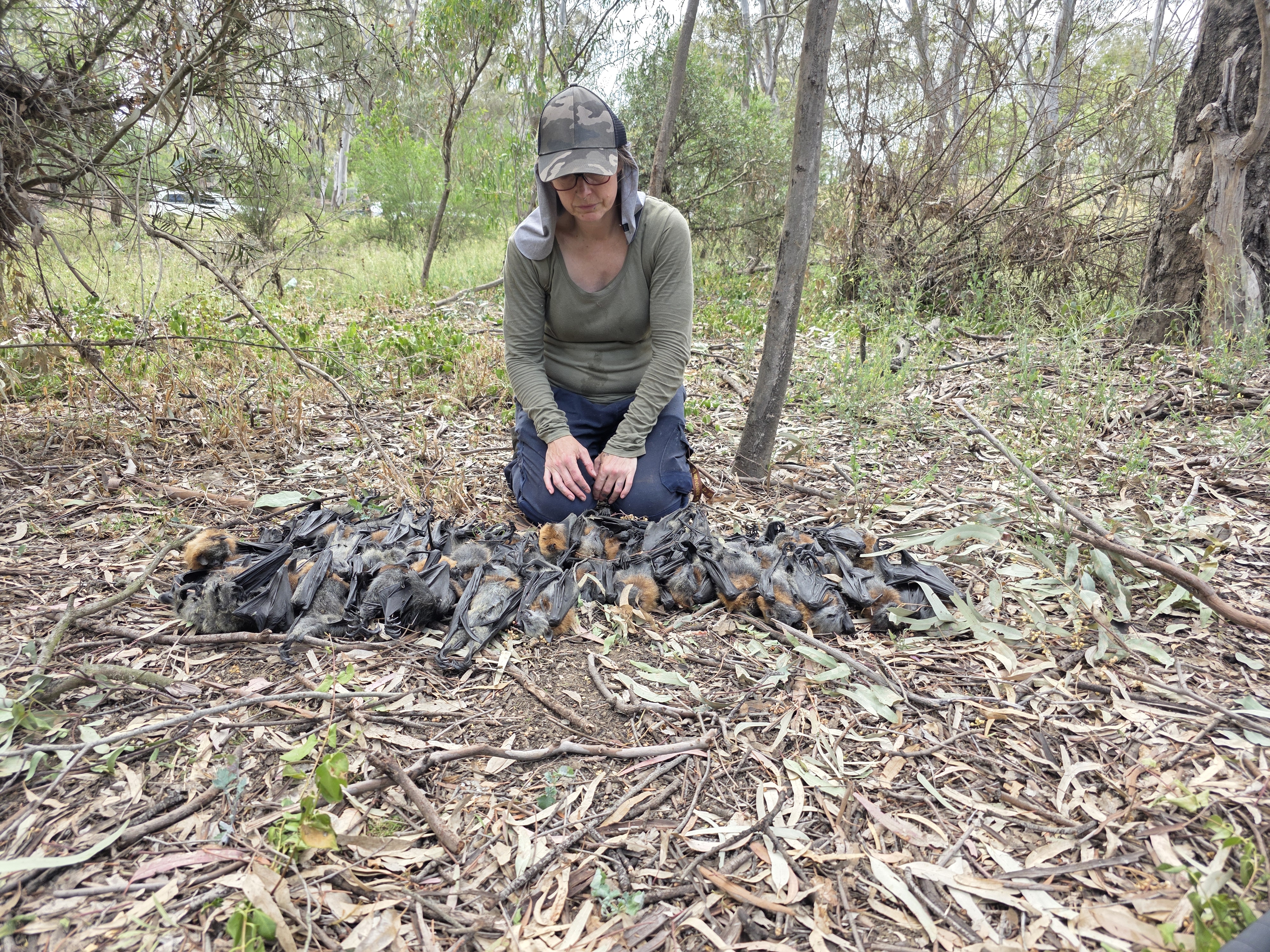
Multiple sites in New South Wales reported hundreds dead, often in record-breaking numbers, with 500 deaths at one site alone near Wollongong, wiping out about a third of the colony.
Infant bats sometimes survive the initial heat, but die without their mothers, unless wildlife carers rescue them quickly. "There were 23 babies at the Dapto camp that evening … and a few more the next day," wildlife carer Rebecca Daly told the ABC.
Only trained and vaccinated carers wearing gloves are allowed to handle the heat-struck bats, since they can carry diseases, although cases of infection in Australia are very rare.
Tamsyn Hogarth of Fly by Night told IFLScience that when the heat is dry, spraying colonies with water or placing misting machines below can drastically cut deaths. She noted this needs to be done with care, however, because “In humid conditions it can make things worse.”
That wasn’t the problem during the dry heat around Melbourne, where deaths were highest. Instead, state officials had assured volunteers they would provide water to colonies in and around the city, only to admit at the last minute that they only had three machines between the 18 colonies. Hogarth and her volunteers scrambled to support the rest using hand-held devices, and couldn’t handle the volume.

Better planning and communication might alleviate disasters in the short term, but if greenhouse gases keep rising, such approaches are likely to offer only temporary relief.
The most devastating aspect of this event is that populations have not had time to recover from the last disaster, when an estimated 72,000 flying foxes died in the largest of three mass mortality events in six years.
With pregnancies lasting more than six months and single births the norm, populations don’t rebound quickly. “We’ve lost a whole generation,” Hogarth told IFLScience, with few young from the last few years surviving.
To Melbourne residents, population numbers may seem healthy, with the sight of hundreds or thousands leaving their colonies at dusk in search of nectar or fruit a relatively recent sight in the city. However, Hogarth told IFLScience this is because climate change and loss of food in their traditional breeding grounds have changed the bats’ range, pushing more of them into the city. “The stay where the humans are,” she said, instead of ranging as widely as they did.
Populations may have still not recovered from the mass culls in the 19th and early 20th century, in response to reports – possibly exaggerated – of their consumption of commercial fruit crops.
Grey-headed flying foxes, which account for most of the deaths, are listed as vulnerable by the International Union for the Conservation of Nature. Black flying foxes, whose range overlaps but mostly live further north, are still listed as being of “least concern”. However, despite inhabiting territory that is warmer on average, black flying-foxes are less used to encountering the shorter but more extreme heat waves in the territory into which they are expanding.
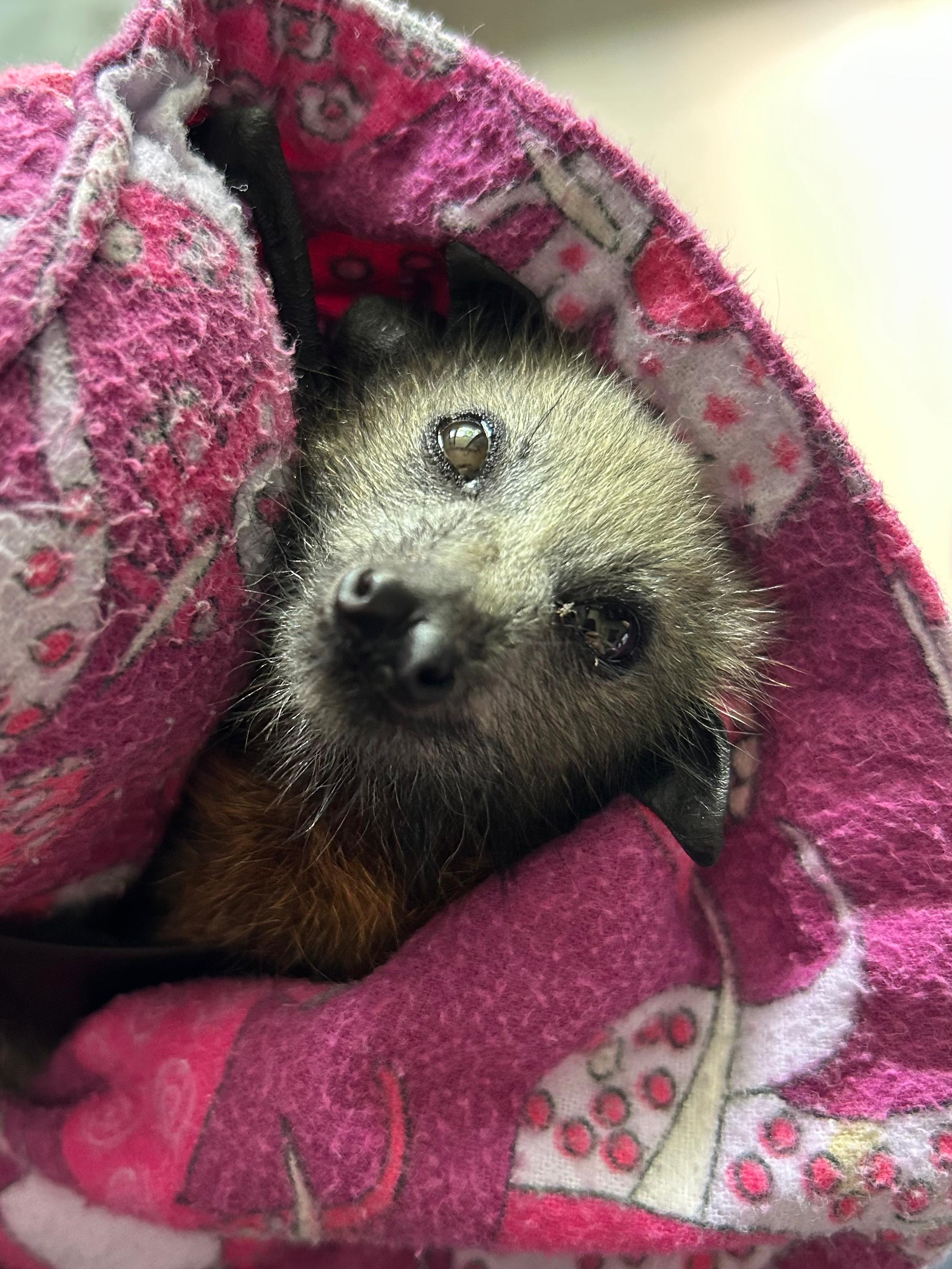
At this time of year, heat waves pose a particular threat to infants, who are still dependent on their mothers. Male Grey-headed flying foxes are particularly vulnerable in late summer, because they expend a lot of energy maintaining the best roosting sites, since females choose partners primarily based on real estate.
Animal experts fear the flying foxes could be the canary in the coal mine for other mammals, whose heat deaths occur singly or even in burrows where they won’t be noticed. Flying foxes play a crucial role in pollinating some plants and redistributing fruit, and their long-term loss could prevent forests from regenerating.
At least there is some good news for the little red flying fox, which lives in even larger and denser roosts in northern Australia. These colonies get so dense they can have serious effects on the local environment, leading to pressure to shoot the bats when they take up residence in urban parks. However, ways have recently been found to move colonies of 500,000 flying foxes without harming them.