Space and Physics
 PUBLISHED




If you're the type who likes to witness the odd astronomical event here and then, the June skies are offering up a few treats.
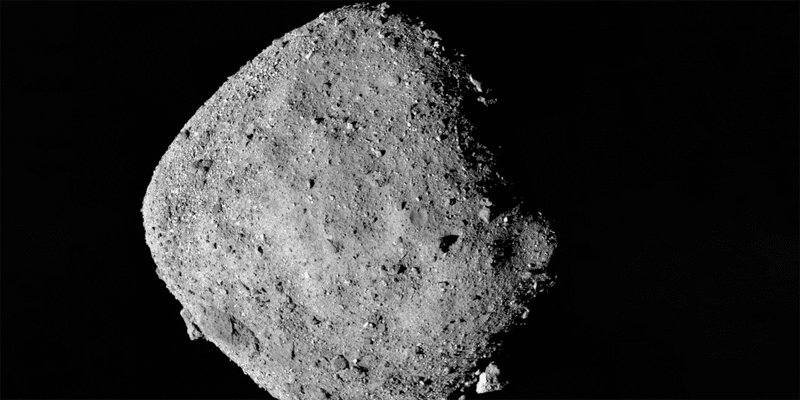
First up is quite a rare one. On June 27, if you have some powerful binoculars or a small telescope, you can see potentially hazardous asteroid 152637 (1997 NC1) making its closest approach in over 400 years. Try and make the opportunity, as this fairly large asteroid (we will not know its exact size until it is observed using radar in the close approach) will not make this close of an approach again until June 28, 2133.
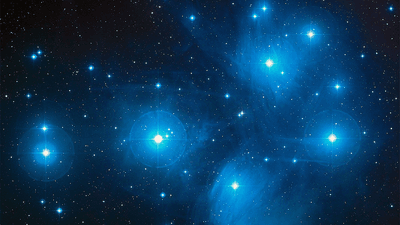
There's plenty to look at in the night skies, and there are a few less rare treats on show. The day after you've gawped at the near-Earth object, you can see the planet Mars line up with the famous Pleiades star cluster, better known as the "Seven Sisters".
Mars has been moving closer to the cluster on its passage through the Solar System, and will be closest to it on June 28. On that evening, it will be just 4.4 degrees from the cluster in the night sky, per When the Curves Line Up.
Why is this event important or spectacular? It isn't really – it'll mainly just be quite pretty. But that doesn't mean it isn't interesting, and looking up at the Pleiades on a clear night may actually be quite a big part of humanity's history, with the cluster being the subject of perhaps the oldest story every told by humans.
The first thing that most modern humans notice when looking at the Seven Sisters for the first time is that there are six of them. The cluster actually contains thousands of stars, but there are only a handful that are visible without the aid of a telescope, and these stars have found themselves the subject of ancient myths.
In the Greek myth, the seven sisters are the daughters of Atlas and Pleione. Since Atlas was a little busy, thankyouverymuch, holding up the sky, he was not capable of protecting his daughters. But when they were being pursued by Orion, a hunter with terrible intentions, Atlas was able to transform them into stars in order to save them from that particular ordeal.
The Indigenous Australian myth is strikingly similar, with all the basic elements of the sisters being pursued by a male hunter, and them being transformed into stars.
In 2020, this intrigued researchers, essentially because there was almost no contact between European and Indigenous Australian cultures from when their common ancestors left Africa around 100,000 BCE until 1788 when the British invaded.
The reference to seven sisters, when any modern viewer can only see six, prompted astronomers to run a simulation on the cluster, finding that a seventh star, Pleione, would have been visible around 100,000 years ago, though it is now too close to Atlas to distinguish with the naked eye.
"When the Australians and Europeans were last together, in 100,000 [BCE], the Pleiades would have appeared as seven stars," the team wrote in their chapter of the book Advancing Cultural Astronomy.
"Given that both cultures refer to them as 'Seven Sisters', and that their stories about them are so similar, the evidence seems to support the hypothesis that the 'Seven Sisters' story predates the departure of the Australians and Europeans from Africa in 100,000 [BCE]."
As well as this, the Pleiades are also depicted on the ancient Nebra Sky Disc, perhaps the oldest visual representation of the sky that humanity has found. That too, however, has seven sisters on it, rather than the current six, raising questions about whether a seventh sister was visible in more recent times.
All in all, we'd say it's a pretty good idea to look at the Seven Sisters in general, and maybe have a bit of a ponder about humanity's origins. While you're doing that, you'd may as well have a bit of a gawp at Mars.