Nature
 PUBLISHED


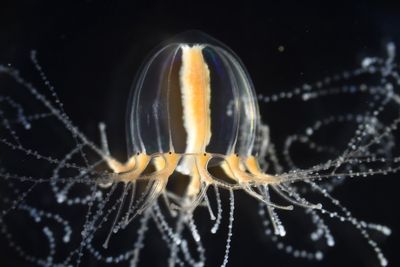


When it comes to the most unkillable beasts out there, a jellyfish the size of your pinkie fingernail probably doesn’t leap straight to mind. However, not only is this subphylum responsible for producing the only known case of natural immortality, but it’s also home to the species Cladonema – a jelly with the ability to regrow an amputated tentacle in two or three days.
It’s this baffling skill that had scientists at the University of Tokyo looking into how, exactly, the tiny medusae re-tentacle themselves – in the hope that, eventually, we might be able to apply the findings to our own tragically single-use limbs.
“Ultimately, understanding blastema formation mechanisms in regenerative animals, including jellyfish, may help us identify cellular and molecular components that improve our own regenerative abilities,” study author Yuichiro Nakajima, lecturer at the Graduate School of Pharmaceutical Sciences at the University of Tokyo, said in a statement.
Regenerating limbs isn’t unique to jellyfish – salamanders can do it too, as can starfish, chameleons, and of course, Wolverine (the fictional character, not the animal). But precisely how they do it has long been a mystery: we’ve known basically what’s going on in that it involves forming a clump of undifferentiated cells known as a blastoma at the site of injury, where they repair the damage and grow into a replacement appendage, but not the actual details of how that all occurs.
That’s all changed now, however, as the Japanese team has identified the cells responsible for building the jellies’ new limbs: stem-like proliferative cells, which grow and divide but are not yet differentiated into specific types of cell, which appear only after an injury and work together with resident stem cells in the tentacle to regenerate the lost tentacle.
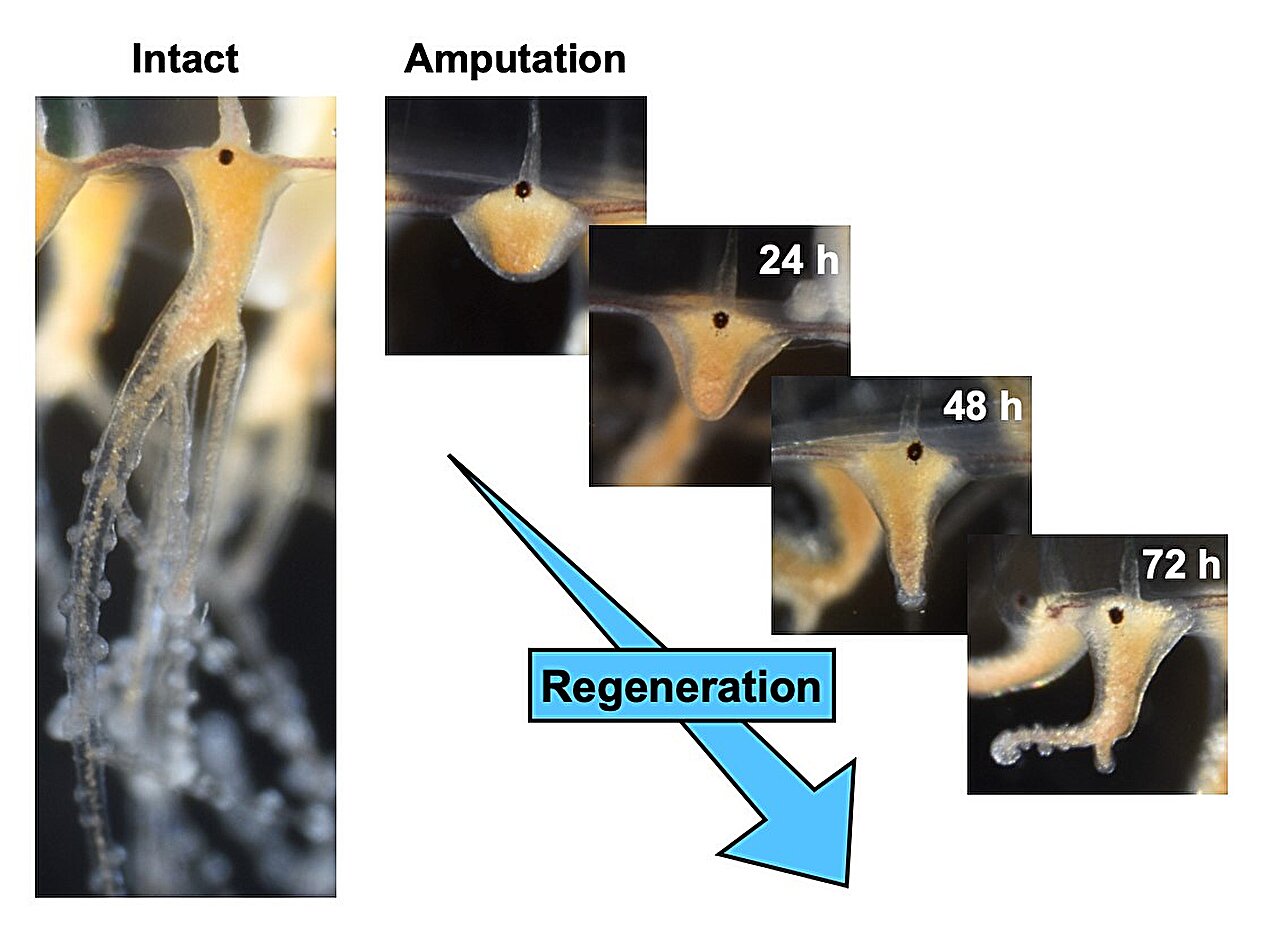
“Importantly, these stem-like proliferative cells in blastema are different from the resident stem cells localized in the tentacle,” Nakajima explained. “Repair-specific proliferative cells mainly contribute to the epithelium – the thin outer layer – of the newly formed tentacle.”
“Together, resident stem cells and repair-specific proliferative cells allow rapid regeneration of the functional tentacle within a few days,” he added.
Unfortunately, like the tentacles themselves, the puzzle has regenerated: the problem is now open as to what the cellular origins of these stem-like cells are, and the tools currently available simply aren’t able to tackle such complicated questions.
But just because there are things left to decipher, doesn’t mean the findings aren’t an important breakthrough: the team says that their discovery holds crucial clues as to how limb regeneration functions in more complex organisms too.
“Our aim was to address the mechanism of blastema formation, using the tentacle of cnidarian jellyfish Cladonema as a regenerative model in non-bilaterians, or animals that do not form bilaterally – or left-right – during embryonic development,” first author Sosuke Fujita, a postdoctoral researcher in the same lab as Nakajima in the Graduate School of Pharmaceutical Sciences, noted.
But, he explained, “given that repair-specific proliferative cells are analogs to the restricted stem cells in bilaterian salamander limbs, we can surmise that blastema formation by repair-specific proliferative cells is a common feature independently acquired for complex organ and appendage regeneration during animal evolution.”
So, who knows: with the right tools – which will be a quest in its own right – we may well one day be regrowing limbs, Terminator-style. We guess it’s true what they say: today, the jellyfish; tomorrow, the world.
The study is published in the journal PLOS Biology.