


 Nature
 PUBLISHED





According to some accounts, early as 565 CE people have reported an odd and massive creature living in Loch Ness, Scotland.
As far as scientists can tell, through techniques such as DNA analysis and good old-fashioned camera traps, there is no real evidence to suggest that the "Loch Ness Monster" exists. The same is true of Bigfoot, aka Sasquatch.
Though hairy, bipedal creatures have reportedly been spotted for hundreds of years, there isn't much in the way of substantial evidence. As well as problems with well-known Bigfoot footage, DNA analysis of supposed samples are usually bears, or else raccoons, horses, cows, sheep, deer, a goat-like serow, porcupines, and bears.
But could they exist? Well, the evidence suggests that is very unlikely. But there have been creatures in the past which people were heavily skeptical of, or dismissed outright as a cryptid, only for them to turn out to be genuine, real animals.
In a way, it's pretty unsurprising that several cryptids turned out to be real animals. With all the weird and wonderful creatures out there, it was bound to happen that somebody called bullshit on, for example, a giraffe.
But what cryptid animals did actually turn out to be real?
Before we get into this, we should first note that in many of these examples the animals in question were perfectly well known to local people and communities. It's the outsiders from far-off regions often dismissing this knowledge who thought of them as cryptids. Quelle surprise.
Platypus (Ornithorhynchus anatinus)
One of the more obvious examples of this is the Australian platypus. Only the most hardcore of monotreme fans would describe them as other than "weird little dudes".
They're one of only a few venomous mammals, have a bill that detects electric fields, and lay eggs. They also nurse their young, despite not having nipples, by oozing milk out of their mammary glands where it collects in their fur and folds of their skin. The babies then suck it out of the fur, or lap it up from the folds.
Early European scientists wouldn't know about any of these odd behaviors, but there were plenty of other curious features that would set their suspicions racing.
When the first platypus skin and sketch were sent back to Europe in 1798, some believed it was a hoax. They thought that, for example, a duck's bill had been stitched to the body of a mole to form something of a duck-billed mole-icus.
It was formally described by scientists in 1799, but it wouldn't be until a few years later in 1802 when Colonel David Collins wrote about the creature "having instead of the mouth of an animal, the upper and lower mandibles of a duck" that the platypus was fully accepted as a bona fide, real animal, by most Europeans.
Gorillas (Gorilla gorilla)
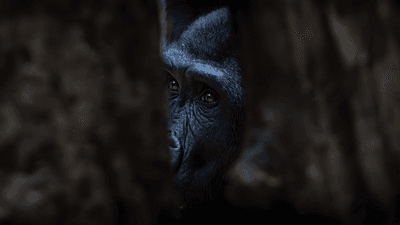
It has been suggested that the earliest known written account of gorillas goes all the way back to Hanno the Navigator, a Carthaginian explorer writing in the 5th century BCE after exploring the continent of Africa. He first describes rumors of "men of a different build" living in the mountains, and capable of running "faster than horses".
Later on, he describes encountering a group of unusually hairy "wild savages" on an island.
"The biggest number of them were females, with hairy bodies, which our interpreters called 'Gorillas'," Hanno wrote of the encounter. "Chasing them, we could not catch any of the males, because all of them escaped by being able to climb steep cliffs and defending themselves with whatever was available; but we caught three females who bit and scratched their captors and they did not want to follow them. So we had to kill them and flayed them and we brought their skins to Carthage."
The exact identification of these animals is not certain, but their name stuck. Gorillas would eventually be described much later on, in 1625 CE, when English explorer Andrew Battel recounted human-like creatures regularly visiting his campfire.
"This Pongo is in all proportion like a man, but . . . he is more like a Giant in stature, than a man: for he is very tall, [and] hath a man's face, hollow-eyed, with long haire vpon his browes. His face and eares are without haire, and his hands also. His bodie is full of haire, but not very thicke, and it is a dunnish colour," Battel wrote. "Those Pongos are neuer taken aliue, because they are so strong, that ten men cannot hold one of them."
Despite these accounts, and the remains delivered by Hanno, belief in gorillas remained rare in Europe until the mid-19th Century CE. They were finally described scientifically in 1847, and then shown around the continent.
Giant squid (Architeuthis dux)
Giant kraken and other sea monsters have been the legend of sailors for centuries. While some argue that the original kraken was not a squid, it seems feasible that at least some of the sea monster myths could have been inspired by early sightings of the giant squid, which we now know can grow up to an impressive 13 meters (42 feet).
Written documentation of giant sea creatures goes back a long way. Pliny the Elder provided the first written description of a giant cephalopod whilst discussing the largest animals of various known oceans.
"The largest in the Gulf of Cadiz is the giant octopus," he wrote, "which spreads out such vast branches that it is believed never to have entered the Straits of Gibraltar because of this".
While rumors of even bigger cephalopods swirled around the oceans for centuries, it wasn't until 1857 when Danish zoologist Japetus Steenstrup was gathering these reports and stories that he also presented a large squid beak, confirming the giant squid as anything other than a myth.
Okapi (Okapia johnstoni)
Okapi sound so weird that they were called the "African unicorn" by Europeans of the 18th and 19th centuries. These animals were, of course, known to local people but due to their elusive nature were not known to the European explorers and colonizers.
They are sometimes referred to as the "forest giraffe" or "zebra giraffe" due to their giraffe-like head and funky zebra stripes. But while their closest relative, the giraffe, was well known and even slaughtered by Roman emperors, the okapi remained almost mythical to Europeans until Sir Harry Johnston got his hands on an okapi leather belt and skull in 1901.
All in all, it's a lesson in listening more to local people when they tell you odd tales of hairy and/or giraffe-like creatures lurking in the forests, mountains, and islands. But Nessie can't be real, can it?


 1
1