Nature
 PUBLISHED


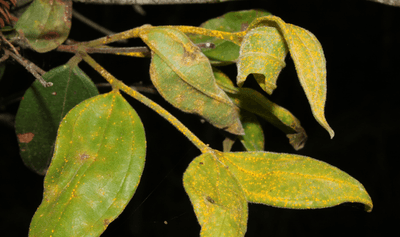


Rhodamnia zombi is one of many species of plant threatened by a devastating species of myrtle rust, but it’s the only one whose battle for survival has been encapsulated in its scientific name. However, the team that named it hold hopes with recent progress that, one day, its designation could be ironic, if its future as a living species is restored.
In the rainforests of South America, various Austropuccinia fungi are parasites on rainforest plants. However, species there have evolved a level of resistance, and survive with only limited damage known as myrtle rust. That resistance actually benefits the fungus – if it killed all the species susceptible to it, the fungus would die out soon after. Unfortunately, in 2005 a member of this genus, Austropuccinia psidii, turned up in Hawaiian guava plantations outside what is thought to have been its original range, and proved absolutely devastating.
One of the world’s most dangerous invasive species, A. psidii has since spread across much of the world, and is proving devastating to unprepared commercial crops and wild rainforest species alike. In Australia, 17 species are teetering on the edge of extinction, but one – R. zombi – is representative of a fightback that may save many of them.
When A. psidii reached Australia in 2010 it quickly got into the rainforests. Although the Rhodamnia genus includes many of the most vulnerable species, others proved resistant. Those without resistance didn’t die straight away, but became unable to produce seeds. One of these was a plant that had been found in museum collections going back almost a century, but scientists had not got around to giving it a scientific description or name.
“It is a small to medium-sized tree with large dark green leaves, shaggy bark and hairy white flowers growing in rainforests in the Burnett region,” Professor Rod Fensham of the University of Queensland said in a statement. “The bright yellow fungal pathogen attacks and kills off its young shoots over and over again meaning an infected tree can’t grow or reproduce and eventually dies.”
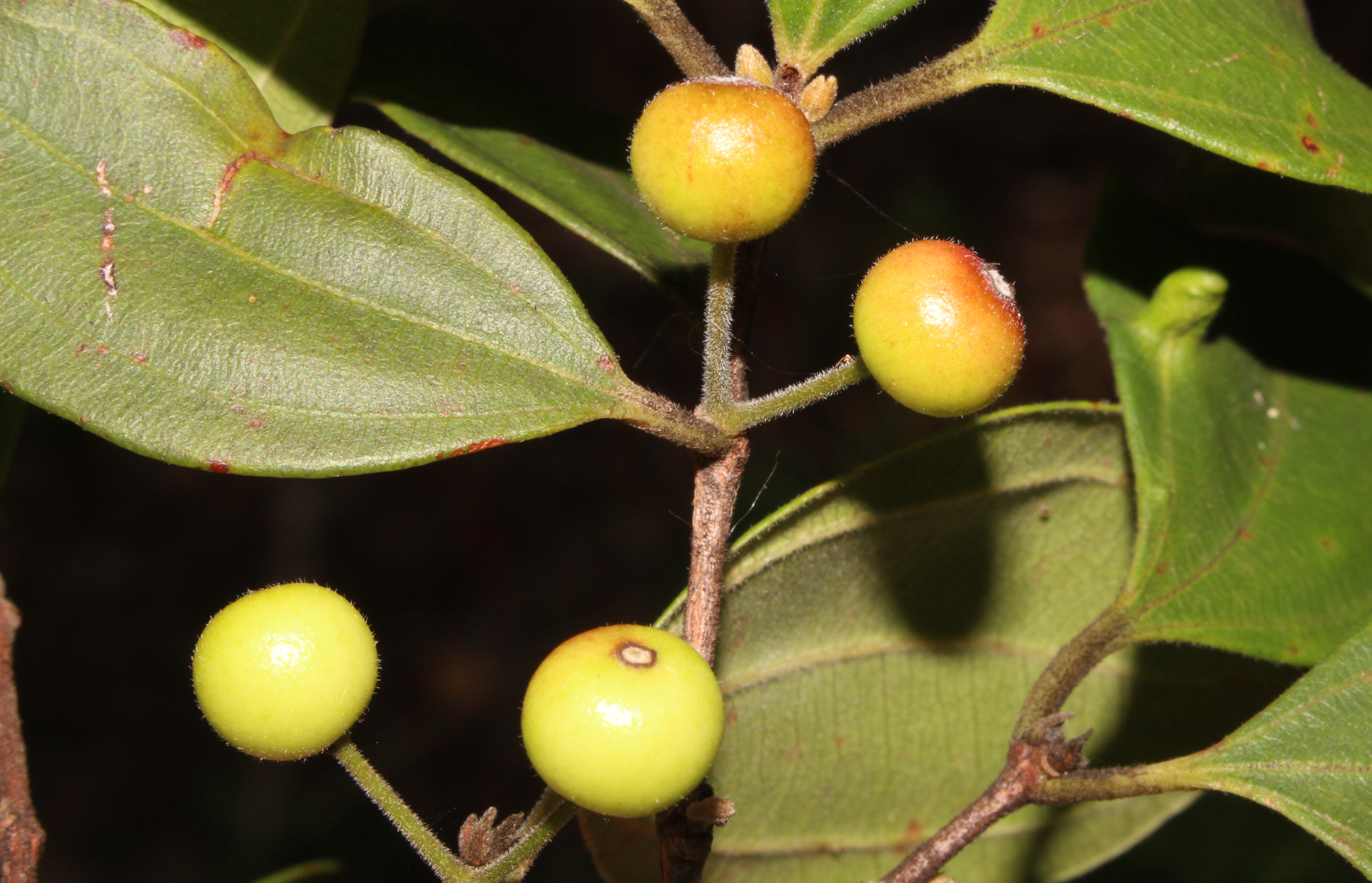
Like religious figures who rushed to baptize sick babies, Fensham and colleagues thought it was wrong for the species to die without getting a name. They called it R. zombi, both because they considered the name accurate for a what appeared to be the living dead, and in the hope the name would attract attention and funding for the wider problem.
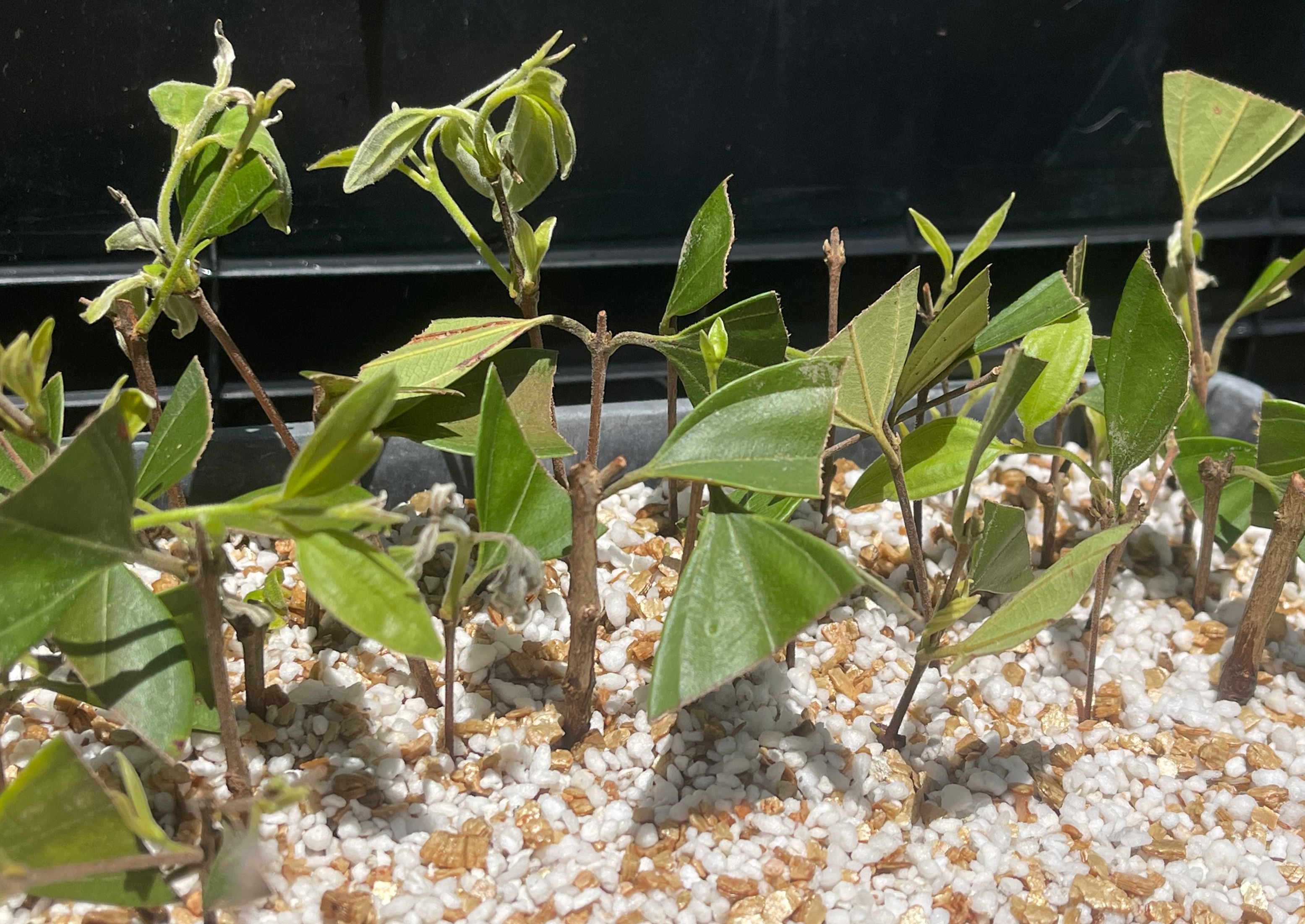
In that, it seems they have had some success. The myrtle rust is now so widespread that the only known R. zombi seeds are in old collections and unlikely to be fertile. However, cuttings taken from trees that still had some uninfected portions have been taken to sites where fungicides keep the rust at bay.
Milo Wakeman-Bateman, a staff member at one site, Barung Landcare Nursery, Maleny, has demonstrated a capacity to make plants grow from cuttings that make others despair, and is growing R. zombi among other rust-threated species. “Hopefully once they produce seed, lurking in the next generation of Rhodamnia zombi some resistance will become apparent,” Fensham said. “It’s ambitious but the species needs time and space without being constantly walloped by myrtle rust to hopefully express some resistance. Left to its own devices, the trees in the wild really will be the living dead.”
There’s a genetic switch lurking within the genus.
Professor Rod Fensham
Fensham told IFLScience that the members of the Rhodamnia genus that have proven resistant don’t show any obvious differences from those that have succumbed, and sometimes appear to be close relatives. “There’s a genetic switch lurking within the genus,” he said. “The key thing is to grow as many plants as we can, hope that the species expresses its genetic variation and shows strains that have not expressed in wild.” The more strains there are, the more chance one will flick the switch back on, opening up the possibility of breeding a population that can be returned to the wild.
“It sounds like a long shot, but has been done with other species… finding tolerance in species we thought were doomed,” Fensham said to IFLScience
Similar programs are under way for some of the other 16 Australian species that are similarly endangered, but lack equally catchy names. Others, however are currently being left to their own devices, with Fensham saying those whose habitat is closest to where the work is being done are generally the lucky ones, rather than some more scientific triage.
Fensham told IFLScience A. psidii has shown the capacity to cross large distances carried by the wind. However, it probably reached Australia through the plant nursery trade, many of whose members are irresponsible about their imports. “Like COVID-19, globalization makes the spread inevitable,” he said.
Rhodamnia zombi was named and scientifically described in the journal Austrobaileya. The quest to save it and other rainforest species is described in a study published in Austral Ecology.