Nature
 PUBLISHED


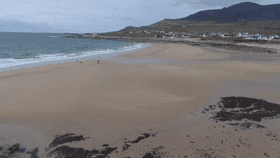


A sandy beach in an idyllic Irish village has reappeared within a matter of days after being lost to the sea for 33 years.
The beach in Dooagh on Achill Island off the west coast of Ireland was washed away by storms in 1984, leaving just gray and rugged rocks behind. However, thanks to some more freak storms and the high Spring tides, the sand has returned to Dooagh Bay.
The aerial drone video footage (below) was filmed on April 28 by Sean Molloy, manager at Achill Tourism office. The other video (bottom of page) was filmed in the same area around mid-March of this year by estate agents Emma Gill Property Partners. As you can see, aside from the stunning Irish backdrop, they are very different scenes.
So how might this have occurred?
“Sand along the coast is in a constant state of flux, moved by storms, waves and wind,” said Dr Ivan Haigh, associate professor in coastal oceanography at the University of Southampton, according to The Weather Channel.
“It is also influenced by the available supply of sediment from stretches of coastline many 100 kilometers (62 miles) away. The strength of storms and waves change on decadal time-scales, and it is also possible that environmental conditions have altered, providing the ideal conditions for a fresh build-up of sand. It is also possible there has been a change in the supply of sand much further down the coast.”