


 Space and Physics
 PUBLISHED


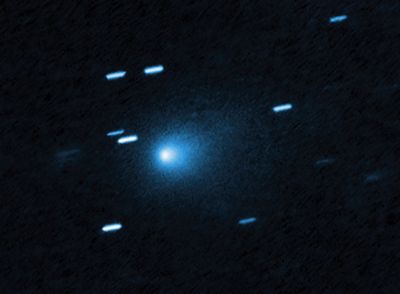


Almost one year on from its discovery, the latest analysis of observations of interstellar comet 3I/ATLAS continues to add richness to this object – as well as challenging what we know about not just comets, but also other planetary systems. The comet might be much older and come from a more extreme environment than previously thought.
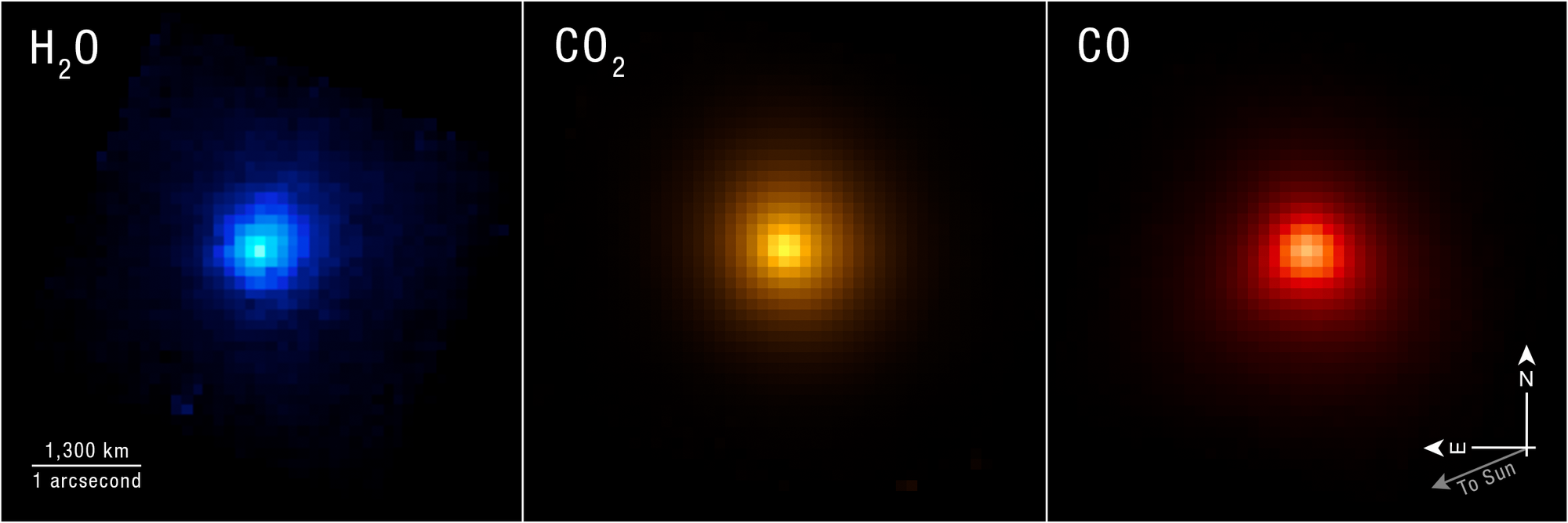
JWST has observed the comet in detail, being able to measure the chemical composition of this object with such depth as to provide insights into its precise age and the environment in which it formed.
In a world exclusive days after its discovery, IFLScience reported that the orbital motion of the comet suggested that this object was likely older than the Solar System, up to 10 billion years old. The new data claims that the comet might be even older.
The team looked at isotope ratios. Elements are distinguished by the number of protons, positively charged particles, in their nuclei. Hydrogen has one, helium two, and so on. Elements also have neutrons in their nuclei. The basic form of hydrogen has no neutrons, but deuterium is a hydrogen made of one proton and one neutron. Stable forms of helium can have one neutron or two neutrons. These are all called isotopes.
By measuring the ratio of isotopes of the same element, scientists can work out the ages of objects (this is the case in carbon dating). In space, it might also provide information about the environment where an object formed, because not all isotopes form in the same conditions.
In these JWST observations of comet 3I/ATLAS, the isotopic ratios confirm once again that it is an exceptional comet. It has 10 times more deuterium than other known comets, and the carbon ratios exceed what is seen from comets in the Solar System.
“This was a unique opportunity to study an ancient object from the distant galaxy, probably pre-dating our Sun and Solar System,” lead author and astrochemist Martin Cordiner, of NASA’s Goddard Space Flight Center in Greenbelt, Maryland, said in a statement.
“On the one hand, we get direct insight into that distant time and place, and on the other, we learn something about how unusual our own Solar System may be.”
The peculiarities of this comet are explained, according to the researchers' team, by a comet of 12 billion years of age. That's several billion years older than the kinematic estimations.
It also comes from a cold environment, something that was also previously estimated by observing the comet with the ALMA observatory. The comet formed in an environment colder than -243°C (-406°F). And that’s not all.
The carbon composition suggests that the planetary system where it formed must have been in an area of intense star formation. This comet is a time capsule of a place and a time in the history of our galaxy that no longer exists.
The oldest known planet is called “Methuselah,” PSR B1620-26b, and it is 700 million years older than this object. Both are over 2.5 times older than the Earth and the Solar System.
“3I/ATLAS thus represents a preserved fragment of an ancient planetary system,” the authors wrote.
The study is published in the journal Nature.



 1
1