Nature
 PUBLISHED


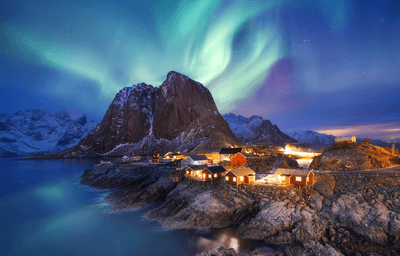


Each year in the North Pole, the Sun sets in mid-September and doesn’t return until mid-March, creating a polar night that lasts for 179 days (around six months). An equally long night occurs in the South Pole too, albeit in the “opposite” time of year during the Southern Hemisphere's winter. In fact, a bunch of different countries that are placed in extreme latitudes have incredibly long periods of darkness during the winter months.
In Utsjoki, the most northern municipality in Finland, the polar night starts at the end of November and lasts as long as 52 days until January.
A similar schedule occurs across the border in Arctic Norway. In the North Cape, the very northern tip of the country, the sun sets around November 20 and doesn’t rise until January 22, lasting over 60 days.
Qaanaaq in North Greenland (one of the northernmost towns in the world) the polar night lingers from October 24 to February 17. In Greenlandic, this period is Kaperlak. The annual coming of the darkness isn’t celebrated, but the first sunrise in February is always welcomed with festivities and parties.

The town of Utqiaġvik in northern Alaska undergoes polar night of 60 days running from November 18 until January 22. Many towns in the northernmost stretches of the Russian Federation also have equally long polar nights that last for weeks on end.
Some of the longest periods of darkness can be found in the northernmost continuously inhabited place in the world: Alert, in the Qikiqtaaluk Region of Nunavut in Canada. Here, the polar night lasts 106 days from October 30 to February 13.
While undoubtedly relentless, polar nights aren’t completely pitch black. Some hints of sunlight can be seen for a few hours each day, turning the skies a soft blue color. This appearance of light is due to the refraction of sunlight through Earth's atmosphere, meaning it can produce hues of pink, red, orange, and other colors typically seen during sunset and sunrise.
It's truly impressive that, even with extended periods of bleak darkness, people continue to live and thrive in these extreme latitudes, adjusting to the rhythm of the polar night. As ever, life – uh – finds a way.