Health and Medicine
 PUBLISHED
 1
1


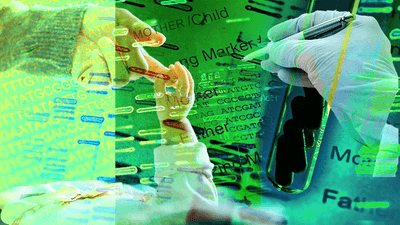


In 2002, a young mother in Washington state applied for financial assistance after separating from the father of her children. The state required genetic tests to support the claim, all standard procedure – but it was the start of a legal and scientific journey that surprised everyone. The maternity test was not a match, suggesting that the mother was not biologically related to her own children – children, mind you, that she definitely remembered giving birth to. Welcome to the weird world of human chimerism.
The case of Lydia Fairchild, the mother from Washington, captured the public imagination and has appeared in numerous documentaries and books. Because it’s just so bizarre, right? We hear about paternity tests all the time, but you don’t expect someone to fail a maternity test, since it’s pretty hard to forget or falsify having a baby.
When the DNA results indicated that Fairchild was not biologically related to her children, the first recourse for lawyers and social workers was to accuse her of lying, and thus committing welfare fraud. The children were clearly related to their father, Jamie Townsend, so Fairchild must not have been truthful about her relationship with him.
DNA evidence was considered uncontestable – it didn’t matter that Townsend confirmed Fairchild’s story, nor that she could produce photographs of herself with the children throughout their lives. At the time, she was due to give birth to her and Townsend’s third child, so a court officer was reportedly ordered to be present to physically witness the delivery. DNA testing on that child told the same story: the child was a genetic match for Townsend, but not Fairchild.
Not understanding how the DNA evidence could possibly be misleading, the judge in the case maintained that some sort of deception must have been happening on the part of Fairchild. However, the new evidence was enough to convince lawyer Alan Tindell to represent her.
It was when Tindell came across a scientific paper from May 2002, that same year, that the pieces started to fall into place.
The case report, published in The New England Journal of Medicine, detailed the story of a woman who was later named as Karen Keegan. In her 50s, Keegan had needed a kidney transplant, and her husbands and two of her sons had been tested to see if they might be compatible donors. It was during this process that it was discovered that these two sons were not genetically related to Keegan, despite the fact that they were her own children she had given birth to.
Keegan’s third son, who was too young to be a kidney donor, was then tested. As it turned out, he was a DNA match. Upon further study, the researchers had discovered that Keegan was, in fact, a chimera – she had two different sets of DNA inside her body. It’s very rare, but it explains everything. Was the same true for Fairchild?
The answer, discovered after more tests, was yes. Swabs from Fairchild’s cervix revealed a DNA lineage that matched that of her children, whereas DNA collected from the more standard locations like the cheek, hair, skin, and blood produced a completely different DNA result. Fairchild’s mother also put forward samples that proved her to be a biological match as the children’s maternal grandmother. The case against Fairchild was finally dismissed, and the whole affair prompted a reckoning with the reliability of DNA evidence in the US legal system.
What is chimerism?
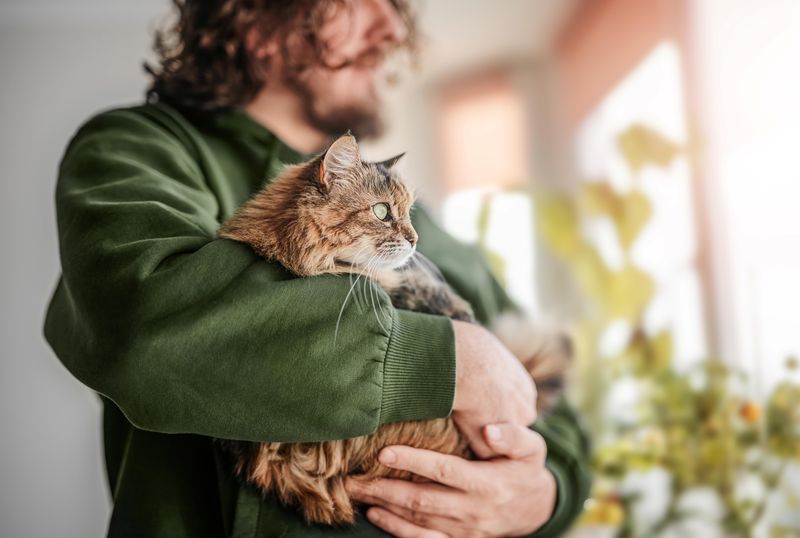
Chimerism is the condition of having multiple genetic lineages present in one body. Examples crop up from time to time in the natural world – take the appropriately named yellow crazy ants, for instance. Chimeric cats also exist (and may be more common than we think), and among sea sponges chimerism is all over the place.
In humans, however, it’s extremely rare – though, as the authors of the case report on Karen Keegan pointed it, situations like hers may be underrecognized as they’re so hard to detect.
The usual process of human reproduction starts when sex cells or gametes – eggs and sperm – fuse during fertilization. Gametes contain only half the usual number of chromosomes each, meaning that the resulting embryo ends up with the full complement. In humans, that’s 46, organized into 23 pairs.
That DNA doesn’t remain static afterwards – lots of little copying errors and mutations begin to build up from the moment of conception, continuing throughout embryonic development and beyond. Most probably don’t cause any problems, while some others may be associated with the risk of diseases and conditions that might not become apparent until much later in someone’s life.
But mutations during the process of cell division are not going to give rise to a whole, entirely different DNA sequence. So how is it possible that someone like Fairchild could have one set of DNA in one part of her body, and a totally distinct one in another?
Tetragametic chimerism
There are a few different types of chimerism, some even rarer than others, but the type that was implicated in the cases of Fairchild and Keegan is called tetragametic chimerism.
Most of the time in humans, the process of fertilization we talked about above happens with one egg and sperm at a time. Unlike some animals that routinely give birth to multiple young at once, multiple births in humans are much less common than single births.
Sometimes a fertilized egg can spontaneously split and give rise to two embryos – that’s how we get identical twins. But sometimes two eggs do get fertilized at the same time, by two different sperm cells. If both go on to develop, you’ll get a set of non-identical or fraternal twins.
Rewind to where we talked about each sperm and egg cell containing half the usual chromosomes. That’s correct, but it doesn’t mean that each egg and sperm cell is identical. Through the process of DNA recombination, bits of chromosomes get swapped around, leaving a patchwork of maternal DNA in each egg and a patchwork of paternal DNA in each sperm. This is why twins born from two separate eggs and sperms are non-identical.
Sometimes as these two embryos start to develop in the womb, one can supersede and even absorb the other. Some call this “vanishing twin syndrome”. The mother may be completely unaware there were ever two embryos in her womb at all; the child, when they’re eventually born, would therefore have no idea they once had a sibling whose genetic material is now inside them. This is tetragametic chimerism.
“I absorbed my twin sister, so I carry her DNA and cells within my body,” explained TikTok user Rachelle (@radrachelle) in a viral video. She discovered the condition as a teen, but had always carried physical signs of her chimerism: two different colored eyes, and different skin pigmentation on each side of her body. These physical indicators are often, but not always present.
Neither Fairchild nor Keegan were known to have any indicators of their chimerism. Keegan was discovered to have different DNA profiles in cells throughout her body, in contrast with Fairchild’s case where the DNA lineages were very localized.
“The oft-taught equation of ‘one individual, one genome’ fails to capture the full complexity of reality,” writes Lise Barnéoud in her book Hidden Guests: Migrating Cells and How the New Science of Microchimerism Is Redefining Human Identity. In an extract published by Live Science, Barnéoud goes on to say, “What seemed a long-established and unshakable certainty, even to me, has turned out to be imperfect knowledge in need of revision. We know too little about our own biology to have blind faith that DNA profiling will always reveal a person's identity or origins.”
“It's impossible to know how many Karen Keegans and Lydia Fairchilds exist. Most of the time, the existence of chimeric cells from vanished twins goes unnoticed.”
How trustworthy is DNA evidence?
DNA still plays a massive role in criminal investigations and it’s incredibly useful, but as these cases illustrated, it’s not infallible.
Most people are not chimeras; but some people are, many of them have absolutely no idea about it, and it’s only likely to become relevant during a vulnerable time like a court case or medical investigation, when it’s more important than ever that the truth becomes known.
“Our ultimate proof is far from foolproof,” Barnéoud writes. “Yet it is very often used to determine relationships, prove or disprove paternity, evaluate applications for family reunification, or convict persons otherwise presumed innocent.”