Nature
 PUBLISHED
 3
3


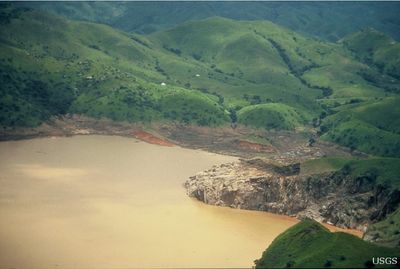


August 21, 1986, was not a remarkable day for villagers living near Lake Nyos, in northern Cameroon. They woke up; they tended their crops and livestock; they held their loved ones, their children, close; they went to bed. And then, they died. All of them.
“On that day there were no flies on the dead,” Ephriam Che, a survivor of that night who had the good luck to live slightly too far from the lake to be affected, told Smithsonian Magazine many years later – the flies, he explained, were dead too. Running downhill towards the houses nearer the lake, he found thousands dead: animals; strangers; his friends; his cousins; his parents and siblings. All were gone.
“I was crying, crying, crying,” Che recalled. He had gone to bed with a headache the night before, he remembered; a strange booming sound had rolled across the valley at one point, but he had just blamed the oncoming rain. Now, there was only silence: no birdsong, no calls from crickets or cicadas, no chattering children or early rising adults.
The bodies lay strewn about, still in the positions where they had, just nine hours earlier, been enjoying their normal nightly routine: some were next to cooking fires; others had fallen in doorways; many had simply gone to bed and never woken up. Even the lake itself seemed transformed, with its normally crystal blue waters now a dull, dead, red.
It must have seemed like an apocalypse. In a sense, it was.
What happened at Lake Nyos?
For a while, nobody knew what could have caused such a tragedy. Death was everywhere, but there was no accompanying destruction: houses still stood upright; the villages and fields were healthy and green; no possessions had been looted. Evidently, whatever had happened was no physical disaster.
Perhaps it was some mysterious sickness, then? A highly contained virus that had swept through only a few villages, killing almost everyone in its path. Except, that didn’t add up either: as outsiders and officials came to the villages to investigate, none of them fell ill. A conspiracy, then – a targeted chemical attack, wrought by either rebels or the government itself – maybe that was the answer.
In time, experts from overseas started turning up to investigate. “When we first arrived, everything seemed to point to a volcanic eruption,” said Bill Evans, a volcanologist at the time working at the United States Geological Survey (USGS), in a 2002 episode of BBC Horizon. “First there was the fact that the lake occupies a volcanic crater. Second, there was the scale of the disaster and third, there was the burns on some of the victims. All of that seemed to be consistent with a volcanic eruption.”
But again, there were problems with this explanation. Volcanic eruptions tend to produce, you know, lava, or steam, or at the very least sediment churned up in the water – but none of that was visible. When they tested the lake for signs of an underwater eruption, they came to similarly dead ends: none of the telltale minerals that would usually be left, and the water wasn’t even any warmer than usual.
So what could the culprit have been? The answer came with a bang – quite literally.
Lessons from Monoun
To experience one mysterious mass die-off on the shores of an otherwise peaceful lake would be a tragedy by any measure. To experience two, however – well, you’d be forgiven for thinking something fishy was going on.
And yet, Lake Nyos was somehow not the first disaster of its kind. A couple hundred kilometers (about 120 miles) north, the same thing had happened – albeit on a smaller scale – on a small dirt road near Lake Monoun, where 37 people had dropped dead almost exactly two years earlier.
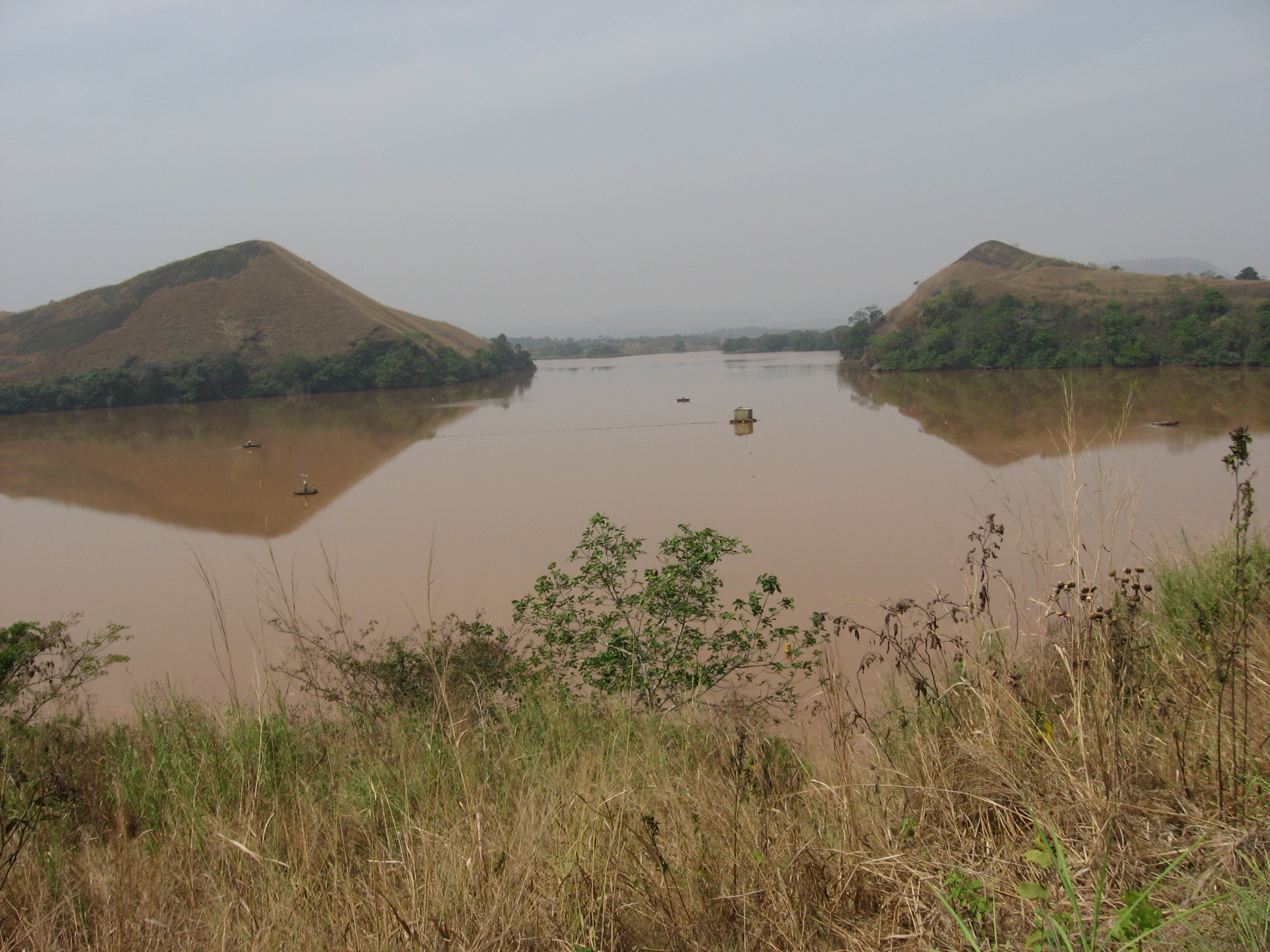
Back then, it had taken a kind of visionary geologist to solve the case: Haraldur Sigurdsson, a volcanologist at the University of Rhode Island. Like Evans after him, he found no indications of volcanic eruptions – but when he took a sample of the water, something surprising happened.
“We were hauling them in, and […] we see that they're bursting with gas,” Sigurdsson recalled to the BBC. “Huge bubbles are coming up and then I immediately realised that the deep waters of the lake are saturated with a gas.”
“It was clear to me then that carbon dioxide was the asphyxiating agent,” he said, “the deadly agent that had let to the disaster in Monoun.”
But finding out whodunnit was only half the answer. The next questions were howdunnit, and why, and whether it could be prevented from being dun in the future. So Sigurdsson took his samples back to the US and tried to figure out what on Earth could have forced out enough carbon dioxide from a lake in one burst to kill everyone nearby.
Shock waves
The thing about carbon dioxide is, it’s different depending on where it comes from. The stuff we breathe out is one type; the stuff that comes out of volcanoes is another; each has its own distinct chemical and isotopic signature that can, if you know what you’re doing, lead you to its origin.
Sigurdsson knew what he was doing. But the chemical signature of the carbon that came from Lake Monoun was none of those. In fact, Sigurdsson found, it came from deep within the Earth, seeping up into the lake through cracks in the ground underneath.
Now, that’s not enough to cause a disaster on its own. Carbon dioxide is pretty soluble in water – it’s part of the reason we’ve been spared the worst of climate change so far – and it’s exponentially more so at the bottom of a lake like Nyos. Two hundred or so meters (around 650 feet) below the surface, a liter of water can hold about 20 liters of carbon dioxide without any fuss, kept safely dissolved by the low temperatures and high pressure of the deep.
But should something disturb those nice, stable conditions – well, then all hell breaks loose.
“We brought the first samples up from the bottom [of Lake Nyos] and they literally exploded,” recalled George Kling, a professor of Ecology and Evolutionary Biology at the University of Michigan, to the BBC. “[T]here was so much gas in them”.
No longer constrained by the immense weight and pressure of the lake, the carbon dioxide rapidly escapes from the water – so rapidly, in fact, that it basically explodes. That’s a surprise when it happens with a sampling tube, but when it happens to an entire lake? That would be a phenomenon so deadly and rare that when Sigurdsson proposed it as the killer for Lake Monoun, people simply couldn’t accept it.
“The idea that a lake itself could have done this didn't really fit with anyone's expectation,” Kling said. “Lakes don't kill people. People may drown, but they just don't explode and kill people”.
“It was a little bit of a leap to go from a relatively easy explanation of a volcanic eruption to something that no one had ever heard of before.”
A ticking timebomb
Why exactly the carbon dioxide suddenly moved skyward on that night, nobody knows – even today. Maybe it was a landslide, or some steam explosions deep beneath the lakebed – a fairly normal occurrence for a crater lake like Nyos. Perhaps it was something as simple as a wind blowing at just the right strength and direction to slosh the water about.
Whatever it was, it only needed to be small – enough to make just enough cold water from the bottom of the lake to move upwards, by just enough to warm slightly. Carbon dioxide would be released, forming bubbles, which would rise to the surface, bringing more cold water upwards with them; those too would then bubble, creating a positive feedback loop that could only end in one explosive way.
But yeah, we’ll probably never know for sure what caused it. And that – that was worrying.
“This lake really is a timebomb,” Evans said. “The gas that comes into this lake every day increases the danger of an eruption, so unless steps are taken to remove that gas it's almost a certainty that the lake would erupt again.”
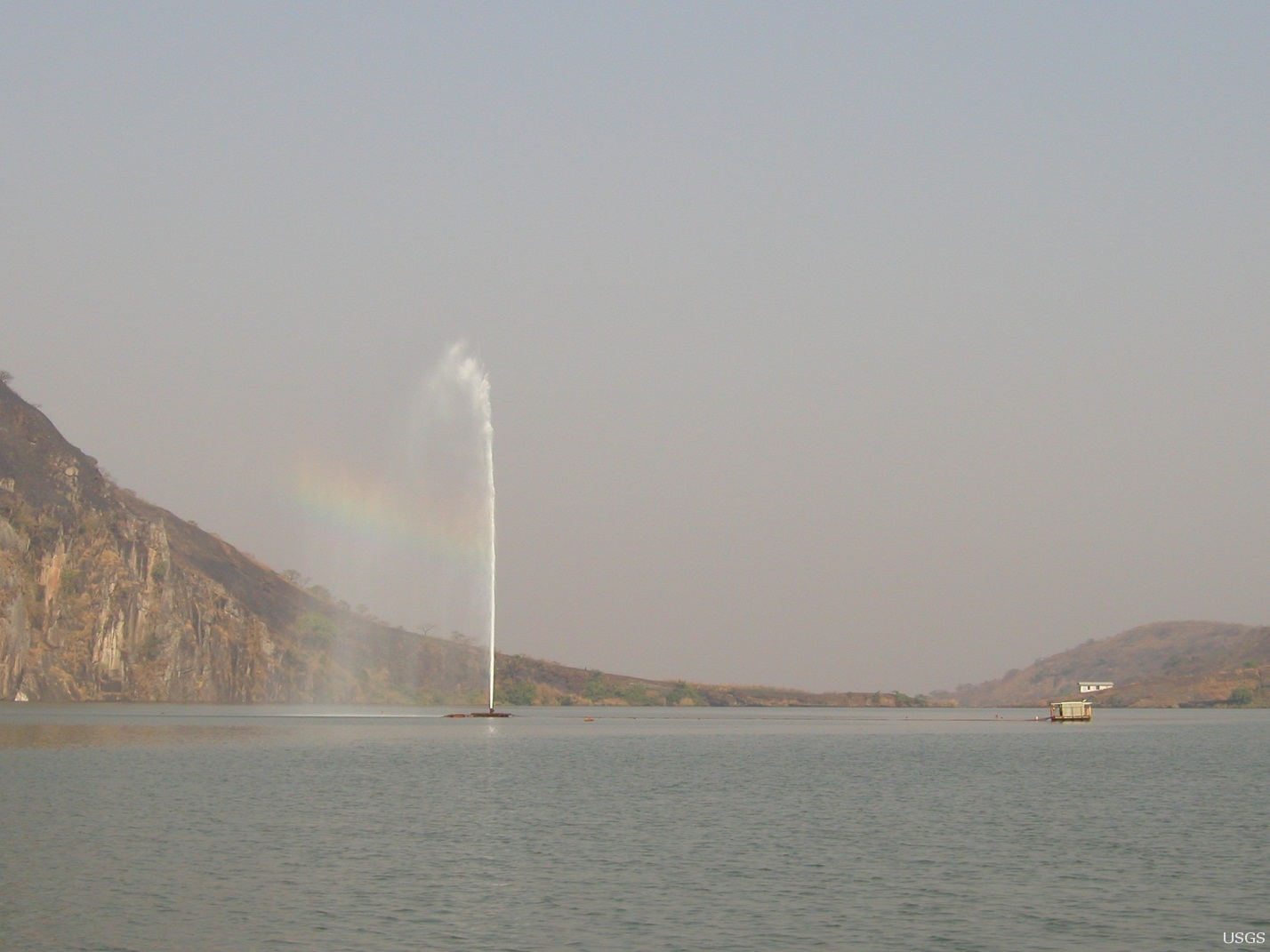
It took a few years, but eventually a solution was found. It’s kind of delightfully simple – if Lake Nyos is a soda bottle, the way to defuse it is essentially a straw: a huge, 14.5-centimeter-diameter pipe (5.7-inch) that reaches all the way to the bottom of the lake and allows the carbon dioxide to vent out into the air. Its installation in 2001 was certainly remarkable: within seconds of its activation, a jet of water was fired 50 meters (164 feet) into the air at 100 miles per hour, and the crowd cheered.
Since 2019, the process has been self-sustaining – the gas going into the lake no longer outpaces the venting of it. Finally, 40 years since it killed almost 1,800 humans and countless animals, Lake Nyos is officially safe.