Nature
 PUBLISHED
 6
6


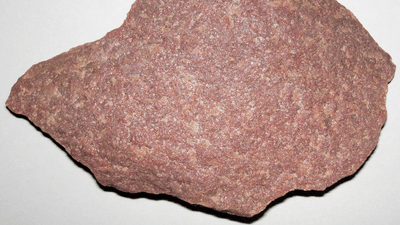


In the southwestern Indian Ocean, the volcanic island of Anjouan is home to a strange geological mystery. On the island, residents and geologists keep finding a type of rock that shouldn't be there.
The island formed on an ocean basin, when tectonic plates shifted away from each other and magma moved up and cooled to form basalt, of which the island is made. On Anjouan you should not expect to find the sedimentary rock quartzite, a type of sandstone made from quartz sand grains that have been collected in river deltas, before being compressed into quartzite over time. The island's basalt does not contain any quartz, and the island itself is too young to have formed a sizeable river delta.
And yet, on the island geologists have reported for perhaps over a century that they have found quartzite in abundance.
In 1900 geologists reported unusual rocks that could have been quartzite, though the documentation was too poor to know for sure. In 1969, geologists found a large formation of "sandstone" on the island near the town of Tsembehou, which was later found to be quartzite. Then in 2017, French geologist Patrique Bachèlery found more quartzite at a nearby ridge.
Setting out a few years later, geochemist at Columbia University’s Lamont-Doherty Earth Observatory Cornelia Class started to investigate. Sure enough, she and her team found quartzite within minutes, and an abundance of it up along the ridge.
“This is contrary to plate tectonics,” Class said in a Columbia University press release. “Quartzite bodies do not belong on volcanic islands.”
Residents told Class that they find the rocks all the time, and use it to sharpen their knives, pointing them in the direction of yet more quartzite. Mapping it out, Class found that the amount of quartzite was "almost half a mountain".
As yet, there isn't a definitive explanation for the quartzite. A chunk of quartzite from continental crust must have found itself deposited in the ocean basin, and then raised up 4,000 meters (13,123 feet) above the seabed by the igneous basalt, yet Class told Live Science that the chemistry of the island's basalt rocks don't show an association with continental crust, calling the find "something we consider impossible, but then we find it, and once we find it, we have to explain it."
Aging the quartzite will help determine when it was deposited, and hopefully how it came to be the only volcanic island in the world with a chunk of continent – possibly from the breakup of ancient continent Gondwana – sitting on it.
An earlier version of this article was first published in May 2023.