Space and Physics
 PUBLISHED


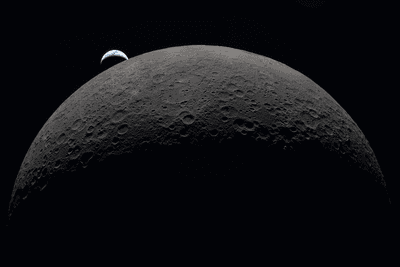


When Neil Armstrong and Buzz Aldrin returned from the Moon, they were kept in quarantine for three weeks lest they bring back any lunar lifeforms that could infect the Earth. It was soon concluded that not only was there no life on the Moon, but Earth life couldn’t survive there either, at least without substantial protection.
However, that assessment may have an exception at the lunar South Pole, the target of future missions.
There are many reasons why life cannot survive on the Moon: the extremes of temperature, the harsh radiation and the lack of water being chief among them.
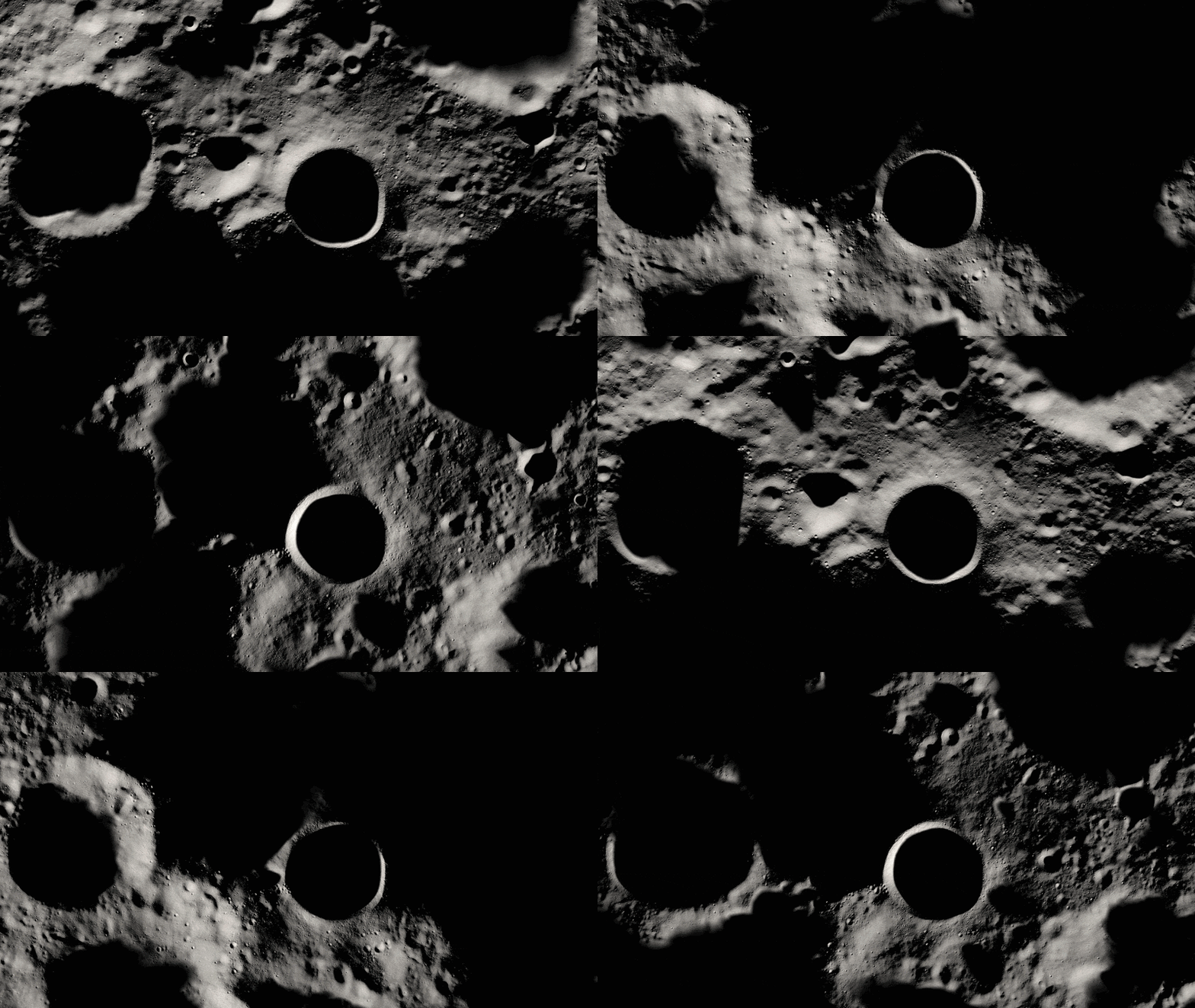
However, it’s precisely because areas near the South Pole are thought to have ice near the surface, protected because the bottoms of craters never get heated by direct sunlight, that this is the target for the current space race.
Microbes we might leave behind may also find the conditions more to their liking, according to a newly published study.
“Humans are natural explorers, and with them come their voices, their memories … and their microbes,” said Dr Prabal Saxena of the Goddard Space Flight Center in a statement. “For some scientists, myself included, that reality can be unsettling. But it also creates an opportunity to turn an imperfect situation into a useful experiment.”
You might not like to think about it, but you and every other member of the human race have billions of bacteria on your skin, to say nothing of what is inside your digestive system. Spacesuits keep most of them inside, but not all, and any long-term human habitat is likely to be even more porous.
NASA cooks its space probes to temperatures above 200°C (400°F) if they’re going places they don’t want to contaminate, but astronauts don’t appreciate the same treatment.
The vast majority of such lifeforms will not live long on the lunar surface, or even in caves beneath. However, as the history of antibiotics has taught us, even if conditions kill 99.99 percent of an organism, evolution could soon see it adapt to the new conditions, particularly if it multiplies fast.
The lack of nutrients may mean we won’t see rapid microbial growth in even the most favorable lunar conditions, but that doesn’t mean nothing can survive.
To test the prospects for persistence at the lunar South Pole, Saxena and co-authors used the survival rate previous studies reported for three bacterial and two fungal species when exposed to UV radiation. They then compared this to the radiation received in regions around the lunar South Pole, allowing for the terrain and shadows.
Despite strict biosecurity protocols, some microorganisms have made it onto the International Space Station, including Aspergillus niger, one of the species used in this study. It’s even been shown to be capable of surviving outside the station, and flagged as a likely adapter to Mars.
Indeed, A. niger proved easily the most resilient of the five used in this experiment, even surviving some exposure to UV radiation equivalent to sunlight at the lunar pole.
Even A. niger in unlikely to survive for more than a week at most lunar locations, the experiment suggested, and less than an hour farther from the pole. For the other four species, the area in which they appear able to survive a day is far more limited.
Nevertheless, there’s always the possibility that some small niches are even more protected than the locations the team modeled, particularly if astronauts drill holes in the lunar surface in the quest for samples.
None of the species appear likely to grow or replicate, so there’s no danger (or hope) of terraforming the Moon with them, but if they hang on in a dormant state, they could interfere with future research.
The potential for life to survive deep in lunar south pole craters could be both good and bad, Saxena and co-authors argue.
On the one hand, the presence of life we bring could undermine a site’s scientific value, making assessments of the chemistry and geology unreliable as representative of the Moon’s natural state.
On the other hand, a trial run with the Moon, an astronomical body we are confident has no native life of its own, could be good preparation before we stuff things up elsewhere.
“We need to understand what was there before us, because when we go to Mars to search for signs of life beyond our planet, we will want to make sure it’s not stuff we brought,” said Dr Andrew Needham.
“When we think of the Moon, we don’t typically think of biology,” said Dr Heather Graham.
“But the Moon is a place where a cell can survive, so our first exploration of these sites should pay extra attention to our microbial hitchhikers and work hard to characterize lunar chemistry before our visits change what we will find.”
The study is published open access in Science Advances.