Ad

nature-iconNaturenature-iconenvironment
clock-iconPUBLISHEDFebruary 16, 2024
comments icon2
share110

"Humanity Do Better": What A Scientist Found At The Bottom Of The Pacific Ocean

There's nowhere humanity hasn't touched.

James Felton headshot

James Felton

James Felton headshot

James Felton

Senior Staff Writer

James is a published author with multiple pop-history and science books to his name. He specializes in history, space, strange science, and anything out of the ordinary.

Senior Staff Writer

James is a published author with multiple pop-history and science books to his name. He specializes in history, space, strange science, and anything out of the ordinary.View full profile

James is a published author with multiple pop-history and science books to his name. He specializes in history, space, strange science, and anything out of the ordinary.

View full profile
EditedbyLaura Simmons
Laura Simmons headshot

Laura Simmons

Health & Medicine Editor

Laura holds a Master's in Experimental Neuroscience and a Bachelor's in Biology from Imperial College London. Her areas of expertise include health, medicine, psychology, and neuroscience.

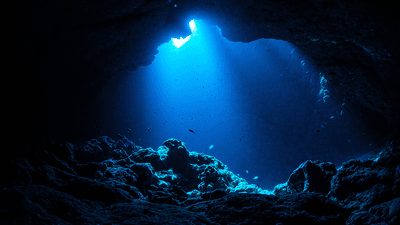
An underwater cave.

Please note this is not a rubbish tip.

Image credit: divedog/Shutterstock.com


Humans have affected pretty much every part of the planet with our various pollutants, no matter how hard they are to reach. 

The rest of this article is behind a paywall. Please sign in or subscribe to access the full content.

For example, in 2020 a new species found in the Mariana Trench was eventually named after the plastic found in its guts, and in 2023 microplastics were discovered in a cave system that had been closed to humans for 30 years

Signs of human activity are abundant wherever you go, as American geographer and oceanographer Dr Dawn Wright highlighted in 2022 during an expedition to the deepest part of the world's oceans.

The very deepest part, located in the southern part of the Mariana Trench and known as the Challenger Deep, is approximately 10,935 meters (35,876 feet) deep. Here's a video from our YouTube channel to give you an idea of how far that is, accompanied by some light feelings of existential dread.

It was at depths of 10,900 meters (35,700 feet) that Dr Wright saw signs of human activity, in the form of a beer bottle lying on the ocean floor.

"It had traveled more than 6.7 miles [10.8 kilometers] to the darkest depths of the Pacific, label still intact," Dr Wright said of the find in a piece for the LA Times. "This discarded trash had managed to reach an unsullied part of our world before we actually did – a symbol of how deeply and irrevocably humans are affecting the natural world."


Written by 

Add us as a Google preferred source to see more of our
trusted coverage in Search