


 Nature
 PUBLISHED



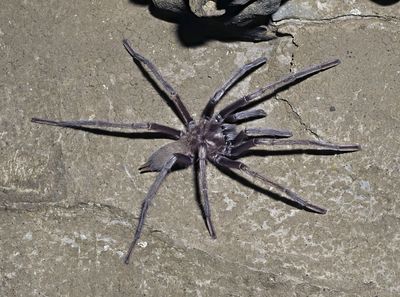


How animals learn has long fascinated scientists. In some species, learning through social bonds and play is important for adult survival; in others without the same level of parental care, there is no one around to teach you. New research has explored learning and memory in tarantula species across North and South America and revealed some surprising results.
This type of research on cognition and navigation hasn't previously been focused on tarantulas, members of the infraorder Mygalomorphae, so almost nothing is understood about how these species learn where food sites and their refuges are.
The researchers have nine examples of observations taken in the field of tarantulas that show they might be capable of flexible navigation based on their experiences. Navigation is important not just for quick trips to capture prey and return via the same route, but also for mate searching, during which a tarantula may move many meters from its burrow and have to find its way home.
Observations such as this one showed the team that the tarantulas could navigate easily back to their burrows in the face of a perceived danger. “Adult individuals of B. klaasi were observed ranging approximately 0.5–1 m away from their ground burrows, presumably hunting for prey. When disturbed, all encountered tarantulas retreated quickly and directly back to their burrows without difficulty or hesitation,” say the researchers in their paper.
The same was true of the blind cave spider species H. sprousei, which was similarly able to navigate back to its retreat quickly and easily when disturbed, despite its lack of vision.
“Previous studies have shown that tarantulas can learn to avoid unpleasant stimuli, navigate complex mazes, and remember spatial locations over time,” said the lead author of the study, Alireza Zamani at the University of Turku in Finland, in a statement. “These abilities suggest that their nervous systems support more flexible behaviour than traditionally assumed.”
Of the nine observations of both forest-living and ground-dwelling tarantulas in their habitats, the team found tree-living species had more limited space for hunting and navigation. However the ground-dwelling species had a larger horizontal plane to move across and, surprisingly to the researchers, were even found in the trees.
Some species were even seen leaving their retreats to hunt insects that were attracted to an artificial light. This suggests tarantulas can learn, retain, and even apply that information to their foraging behaviors, a behavior known as spatial learning that has been observed in other spider groups.
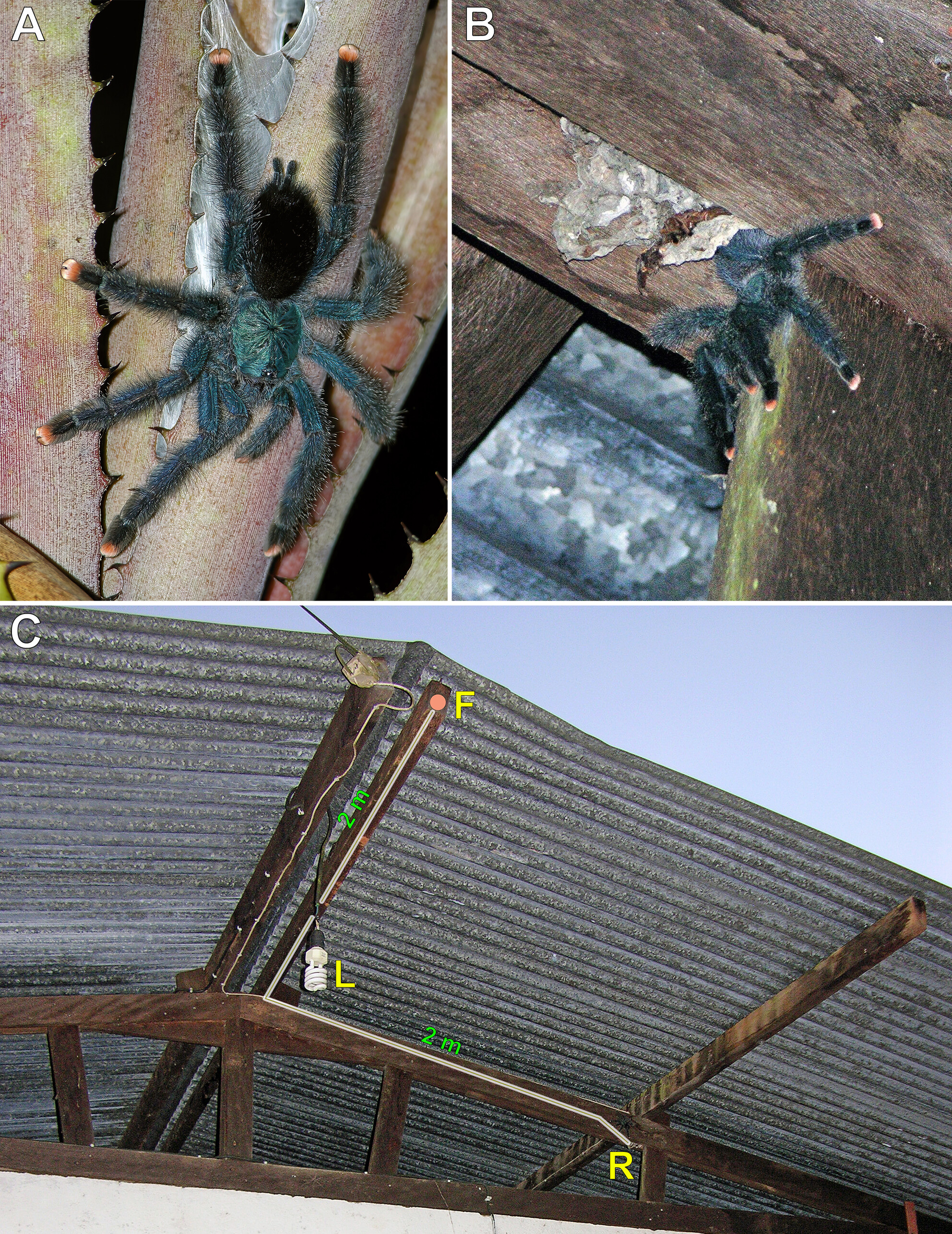
This is also supported by observations of ground-dwelling species climbing trees. This could be a response to environmental conditions such as flooding, after which the tarantulas have learned to seek higher refuges.
The researchers stress that their findings are only observational and preliminary without experimental data. Other clues such as the use of silk around maternal retreats can help guide juvenile spiders back to their dens after foraging, and these cannot be discounted when it comes to learning and navigation within tarantula species.
“Overall, studies on spider learning are still relatively recent, especially for tarantulas. Observations from the field, combined with controlled experiments, will be important for understanding how sensory cues, memory, and experience interact to help these spiders navigate and search for prey,” noted Zamani.
The paper is published in Ecology and Evolution.


 1
1