Nature
 PUBLISHED


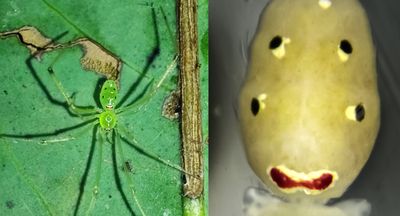


Much as I appreciate their ecological role, I’m not exactly the biggest spider fan in the world – but even I have to admit that this very cheery-looking, newly discovered species of spider put a smile on my face.
This freshly unearthed not-so-creepy crawly is a happy-face spider, a type of spider that until now, was thought to be unique to the Hawaiian Islands. There, Theridion grallator exist with a wide variety of patterns on their abdomens (known as color morphs), many of which look a bit like a smiley face – hence why they’re called Hawaiian happy-face spiders.
But when researchers from India’s Forest Research Institute and the Regional Museum of Natural History were carrying out surveys in the temperate forests of Uttarakhand – a region of the Indian Himalayas a good 12,000 kilometers (7,500 miles) away from Hawaii – they stumbled upon some very similar spiders.
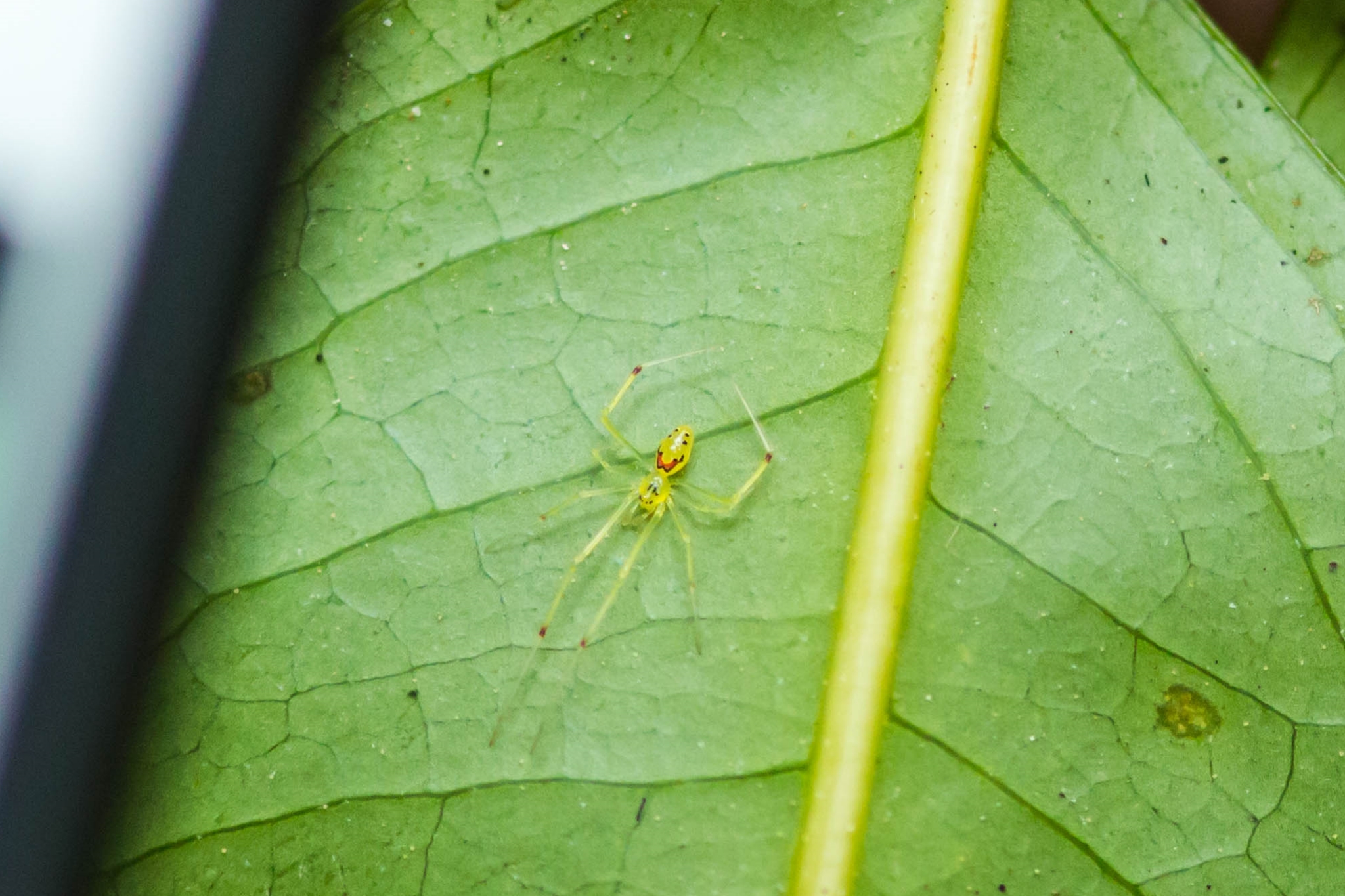
“The discovery was accidental because our survey was [originally] on ants. But my co-author [Ashirwad Tripathy] kept sending me spiders from high altitude regions for identification,” study coauthor Devi Priyadarshini told Pensoft in a blog post.
“So, one fine day, when he shared this image from the underside of a Daphniphyllum leaf, I froze in shock because I had seen the Hawaiian spider during my master’s programme itself, and I knew instantly we had a jackpot because of its striking resemblance.”
What came next was further sampling of the area, carried out back in 2023 and 2024, in which the team collected even more of these unusual spiders. In total, they analyzed 61 of them, looking in detail at their sex, life stage, color morphs, and DNA.
The genetic analysis revealed that the spiders had a variation of around 8.5 to 12 percent from their Hawaiian doppelgangers. This meant that while the two were related to some degree – belonging to the same genus, Theridion – it wasn’t a close relation. The spiders found in Uttarakhand were their own species, T. himalayana, or the Himalayan happy-face spider.
“The name Himalayana was decided as the species name because we both wanted to pay our respects to the mighty Himalaya mountain ranges, which have been standing tall not just guarding our country but also holding a plethora of biodiversity within them,” said study coauthor Ashirwad Tripathy.
Like the Hawaiian happy-faces, the Himalayan species also has a large number of color morphs – the researchers identified 32, fitting into five groups, with some more smiley than others. The two species evolved their happy abdomens independently, in what the authors write “provides compelling evidence for convergent evolution.”

Convergent evolution is the term for when species of different lineages – like the Hawaiian and Himalayan happy-faces – independently evolve similar traits, rather than sharing a recent common ancestor that passed it on to them. Where this happens, it’s often because the two species face a similar environmental pressure.
What kind of shared pressure was it that led to the happy face appearing in both T. grallator and T. himalayana? There are some theories; one suggestion, for example, is that while we might find their goofy smiles endearing (at least until you remember all those legs *shivers*), it might scare off potential predators.
This could also be linked to sex. The vast majority of the Himalayan spiders seen with the smiley face were female, the sex that sits and guards the egg sacs filled with future teeny tiny smiley spiders; it’s handy to have a feature that freaks out hungry birds when you can’t exactly run away.
Fundamentally though, the exact reason remains unclear, and is something that will require further research.
“These patterns definitely help them survive better in the wild, which is understood prima facie, but why do they resort to such patterns on their back, and what functional role in their life cycle does it exactly serve is yet to be deciphered,” said Priyadarshini.
“This is definitely indicative of a deeper genetic mystery.”
The study is published in Evolutionary Systematics.