Nature
 PUBLISHED


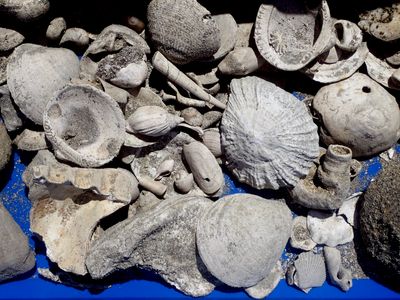


During an upgrade of a wastewater treatment plant in Auckland, New Zealand, contractors stumbled upon the unexpected – an ancient shell bed that has since become one of the richest fossil finds in the country.
The treasure trove of fossils was unearthed whilst excavating shafts for an upgrade to the city’s main raw sewage pipeline. After the discovery was made, the heap of sand was moved to a nearby field, where palaeontologists began the lengthy process of examination and identification.
The researchers sifted through to find over 300,000 fossils of creatures from the Late Pliocene age. “Detailed identification of the fossils shows that they were deposited between 3 and 3.7 million years ago in a subtidal channel in an early version of the modern Manukau Harbour,” said lead author of the study, Bruce Hayward, in a statement.
“At that time, sea level was slightly higher than it is today as the world was also several degrees warmer than now. As a result, the fossils include a number of subtropical species, whose relatives today live in the warmer waters around the Kermadec and Norfolk islands.”
Though the sheer number of fossils discovered could be considered a significant find in itself, the dig became New Zealand’s most diverse.
“What is surprising,” said Hayward, “is that the fauna contains fossils that lived in many different environments that have been brought together in the ancient marine channel by wave action and strong tidal currents.”
“Most of the fossils lived on the sea floor, some in brackish estuaries, others attached to hard rocky shorelines and still more have been carried in from offshore of the exposed west coast at the time.”
The research team identified 266 different fossil species, including 10 that were previously unknown. Other rare finds were the spine of an extinct sawshark, dental plates of eagle rays, and the carnivorous snail genus Buccinulum.
The study also uncovered some of the oldest flax snail fossils in the world. A genus of giant land snails native to New Zealand, several species are now extinct, with only three remaining species living threatened or endangered in the country. The researchers found rare whole and broken shells of two of the extinct species, Maoristylus and Archaeostylus.
With a plethora of new species discovered, the researchers hope that future work will involve formally naming and describing them, as well as comparative studies with fossils found in other regions of New Zealand.
The study is published in the New Zealand Journal of Geology and Geophysics.