Health and Medicine
 PUBLISHED


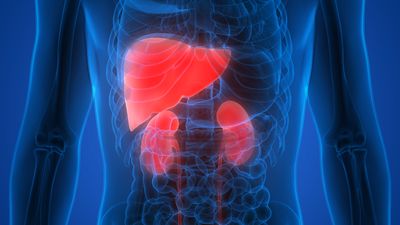


Organ transplants are among the greatest achievements in medicine, but there’s a major limitation: we just don’t have enough organs. One way that scientists hope to get around this is by using animal organs in place of human ones, and this field just took a step forward thanks to the first-ever combined liver and kidney transplant in a human using pig organs.
The use of animal organs in human transplants is called xenotransplantation, and it’s something that’s been the subject of imagination, scientific theory, questionable attempts, and – most recently – increasing experimental success.
The inescapable reality of organ transplantation is that a lot of people will not receive a human organ in time. There are over 100,000 people on the waiting list in the US alone, and 13 people die each day waiting for a transplant.
Strategies to tackle this problem include better ways of preserving, transporting, and selecting donor organs. Artificial options are also being explored, such as the titanium heart that recently saw a man in Australia become the first person to survive for a milestone 100 days with such a replacement organ.
Many believe xenotransplantation could be an important part of plugging the gap between donor organs and transplant recipients. A new study from scientists in China reports the first-ever successful bilateral kidney and whole liver transplant using pig organs in a deceased human.
The patient’s own liver was removed for use in another transplant surgery for a living human recipient. At the same time, the xenotransplant procedure was performed. According to the study, with the consent of the patient’s family, his organ function was sustained for five days.
Up to now, the small number of xenotransplants that have been carried out in both deceased and living people have involved only one organ at a time, and a whole liver has never been attempted. The more organs you want to transfer, the greater the complexity of the surgery and the higher the risk of complications. This study shows it might be possible.
The reason why early attempts at this were less than successful is that organs cannot simply be removed from a pig and placed straight into the human body. They’re a similar size and work a similar way, but the human body would immediately recognize them as foreign and go on the attack – what we know as rejection.
But today, scientists can take advantage of cutting-edge gene editing technology that limits the risk of this happening. In this case, the liver and kidneys used each had six gene edits, to knock out certain gene sequences and add in other ones that “humanize” the organ just enough.
Once the organs were in place, the team analyzed how they were functioning, and found that they were closer to the function of human organs than pig ones. This, they write, “indicate[s] that essential hepatic and renal functions depend only weakly on the species of the graft and highlight substantial physiological commonality and tissue compatibility between human and porcine liver and kidney systems.”
In other words, with further refinement and experimentation, pig kidney and liver transplants should be feasible in humans.
There were some early signs of rejection at 36 hours post-surgery, with elevated levels of a subtype of immune cell that the authors suggest could be targeted with specific drugs to help lower the risk of long-term rejection.
They also stress that these are results from just one person, and they were only able to follow up for five days in line with the family’s views around burial of the deceased.
However, they write that “the current study provides a foundational […] framework for combined liver-kidney xenotransplantation and a rationale for systematic follow-up in an expanded series of cases.”
According to polling from the United Network for Organ Sharing, the nonprofit that manages parts of the US donation and transplant system for the federal government, the public is broadly in favor of xenotransplantation using pig organs. Over 64 percent of the 1,400-plus adults who responded to the survey in 2024 said they would accept a pig organ themselves.
We’re still a long way off from the day when xenotransplants are commonplace, if we ever reach that day; but experts agree something must be done to try to relieve the shortage of donor organs, and it increasingly looks as though xenotransplantation may play some role – however small – in that.
The study is published in the journal Med.