Nature
 PUBLISHED
 5
5


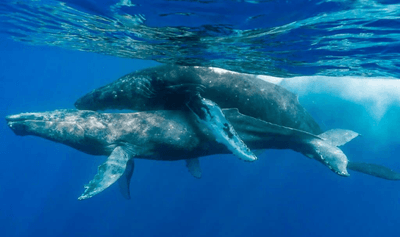


For the first time, photographers have recorded two humpback whales copulating. When they showed their footage to a marine mammal expert, she confirmed both participants were males, confirming once again that same-sex sexual behavior is widespread among animals. There are, however, questions about whether in this case, both whales were happy about the situation.
Whales are big, but the ocean is bigger, so there’s plenty of room to hide if they don’t want humans spying on their private moments. Consequently, despite humpbacks being one of the most studied species of whales, there is no record of how they copulate – until now.
PhD student Stephanie Stack of the Pacific Whale Foundation was contacted by two photographers who, while on a recreational trip off Maui, had photographed two humpbacks. Lyle Krannichfeld and Brandi Romano contacted Stack because they knew they had something unusual, but they didn’t realize just how special their discovery was. Not only was it a first, but what they had seen was same-sex coupling.
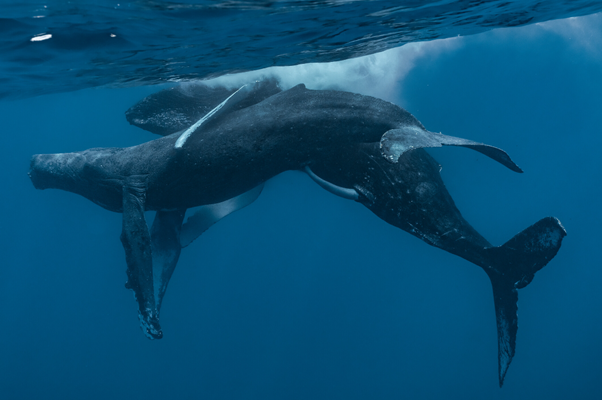
"Despite being well studied for decades, the sexual behavior of humpback whales has remained mostly a mystery until now,” Stack said in a statement sent to IFLScience. “This discovery challenges our preconceived notions about humpback whale behavior. While we have long recognized the complex social structures of these incredible creatures, witnessing the copulation of two male whales for the first time is a unique and remarkable event.”
Stack and other researchers are keen to expand the pool of observations of humping humpbacks, including seeing how common same-sex encounters are as a proportion of copulation in general. Was it sheer fluke that the first recording of humpback sex is two males, or are such encounters as common – or even more so – as between males and females? Evidence for the latter includes a forty-year-old account of a subadult male rubbing its penis against the genital slit of an adult male. In that case, if copulation occurred, it was out of human sight.
Humpbacks feed in polar waters during the relevant hemisphere’s summer, then migrate to spend winter in the tropics where they give birth and raise their young. If, as is expected, most sex also occurs in warmer waters, it should improve our chances of catching whales in the act. So far, however, even reports of penis extrusion, when cetaceans sacrifice hydrodynamics for mating preparation, are rare for humpbacks.
Intriguingly, the few cases of penis extrusion witnessed include five reports of humpbacks pointing their penises at other males. However, four of these involved males competing for access to a fertile female, so we may have seen a literal dick-waving contest where one whale was trying to assert priority.
“In male cetaceans, homosexual activity can involve insertion of the penis of one male into the genital slit,” Stack and co-authors note in their report of the event. Previous observations have involved smaller and more common species, such as the famously horny bottlenose dolphins.
While some people might suggest that male whales get it on because it feels good, biologists seek evolutionary explanations. “The purpose for nonreproductive behavior is varied; proposed functions include learning or practicing reproductive behaviors, establishing or reinforcing dominance relationships, forming social alliances, and/or reduction in social tension,” the report states.
If the reason we haven’t witnessed humpback copulation before is that they avoid the presence of humans as it happens, this pair was an exception. They approached the photographers’ boat and even circled it several times while the copulation was taking place.
Sadly, however, this may not be because they were exhibitionists, but an outcome of the possibility the interaction was non-consensual. One whale, referred to as A, was unhealthily thin and infested with parasites, likely as a result of a shipstrike to his jaw.
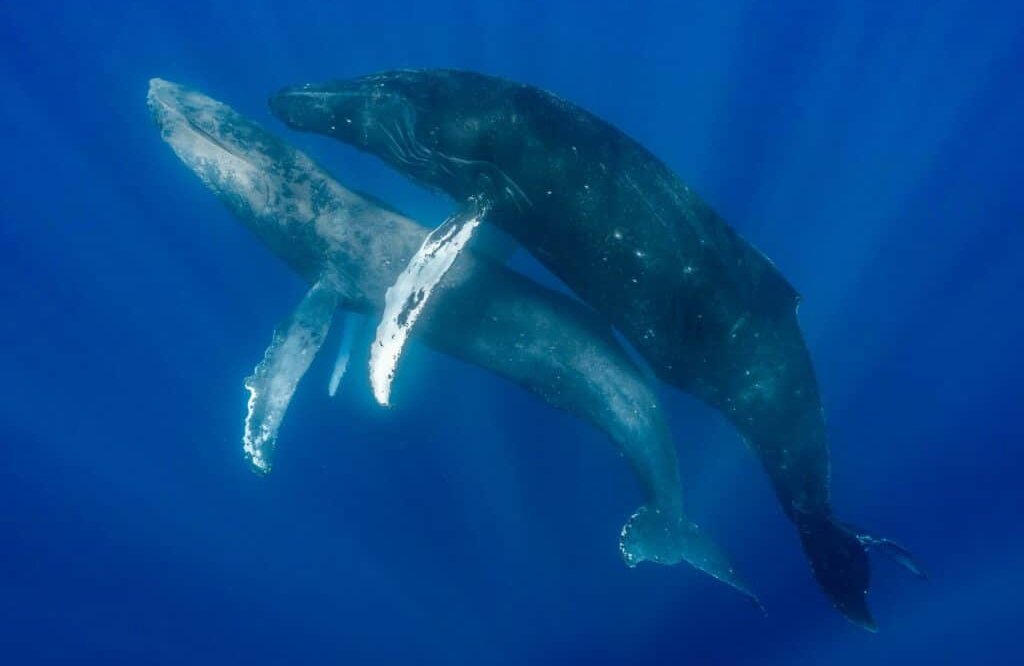
Images of the tail flukes of both whales have been uploaded to the Happywhale.com database, which allowed researchers to identify both whales. Whale B has been in the database since 1993, suggesting age does not impede humpback sexual activity. Images of their genitals were also added to the database, online whale privacy not being considered a thing as yet.
Accounts of same-sex sexual activity, and other behaviors then considered "deviant", were once suppressed by scientists worried about the implications the public would draw. Now, however, they have been documented in so many species that some researchers have proposed the norm may be what we would perceive as bisexuality.
The report is published open access in the journal Marine Mammal Science