Nature
 PUBLISHED
 3
3


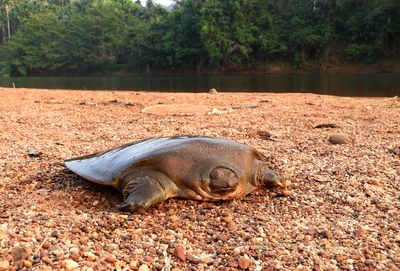


If you’re familiar with the Twitter game “flat fuck Friday”, then oh boy, do we have a treat for you. We present to you one of the flattest fellas around: the Asian giant softshell turtle (Pelochelys cantorii). And, with the help of local community knowledge, researchers have just discovered both its first-ever nesting female and breeding population.
Unfortunately, the Asian (or Cantor’s) giant softshell turtle is also critically endangered; its population has been declining due to habitat destruction, getting caught up in fishing gear, and being hunted for meat.
But in figuring out ways to find out more about and protect the species, conservationists have encountered a problem – the turtles are notoriously elusive, spending much of their time buried in the sands under their native rivers of South and Southeast Asia.
So, researchers turned to communities local to the Chandragiri River in Kerala, India, as study author Dr Francoise Cabada-Blanco explained in a statement. “Following several unsuccessful attempts at tracking one down using conventional ecological survey methods, we took a different approach by tapping into local knowledge.”
“The team, led by Ayushi Jain were able to engage the community really effectively, so much so that they shared tales of historical sightings, provided leads on current occurrences, and even aided in the live release of individuals accidentally caught as by-catch.”
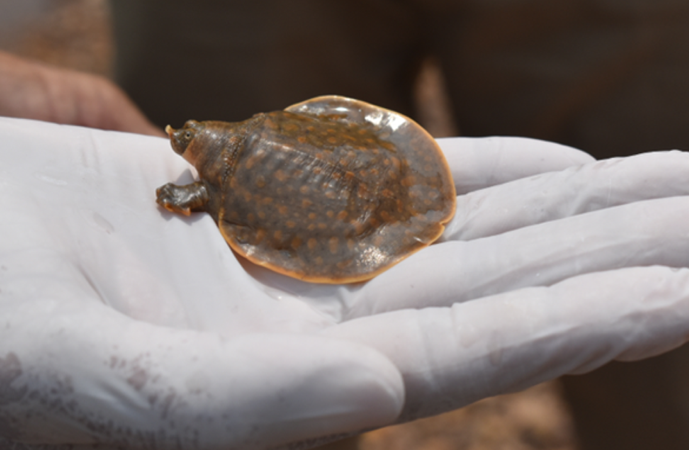
As a result of this collaboration, the team discovered the first evidence of both a female turtle nesting and of a breeding population. They even managed to rescue some eggs from nests that had been flooded, later releasing the flat and, frankly, ravioli-esque hatchlings into the river.
It’s an important step towards the conservation of this secretive species – the team is now setting up a community hatchery and nursery in the area – but the authors were also keen to emphasize just how critical a role local knowledge can play in achieving this goal.
“The community’s willingness to engage formed the backbone of our project, allowing us to record not just fleeting glimpses of the turtles but evidence of a reproductive population – a discovery that rewrites the narrative of a species thought to be vanishing from India's waters,” said Jain.
“For years, the Cantor turtle’s existence has barely been a murmur against the backdrop of India's bustling biodiversity, with sightings so scarce that the turtle's very presence seemed like a ghost from the past,” added Cabada-Blanco.
“Our study is a narrative of rediscovery, of finding hope in the stories told by the river and its people, and of laying the groundwork for a future where this magnificent species can thrive, not just survive.”
The study is published in the journal Oryx.