


 Health and Medicine
 PUBLISHED




What you'll discover in this article
- An outbreak of a rare type of Ebolavirus centred on the Democratic Republic of the Congo has reached 2,000 deaths and is gaining pace faster than any previous outbreak of Ebola.
- Efforts to contain the virus are being hampered by widespread conflict and disruption in the area and the lack of an effective vaccine, though there is essentially no risk of global outbreak because the virus is not airborne.
- Professor of Medicine Paul Hunter told IFLScience: "Without an effective vaccine I could not begin to predict when this outbreak will peak and how many cases and deaths."
The ongoing Ebolavirus outbreak in the Democratic Republic of the Congo (DRC) passed 2,000 confirmed deaths this week, according to the latest situation report from the World Health Organization.
This makes the outbreak, which has also exceeded 4,300 confirmed cases, the fastest growing Ebola outbreak in history and currently the second most deadly after the 2014-2016 epidemic in West Africa.
This situation is different because it involves a rare member of the ebolavirus family called Bundibugyo virus, for which there isn't yet a proven vaccine.
Without vaccination, the only options available to healthcare workers are non-pharmaceutical interventions, which boil down to getting sick people into hospitals where they can be nursed and isolated from others while they are most infectious.
"Without an effective vaccine, I could not begin to predict when this outbreak will peak and how many cases and deaths," said Dr Paul Hunter at the University of East Anglia in the UK, who has been following the situation closely and has a research project just across the border in Uganda.
The outbreak was first declared in Ituri province in the northeastern DRC on May 15, quickly followed on May 17 by the WHO designating it a public health emergency of international concern. There have since been a few tens of cases in neighboring Uganda and one from a returning doctor in France.
The really scary thing is that there appears to be exponential growth in the epidemic, with gradual increase in geographical area.
Dr Paul Hunter
When the outbreak was first announced, the WHO said there were "significant uncertainties" when it came to the number of infected people and the breadth of geographic spread.
Indeed, genetic testing now suggests there were cases as early as February. These were misattributed to other diseases, such as malaria and typhoid, according to a statement from WHO regional director for Africa Dr Mohamed Yakub Janabi.
Even with a February start date, the present outbreak remains the fastest-growing on record and the second largest by size after the 2014-2016 West Africa outbreak. That situation took eight months to reach 1,000 deaths, a figure the present outbreak passed just nine weeks after the May 15 announcement.
All Ebolaviruses cause similar symptoms, starting with fever, fatigue, and headache before progressing to vomiting, diarrhea, and internal and external bleeding. The virus is contracted through exposure to bodily fluids such as blood, vomit, and semen.
Prior outbreaks have generally been caused by another subtype of the virus called the Zaire strain. In theory, Bundibugyo virus – which was only identified in 2007 – is less deadly than Zaire, which claimed 11,000 lives during the 2014-2016 West Africa outbreak.
However, the lower theoretical mortality rate of Bundibugyo is dependent on people getting access to treatment, and this outbreak appears to have been more deadly in practice, with a 45.9 percent mortality rate compared with the 2014-2016 outbreak's 39.6 percent.
That said, according to Hunter, it is very difficult to compare the two situations, in part due to suspicions that there are many more cases in the region than have yet been reported.
That seems to be borne out by figures reported last week in AP News suggesting between 60 and 70 percent of new cases are cropping up outside the network of previously reported infections, suggesting there is a significant amount of transmission that is falling outside health agencies' radars.
WHO Director-General Dr Tedros Adhanom Ghebreyesus said recently that the virus is spreading faster than efforts to fight it, with new cases doubling in some hotspots. While it took about nine weeks for the outbreak to record its first 1,000 deaths, reaching 2,000 has taken just three weeks more.
"The really scary thing is that there appears to be exponential growth in the epidemic, with gradual increase in geographical area," Hunter told IFLScience.
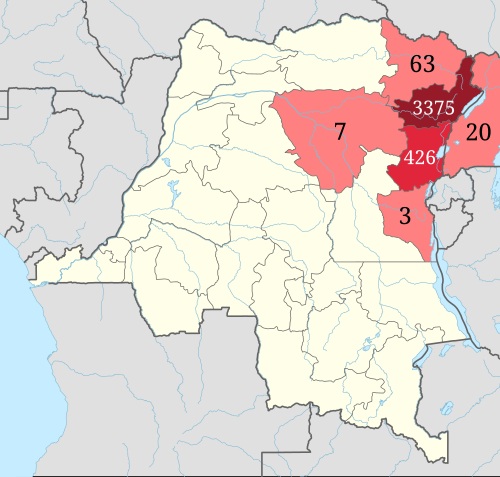
Ituri Province, which remains the center of the outbreak and accounts for more than 80 percent of cases, has been embroiled in conflict for the past several years. This has resulted in limited health infrastructure and mass displacement of people. There have also been strikes among health workers and reports of widespread disinformation about the virus itself.
Hunter said healthcare facilities have been seen as legitimate targets for militant groups, leading to healthcare workers being killed and perhaps contributing to the overall sense of fear about attending treatment centers.
A poor relationship between local people and healthcare providers has also been a long-standing factor limiting the effectiveness of epidemic responses to Ebola. As a community healthcare worker reported to researchers in a 2018 paper about the earlier outbreak in West Africa:
"Nobody would complain about being sick to you because they believed that if you were aware of their sick people you would refer them. They were answering us differently… The community people were denying sickness and there was not a good relationship between us."
There has been some research suggesting vaccines against the Zaire strain could also provide protection against Bundibugyo, said Hunter. The WHO has recently recommended one such vaccine, Ervebo®, be trialled for treating Bundibugyo, which Hunter describes as a "bright spot" in the current situation.
While it's unclear whether Ervebo® would be sufficient to stem the flow of new infections, Hunter hopes it will reduce severity and limit the rate of spread until a more effective vaccine can be developed.
Such vaccines, specific to Bundibugyo, are currently under development, including an mRNA vaccine from Moderna and a candidate vaccine based on the technology behind the Oxford-AstraZeneca ChAdOx COVID-19 vaccine. A volunteer in the UK received the first trial dose of the Oxford vaccine on July 24, less than 100 days since the official start of the outbreak.
"Over the coming months, we will continue vaccinating and monitoring participants, and assessing the safety and immune responses generated by the vaccine," Dr Peter Skidmore, Lead Study Doctor for the BD-Ebov trial at the Oxford Vaccine Group, said in a statement.
Skidmore told IFLScience the team has now vaccinated its first group of participants and is closely monitoring them for safety.
"We're still recruiting volunteers to the study and are keen to hear from healthy people aged 18 to 55 who would like to take part. Potential participants should have a look at our website for more information and to express their interest," he said.



 2
2