Nature
 PUBLISHED


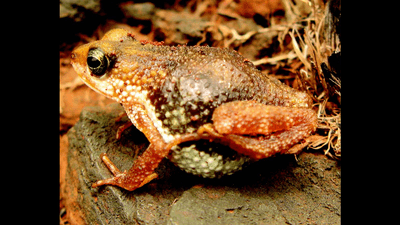


When we think of amphibians like frogs and toads, we often imagine spawn. Gloopy little eggs spilling out into ponds. It’s a great glimpse into the metamorphosis of anurans, allowing us to see them grow from egg to tadpole, to froglet, or toadlet. There is, however, one species that keeps things a little more intimate. You see, there exists one known species of toad that actually gives birth to live, fully developed young.
Yeah, we found it strange, too. This is the curious life cycle of the Western Nimba toad (Nimbaphrynoides occidentalis). It lives in the Mount Nimba region of West Africa, spanning Guinea, Côte d'Ivoire, and Liberia.
It’s one-of-a-kind, being the only known anuran to give birth to fully developed juveniles. It keeps them alive for nine months in a womb, before adopting a special birthing posture with its legs forming a double W to get them out. This is important because they haven’t got the musculature to squeeze them out like mammals do.
It’s even thought that the young toadlets may be active participants in getting themselves out because in cases where juveniles died midway through the process, the mothers later died of sepsis, so it takes the whole family to get the job done.
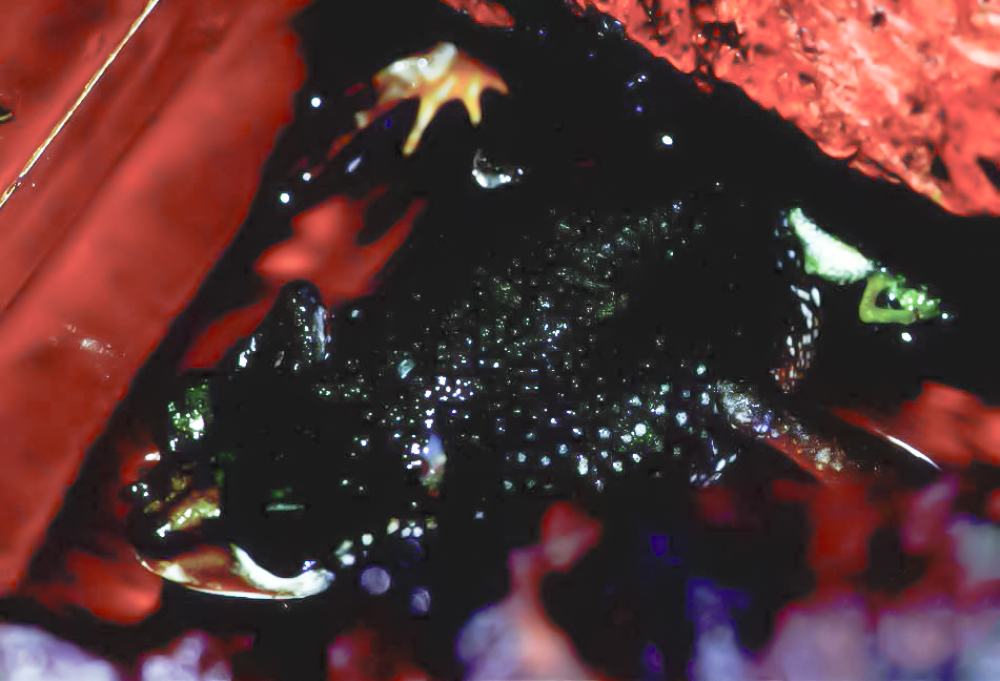
Sounds like a lot of work, right? In a 2017 paper, the authors suspected the unique reproductive strategy may be a consequence of these animals' environment.
"It is likely that the harsh unpredictable environment and scarcity of open water promoted viviparity in Nimba toads, or supported the survival of this unique reproductive mode in these special and isolated conditions," they wrote. "Considering their complex life cycle, in which reproductive and seasonal cycles are tightly linked, understanding and protecting the Nimba toad's threatened environment is of utmost importance."
These toads live exclusively in the Nimba mountains and are listed by the IUCN as Critically Endangered. Their presence here, along with a few other species unique to the region, got this region qualified as a UNESCO World Heritage Site.
It’s an area of remarkable biodiversity, but one that could be under threat in Guinea specifically, as a new conservation initiative is trying to prevent iron-ore mining in the region. The letter, led by Re:Wild and backed by seven international conservation and environmental organizations (including Amphibian Survival Alliance), has asked the minister of the environment and sustainable development and the minister of mines and geology to limit or prevent the negative consequences of future mining projects affecting the UNESCO World Heritage site.
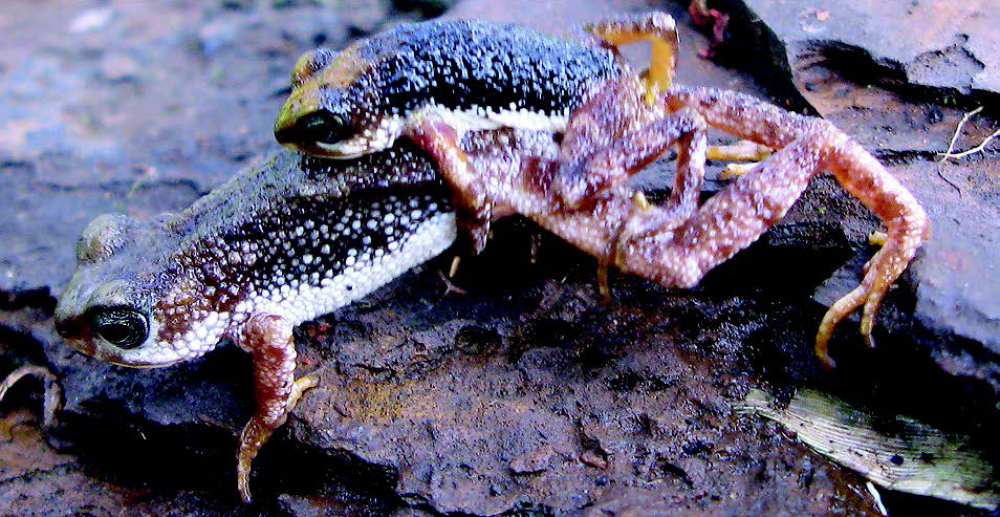
“Guinea has only one World Heritage site, but many iron ore mining permits,” said ARRC Task Force head Genevieve Campbell, in a release sent to IFLScience. “Mining companies have not demonstrated the effectiveness of the mitigation measures they are putting in place to reduce their impacts on biodiversity.”
“Most damage from mining is essentially permanent; areas that have been mined are left looking like barren moonscapes for decades after operations have stopped. As mining intensifies due to our demand for minerals, we need to ensure that we won’t destroy the most ecologically important places on the planet to make smartphones and electric cars.”
“Nimba is home to exceptionally diverse and endemic flora and fauna, including threatened species, especially within the high-altitude grasslands,” added Angelique Todd, senior program manager, West and Central Africa for Fauna & Flora.
“Among these species is the critically endangered western chimpanzee, which has been found to be culturally unique at this site in their use of tools, nest-building, and inclusion of crabs in their diet. Mining in this ecological haven not only has impacts on the areas under exploitation but across the wider landscape, affecting biodiversity and ultimately local people's access to ecosystem services – such as water and climate regulation – as well as their livelihoods and wellbeing.”
With species and behavior not seen anywhere else in this unique region, the campaign is asking for a five-year moratorium on mining in the Nimba Biosphere Reserve. The government of Guinea has yet to respond to the letter.


 2
2