Nature
 PUBLISHED


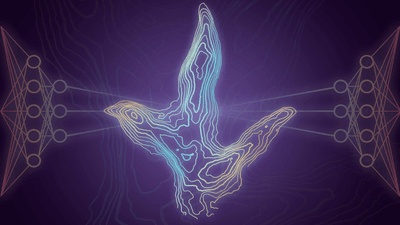


Seems like there’s a Shazam for everything nowadays. First it was music, then plants, then plant diseases. You can even ask your phone what kind of cloud you’re looking at, but what’s a girl to do when she stumbles upon a dinosaur footprint and wants to know who made it? As the immortal words go, there’s an app for that.
DinoTracker, an app powered by artificial intelligence (AI), has already made a rather impressive debut. The virtual assistant can help palaeontologists identify fossilized dinosaur footprints based on their shape, and it’s already stirred up some big questions about the emergence of birds.
If you’re wincing at the mention of AI, we get it, but the fact is, data-crunching AI has been making valuable contributions for a long time before all this generative slop came to pass. It can be a pivotal tool in speeding up processes, including what vertebrate palaeontologist and evolutionary biologist Professor Steve Brusatte refers to as “the Cinderella thing” when trying to figure out which dinosaur made a track.
Our dinosaur footprint AI model shows that some of these mysterious controversial three-toed Triassic tracks really do resemble those of birds.
Prof Steve Brusatte
Led by physicist Gregor Hartmann at Helmholtz-Zentrum, Berlin, a team of scientists used advanced algorithms to enable computers to train themselves to recognise variations in the shape of dinosaur footprints. This is something that’s typically done manually, opening up datasets to potential bias.
The AI model familiarized itself with almost 2,000 real fossil footprints, as well as millions of variations that mimicked realistic changes. In doing so, it identified eight key variations that could help match a footprint to its maker.
The AI agreed with human classifications of dinosaur footprints in 90 percent of cases tried out in the research. It also resurrected an old debate about whether some tracks made over 200 million years ago were made by a dinosaur or a bird. Perhaps not that surprising, given birds are dinosaurs, until you realize that would mean AI just identified the world’s oldest birds.
“Our dinosaur footprint AI model shows that some of these mysterious, controversial three-toed Triassic tracks really do resemble those of birds,” Brusatte told IFLScience. “The humans studying them were correct. It wasn't just wishful thinking, or that they were seeing a bird shape in the tracks in the same way somebody imagines the face of Jesus on a slice of toast.”
I wish there was an app like this when I first started studying dinosaur tracks.
Prof Steve Brusatte
“The AI tells us that yes, objectively, based only on shape, these tracks are very similar to those of birds. And what that does is raise a bold hypothesis: birds originated in the Late Triassic, tens of millions of years before their oldest fossil skeletons were preserved.”
“Now that hypothesis may be correct, or it may be incorrect, but the key thing is that the AI shows it is a reasonable hypothesis, and now we have to test it by finding more fossils – like an unequivocal skeleton of a Late Triassic bird. With that said, [...] I suspect it is more likely that these tracks were made by meat-eating dinosaurs with very bird-like feet, maybe bird ancestors, not true birds – but we shall see!"
What’s more, DinoTracker is free to download via GitHub. All you need to do is import a photo and generate an outline of the track, then put that outline into the app. It will tell you which tracks in the database are most similar to your track, and which features – be it the spread of the digits or the length or the heel – back the ID.
“I wish there was an app like this when I first started studying dinosaur tracks,” said Brusatte. “It really is challenging to understand the variation among tracks that were made by different dinosaurs and preserved in different environments, and this app now makes everything more objective.”
AI can become a new type of paleontologist, one that compiles and observes and filters through and classifies data and does so in a way that is free from the usual human biases.
Prof Steve Brusatte
“I think AI has a bright future in paleontology. It's not that AI will become some all-knowing god that can identify every single fragment of dinosaur bone or tell us exactly where to find every fossil in the rocks. But what excites me most is that AI can become a new type of paleontologist, one that compiles and observes and filters through and classifies data and does so in a way that is free from the usual human biases.”
And if you're wondering how it is dinosaur/bird tracks can even fossilize for 200 million years, welcome to the curious field of ichnology – the study of trace fossils.
The study is published in the Proceedings of the National Academy of Sciences.