


 Nature
 PUBLISHED


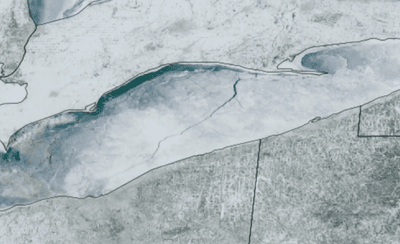


This is the moment a 128-kilometer-long (80-mile) fracture emerged across the icy surface of Lake Erie.
Lake Erie, one of the five Great Lakes along the Canada-US border, has spent the past few weeks in an ice-capped state. Fueled by low temperatures, its ice coverage surged from under 2 percent on January 14, 2026, to nearly 85 percent by January 21, according to data from NOAA’s Great Lakes Environmental Research Laboratory. As January drew to a close, ice cover rose to over 95 percent, teetering on the brink of a rare total freeze-over.
However, cracks are starting to appear. On Sunday, February 8, NOAA’s GOES19 weather satellite witnessed a giant fissure appear across Lake Erie's ice. In less than four hours, the fracture stretched for up to 128 kilometers (80 miles) from Port Burwell, Canada, over to the other side near Cleveland, Ohio.
Cracks like this form for a variety of reasons, but they are most often associated with thermal stress, caused by the ice expanding or contracting suddenly as temperatures fluctuate.
.gif "This GIF shows the crack across Lake Erie's ice form in a few hours.")
Despite the huge fissure, it doesn’t necessarily mean the great freeze is loosening up. AccuWeather notes that it’s possible Lake Erie could still achieve 100 percent ice cover this week if bitter temperatures persist. This will also require the wind to relax, they added, since strong gusts can break up the ice and prevent it from consolidating into a solid sheet. However, with temperatures forecast to rise slightly in mid-February, the window for a record-breaking total freeze may be closing.
The recent conditions at Lake Erie are rare, although not wholly unprecedented. The water's surface has reached a completely frozen state on three occasions since records began in the 1970s, most recently in February 1996, although it has approached full ice coverage multiple times, including in 2025, 2018, 2015, 2014, and 2011.
Each winter, this expansive ice cover transforms parts of the lake into a frozen playground, boosting recreational activities like ice fishing, pond hockey, cross-country skiing, and snowmobiling. However, as the recent fracture proves, the lake is a dynamic and dangerous environment, so local authorities urge extreme caution for those wishing to take to the ice.
Compared to the other Great Lakes, Erie is the most prone to freezing. Due to its shallower waters, it tends to freeze earlier than the others and experiences the highest surface ice coverage most seasons.
But it isn't just a passive victim of the cold. During the winter months, Lake Erie also acts as a weather engine due to a phenomenon known as lake-effect snow. This occurs when cold, dry air from the Arctic moves down, across the relatively warmer waters of the lake. The lower layers of air pick up water vapor and heat, rising rapidly into the atmosphere. As this moisture-laden air pushes across and reaches the colder land on the downwind shores, it cools and dumps massive amounts of snow. This is one reason why it’s often so snowy in areas like Buffalo, New York, or Erie, Pennsylvania.
Once the lake freezes over completely, as it nearly did this week, the "engine" is halted as it can’t pick up any more water vapor, and the lake-effect snow machine shuts down.


 1
1